Last year we had the honour and privilege of leading an awesome group of riders through some of the best singletrack in Eastern Tibet. Photographer Ryan Creary and Freelance writer Ryan Stuart were among them. Together they published a couple of articles highlighting their first-hand experience of our Eastern Tibet Backcountry Mountainbike Tour. The first article was published in Action Asia Magazine, and now they've done it again!
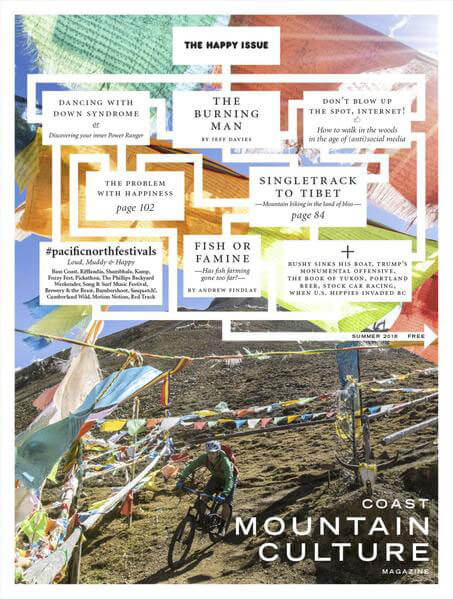
We're excited to be published in Coast Mountain Culture Magazine. If you're on Vancouver Island (or the Pacific Northwest in general) pick up a copy and flip to page 84. Drop us a line, tell us what you think, and if you want a two-wheeled Tibetan adventure of your own, come join us October 11-21, 2018 with pro-riders Mark Matthews and Brian Kennedy.
Click below to read about The Highs and Lows of Mountain Biking Tibet
If you’re interested in joining our 7-day Mountain Biking Backcountry Tibet trip click here to learn more or drop us a line at info@extravagantyak.com.
I only had three things to remember: breathe deeply; drink a lot of water; and put the toilet paper in the wastebasket, not the hole. That was my mantra for fourteen days. The first two were essential for surviving a mountain bike expedition above 4,000 metres. The third was necessary for avoiding the awkwardness of a clogged Tibetan toilet. Remembering to practice all three is not as easy as it sounds; habits and routines are hard to change. How much can a person transform during a two-week trip? Can you become a different person through travel? If so, is it possible to bring that person home?
These questions were far from my mind six months earlier. I was home in Canada, lazily scrolling through Facebook, when a posting caught my attention: A group is going to Tibet for a 10-day epic mountain bike adventure and we are looking for people to join us. At that time, my knowledge about Tibet was basic–Mount Everest, the Dalai Lama, Prayer Flags. I asked my partner, “Should I go mountain biking in Tibet”? His response, as usual, was “Hell yeah.” I signed up the next day.
To prepare, I Googled my fellow travellers. Among them were a mountain bike guide, a racer, and a pro rider. I imagined them travelling all over the world in exotic locations, with massive thighs and nicknames like ‘Shredder’ and ‘Count Huckula’.
I love mountain biking; it makes me, a 56-year-old woman, feel like a kid. I ride a couple of times a week at the local trail affectionately known as ‘The Dump’. My mountain bike buddies call me ‘Crash’. Doubts started to march through my mind. An Army of Insecurities ordered me to stand down. How can Crash keep up with a group of fit, professional riders who get paid to bike for a living?
Nevertheless, I trained the best I could, and six months later my bike and I boarded a plane to China. Jet-lagged and bleary, I arrived in Chengdu. My bike had other plans–and an unknown destination. Cool. My first test. Breathe deeply. I didn’t need my bike for another four days. The next morning, we flew to the Tibetan capital Lhasa to tour and acclimatize. That night my head pounded–the dreaded altitude headache. Cool. Test number two. I guzzled five litres of water, which cured my headache but led to frequent tests of mantra number three–wastebasket, not hole.
After four days of visiting Lhasa, the City of Happiness, we travelled to eastern Tibet to start the biking adventure. My bike had arrived, and I no longer felt the effects of altitude–until the first climb. I gasped and gulped for air, desperate to introduce oxygen into my starving lungs. My head exploded, and then my stomach and I spewed my lunch behind a bush on a pile of yak dung. I questioned myself, and the nearest yak–what was I doing on a trip like this?
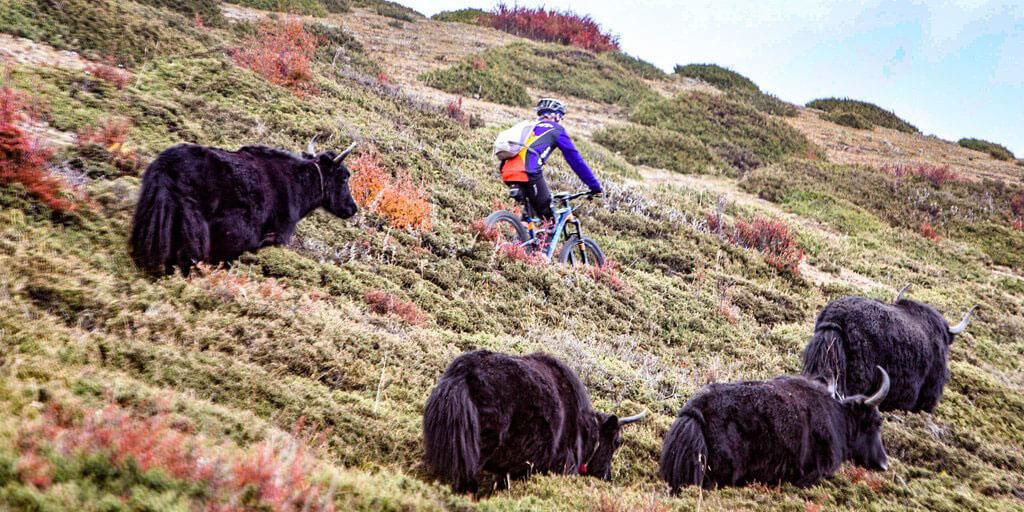
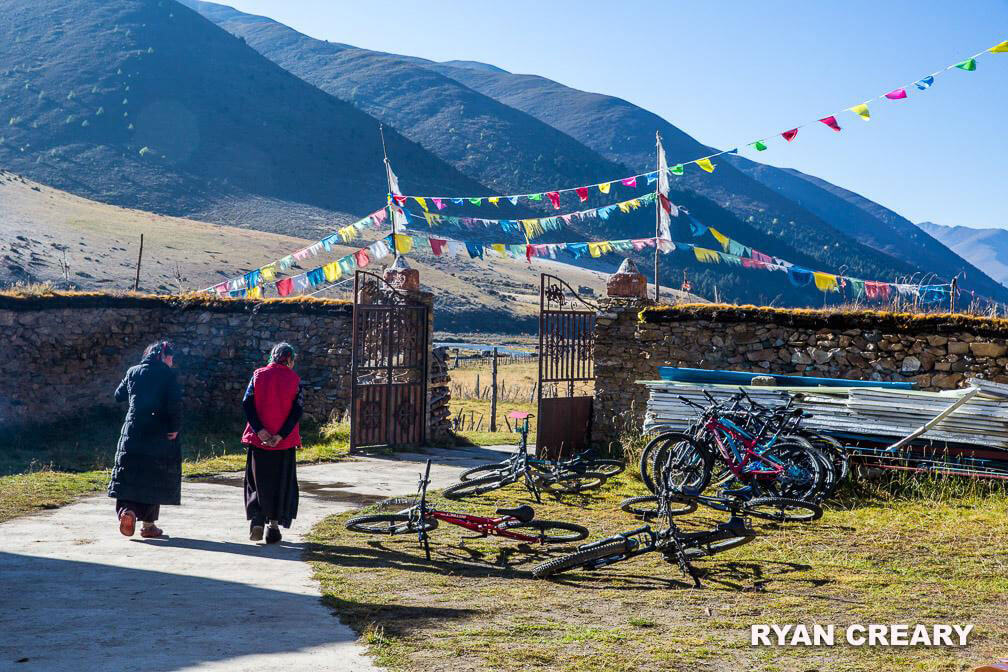
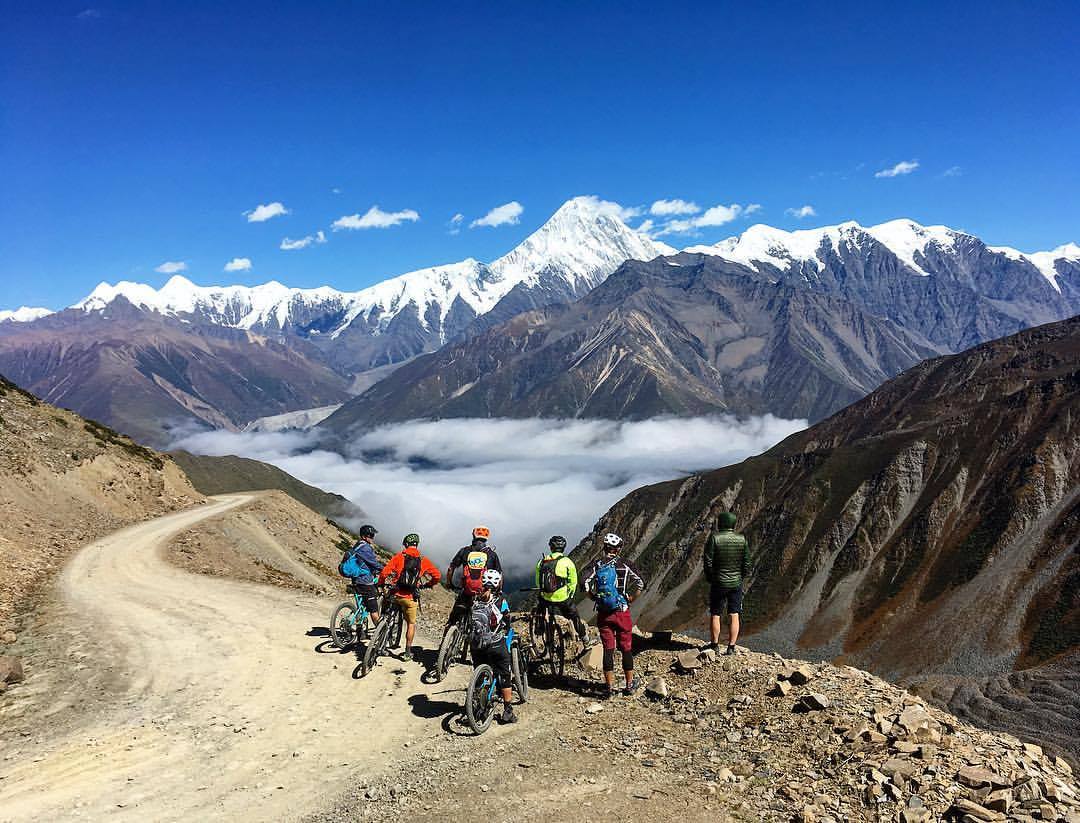
Over the next week, we pedalled eight to ten hours per day. We grunted our way over mountain passes, down rocky yak tracks, and through nomadic villages. Raging creeks tried to swallow us as we traversed their banks. We hoisted our bikes on our shoulders to scramble up slippery slopes. Exhausted, we descended upon remote guesthouses where the owners greeted us with local foods like yak meat, yak momos, and yak butter tea.
Somewhere along the way, I began to notice that I felt…nothing. Sensations of hunger, cold, soreness and sickness dissipated into the thin air. I didn’t miss my family, or friends, or home comforts. Worries and negativity drifted away from my reach. From my consciousness. I was filled with a deep spiritual joy and contentment (as well as a newfound respect for yaks). I experienced my own personal Nirvana, and in my mind, I was no longer Crash; I was now the Biking Buddha.
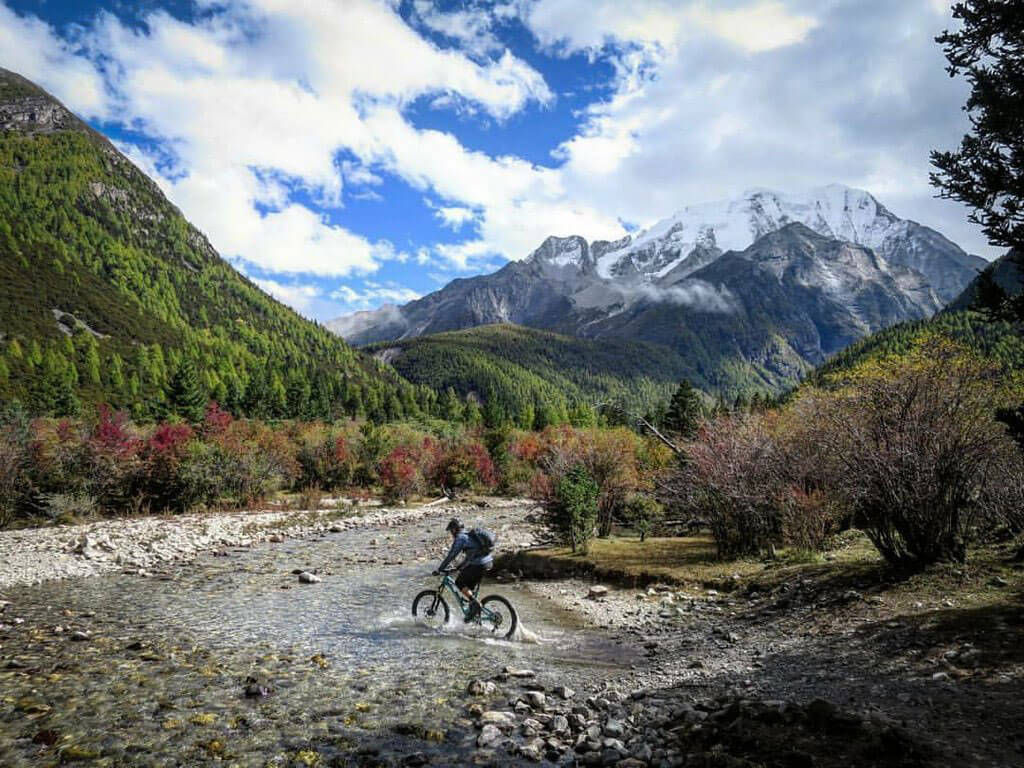
I don’t consider myself a spiritual person. I am a true Virgo–practical, logical, in control. During that trip to Tibet, I shifted inside. I awoke each day, mounted my bike, and rode blissfully at my own pace accepting whatever came my way. I felt present and profoundly peaceful.
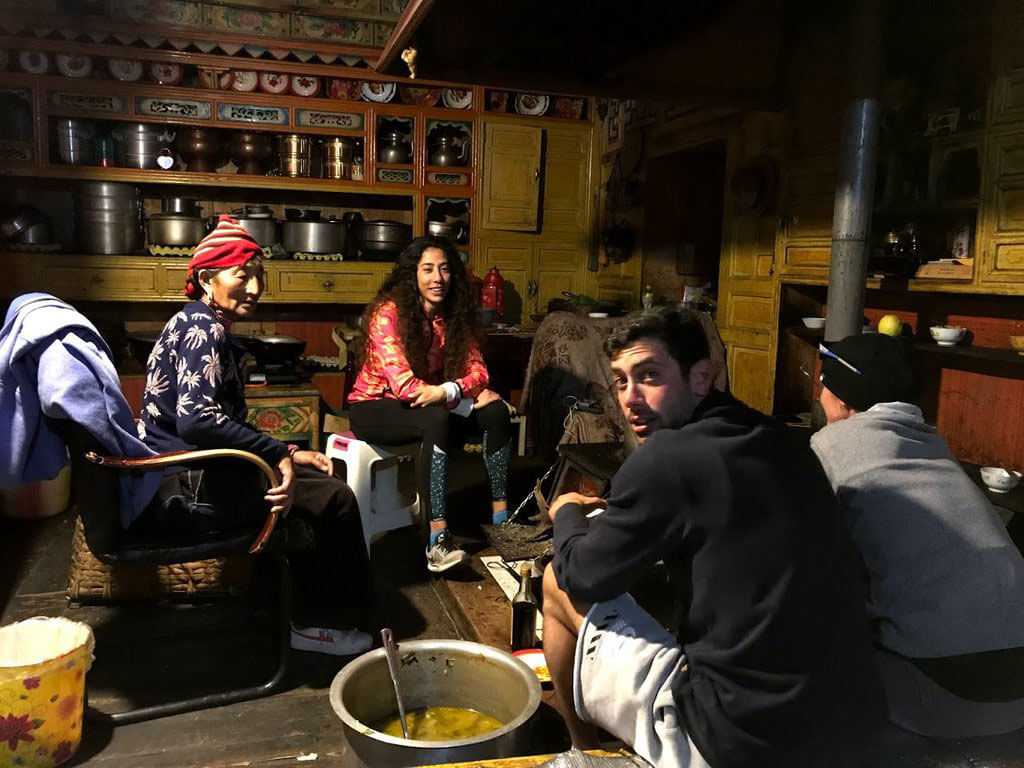
There were many occasions where feeling peaceful was easy. Sharing meals with my new friends, stabbing forkfuls of freshly made noodles as delicious Tibetan dishes whirled by on a lazy Susan. Cozying up to the fireplace where grandma was feeding yak dung into the stove and serving yak butter tea; the old woman and her daughter giggling conspiratorially when I sipped the butter in the tea rather than blowing it away. Spending hours laughing and talking with a wizened Tibetan monk–not understanding a single word. Our van driver presenting me with a gift of his family’s prayer beads. Riding above the clouds, locals gaping incredulously as our cycling entourage sped by.
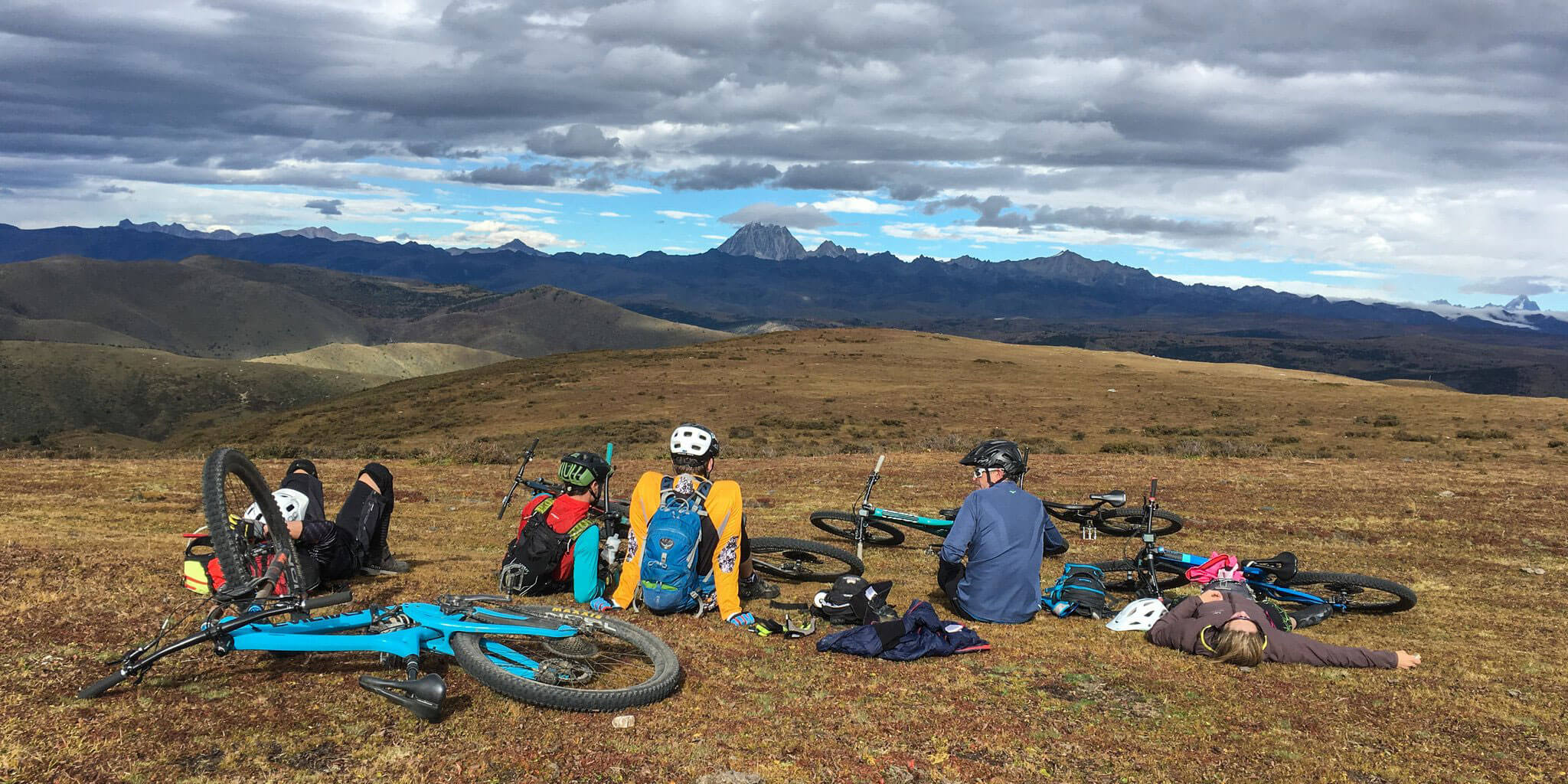
There were also occasions where my newfound serenity was challenged. The second day of riding included endless declarations of ‘one more climb before the summit.’ We reached the final peak as the sun changed guard with the moon; its toothless grin our only light as we dropped over the edge into the darkness.
Another time, I found myself solo, separated from everyone. I didn’t know where I was, where I was going, or if I was on the right trail. Miles of vast countryside loomed before me. I was utterly alone, but it didn’t matter–I wasn’t fearful or anxious. For what seemed like hours I journeyed on, thinking– This is my new reality, riding through eternity on a back road in Tibet –until I eventually reunited with the group.
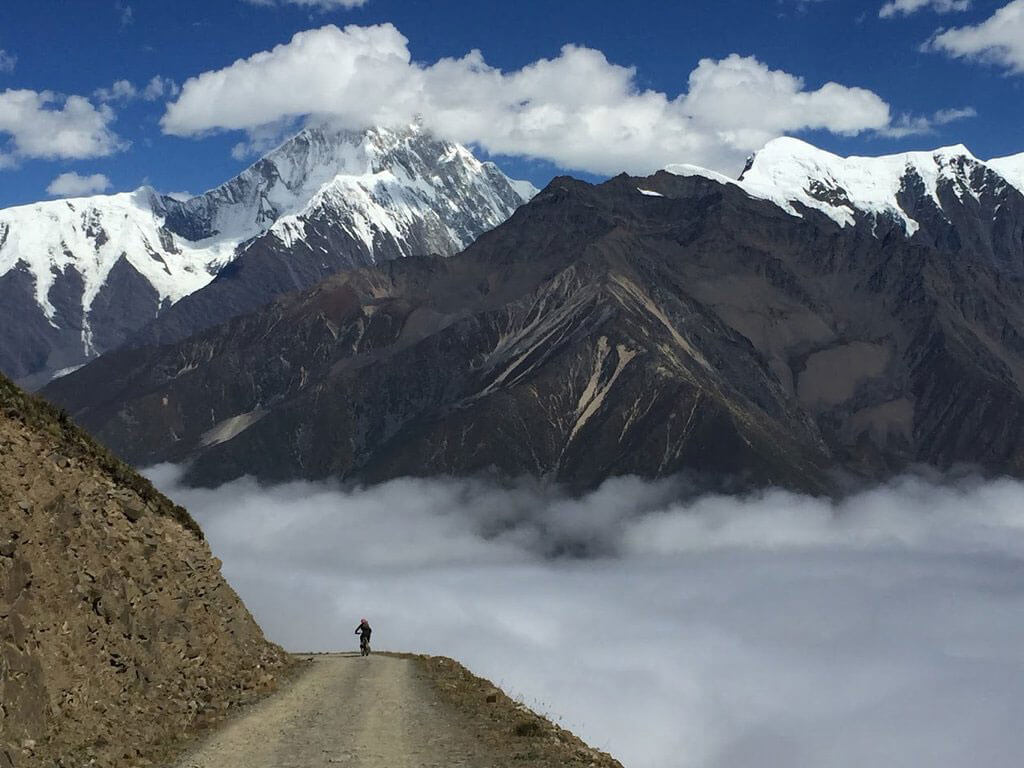
Landing back in Canada after the long flight from China, I waited calmly at the baggage area to claim my bike. A man waiting for his luggage looked over, and remarked, “You look like you just got back from the Himalayas.” I smiled. My question was answered–I can bring that different person home. But how long will the Biking Buddha stay before she plans her next journey?
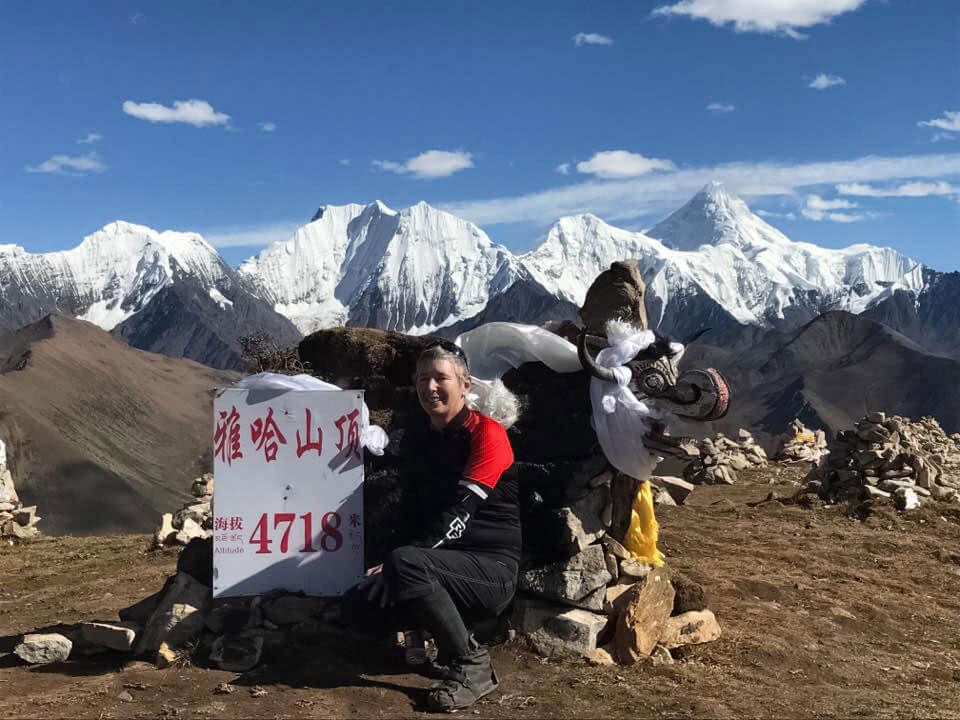
Originally titled "Constellation Realignment", this is a personal retrospective of an Extravagant Yak Mountain Bike Tour of Tibet written by Maureen Scott. Images by Maureen Scott and Ryan Creary
Click here to read more on how you can experience your own two-wheeled path to transformation on our 7 Day Backcountry Tibet Mountain Bike Trip
Fritz Liedtke, a fine art photographer from Portland, Oregon, joins forces with Extravagant Yak to host a photo tour in Eastern Tibet. (Written by Garrett Jones)
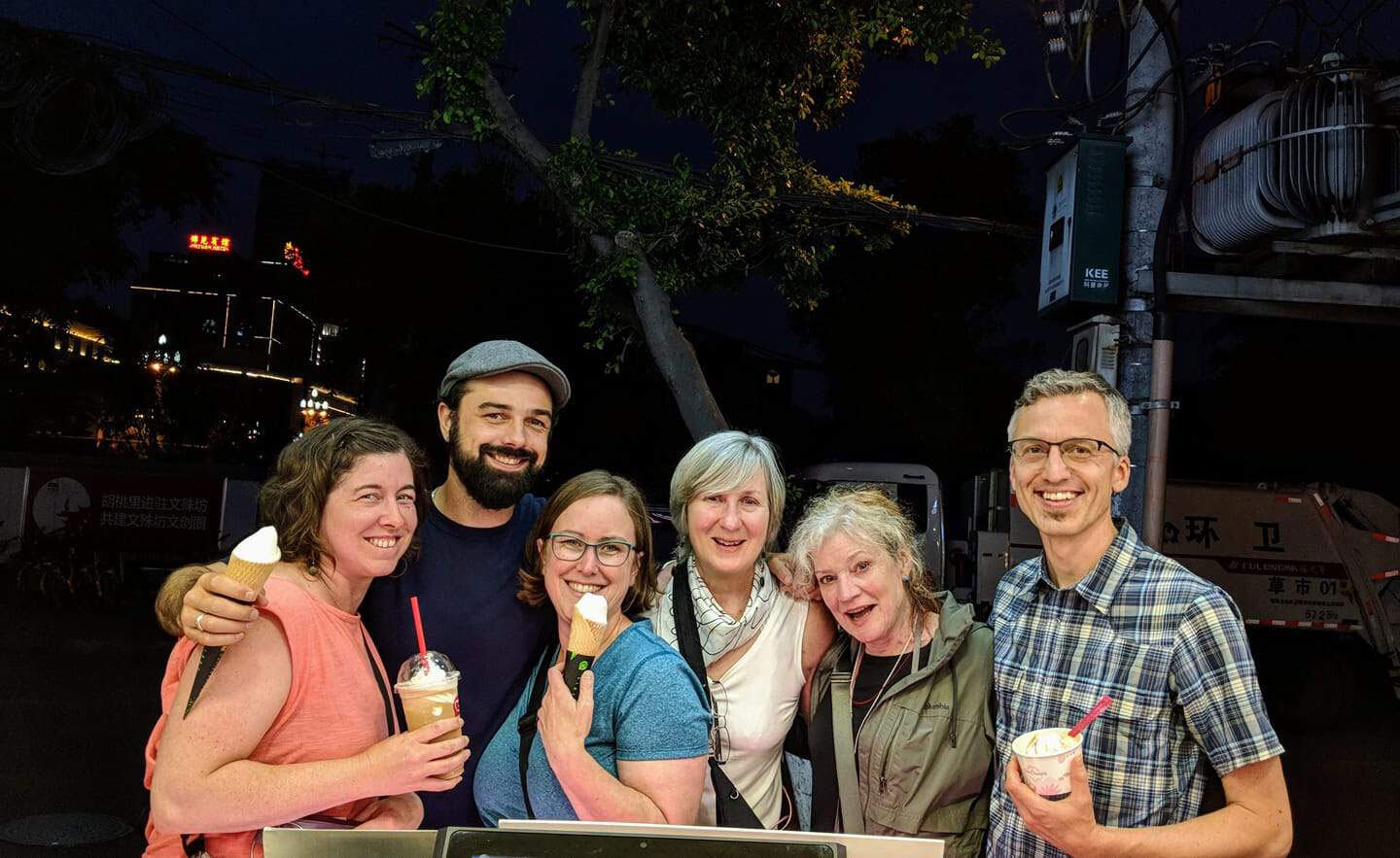
When Fritz arrives into Chengdu on his 10:30pm flight from Beijing, he greets me with a hug. As the other guests arrive at their Buddha Zen hotel at Wenshu Temple Monastery, I notice he greets everyone with a hug. Super friendly; building rapport from the first hello. He’s bound to be a great teacher.
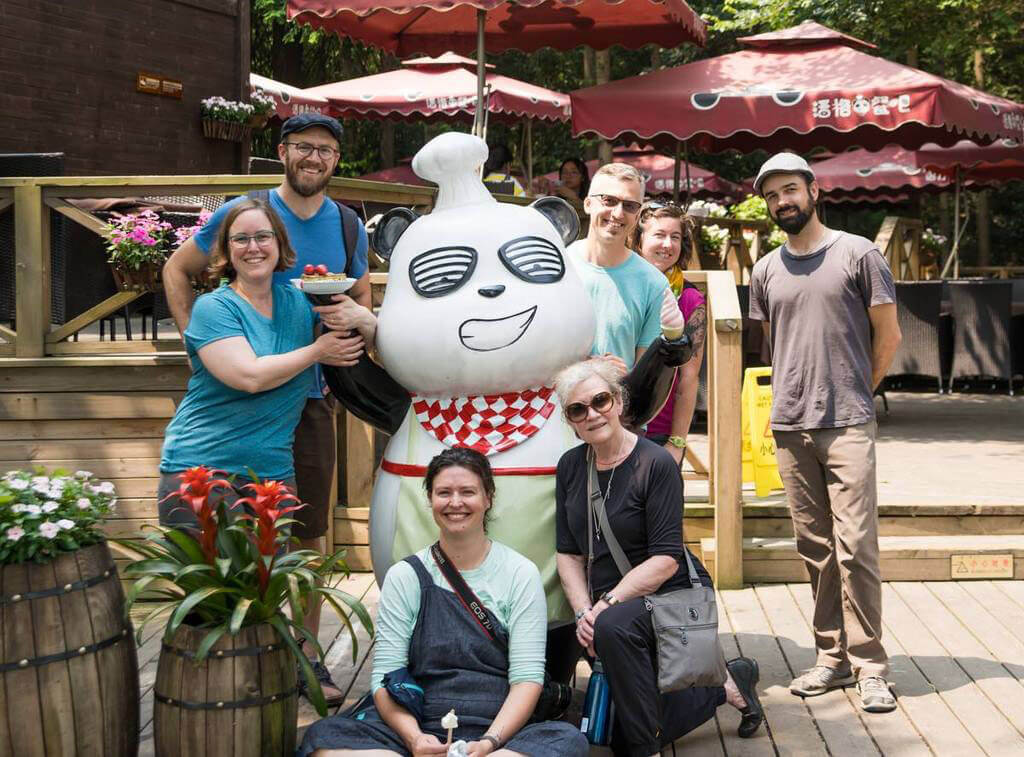
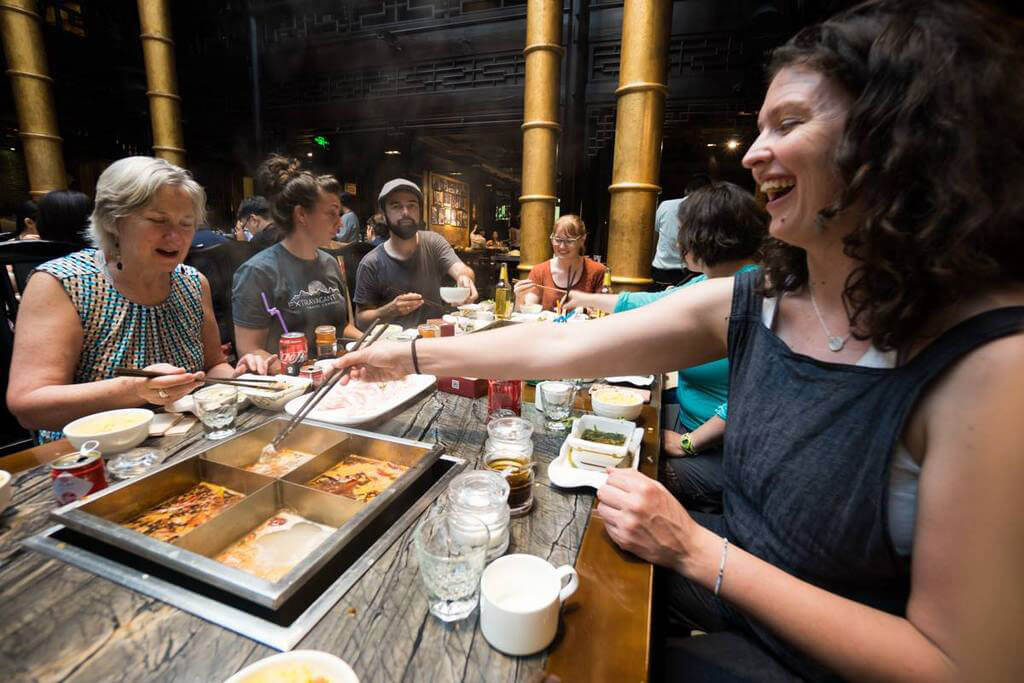
Our tour group is diverse: seven people from all walks of life—all eager to improve our photography skill in some way. Sherry, the oldest in the group, has a point-and-shoot, and says, “My goal out of this tour is to learn at least one thing about photography that will make my point-and-shoot taking better.” Fritz assures her, “you’re going to learn a lot more than one thing.”
Our first class is in the Buddha Zen hotel courtyard. It is an open-air courtyard and reminds me of a fight scene from a Kungfu movie. Everything is old-style China. Wooden pillars hold up the old, wood-shingled roofs that curl up at corners like skin on the bones of some old, scaly monster. It’s not raining, but it feels like water should be dripping into the courtyard.
Instead, a curtain of sunlight shines on a gazebo, beneath which sits a golden statue of the Buddha. Antique Ming Dynasty chairs are placed like wooden thrones around the space, inviting commoners like myself to enjoy the past life of a wealthy landowner. Small fish ponds and streams break up the stonework to create perfect fengshui. Like yin and yang, the balance of light, colors, sounds, and elements make one feel you have fallen into a painting.
Fritz has us play with light. Literally. We move around the courtyard and observe how light bounces off of surfaces and how it shows up differently on faces. We then practice taking photos of subjects with different sources of light. He shows examples to us on his camera how he captures reflections of light from the stone work. The sense is felt by all: We are learning from a wizard.
Our transportation for our Sichuan journey is a Toyota Coaster, a 17-seater that feels like the cabin of Air Force One. It has leather captain’s chairs and desktops with cupholders. Fritz takes the opportunity to hold our second class while we are driving upward to Kangding. He hands out printouts of famous quotes around the subject of art, of seeing and of living.
He says, “I don’t want this tour to just be an opportunity to learn technical skills of photography. I also want you to get the spirit of photography, by being inspired by others’ thoughts.” We read the first quote aloud. It’s about slowing down to see. Everyone shares their thoughts freely like poets discussing Milton, like collectors appraising a work of art, like philosophers discussing ethics.
We feel validated and too big for our shoes all of a sudden. We have several of these “deep thoughts” pow wows throughout the trip. It binds us together on a deeper level and provides the language for our technical learning, too.
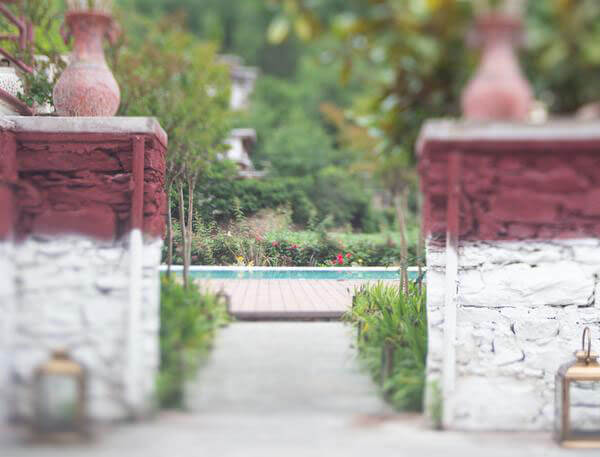
In Danba, after one of our meaning-of-life-meetings, Fritz gives us all a challenge: go on a walk and take 20 steps as slowly as we can manage, making sure to see everything around us, to notice things we may normally walk past. I take the challenge seriously and head straight for the pool. He didn’t say you had to do 20 steps on land. Besides, walking in water makes walking slowly even easier. (The pool is an outdoor, heated, infinity pool in the middle of a Tibetan, mountainside farming community.
There have possibly been more leprechauns in this valley than swimming pools, but given the rise of tourism and outside investment, this enterprising family converted their farmhouse into a 5-star resort in the style of a ClubMed.) So, there I am, in this pool, taking in my surroundings. I have never felt like I was swimming inside of a painting before, but that is the best way I can describe this experience. It is surreal.
Then a revelation hits me. Surreal is that feeling of reality and unreality happening at once. And seeing both is what it means to see. It means being in that space where you acknowledge that all of this isn’t necessary. It’s all extra. Everything around us can be received as an “I get to do this.” Not have-to, not same-ole, not been-there-done-that, but all of life is a painting we get to swim in and have fun with.
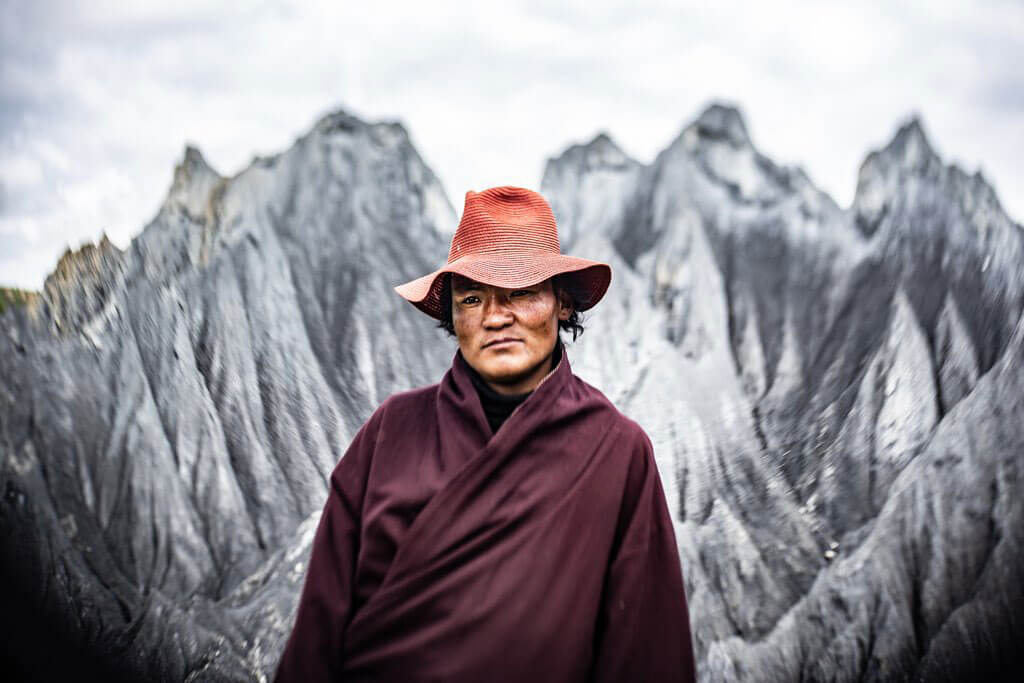
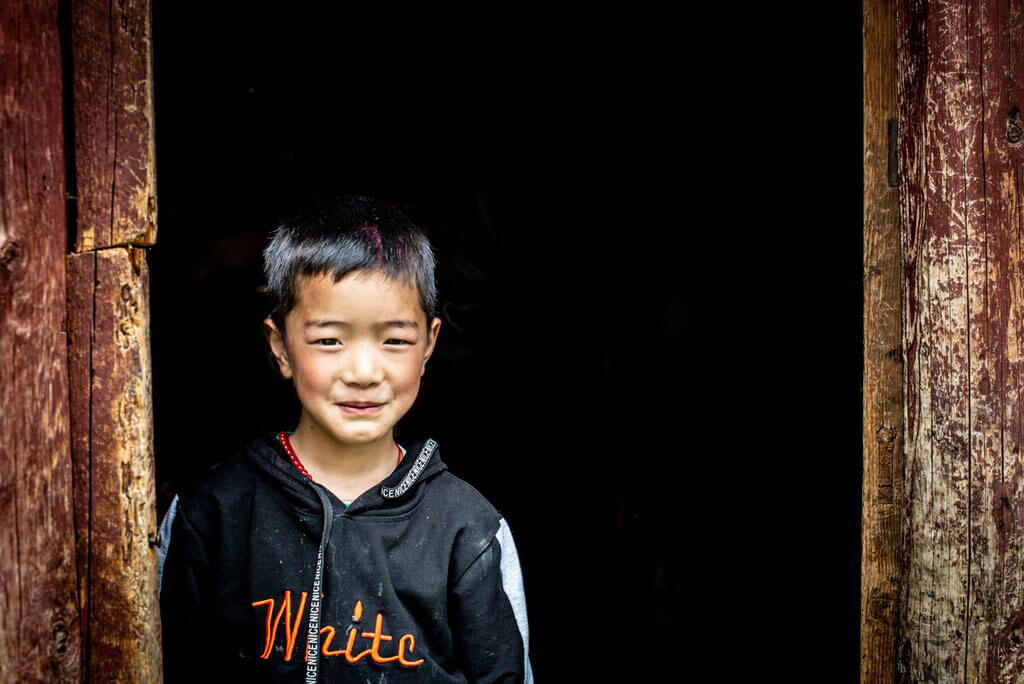
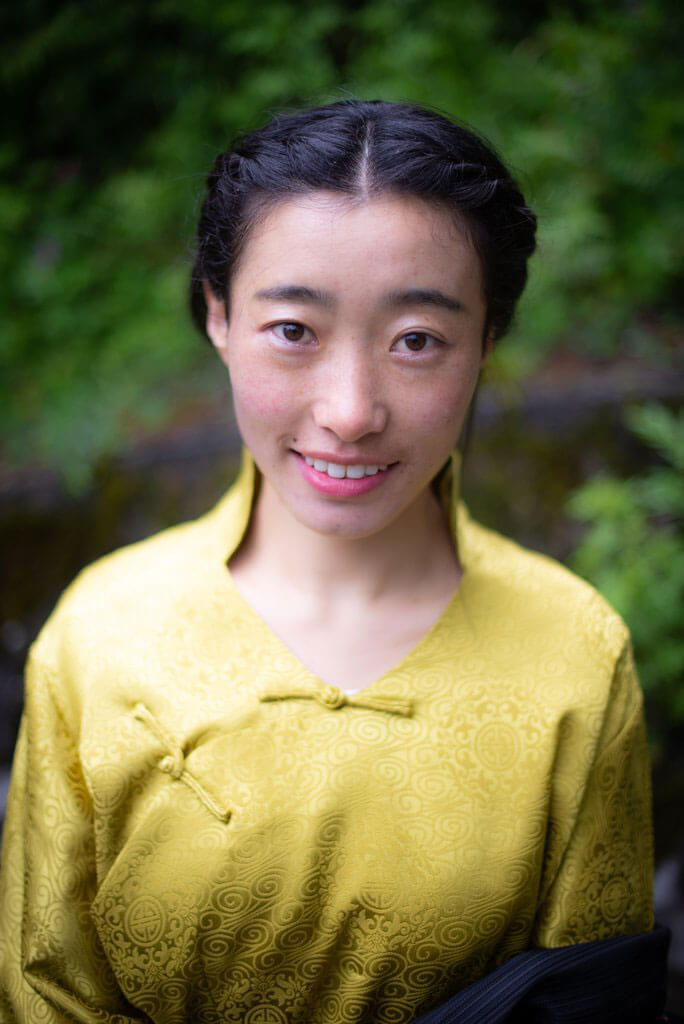
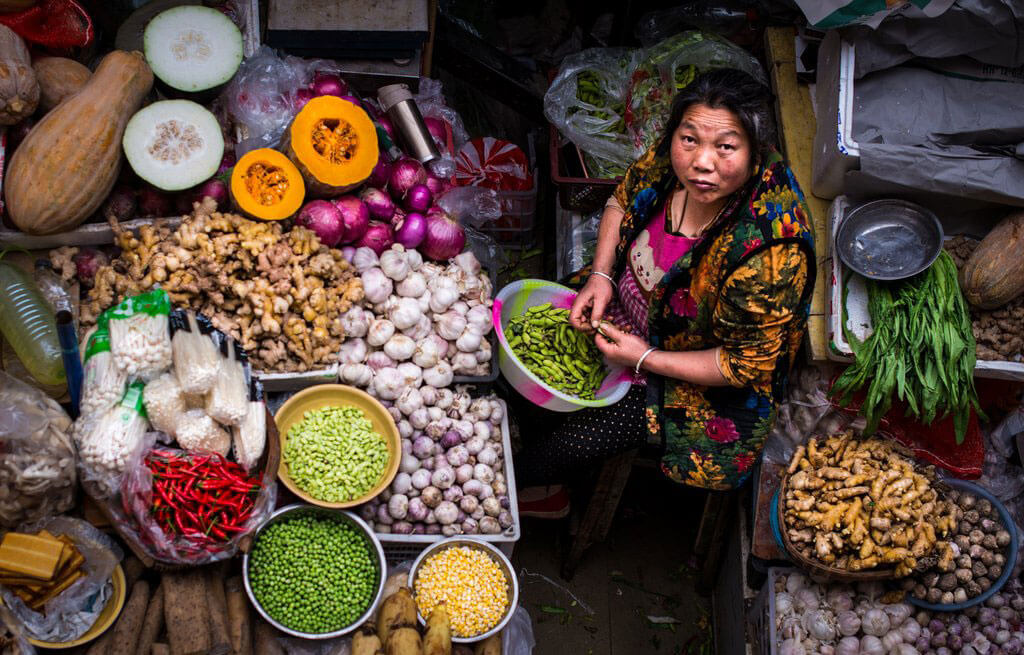
We get tons of technical photography practice, too: shooting models in exotic places, being tourists on horseback in Tagong, catching landscapes from mountain passes and spying out the hustle and bustle of life in a fresh market. Some smells were better than others, but it is all visually amazing.
Fritz is eager to review our pictures with us in the moment, on the backs of our cameras, while we are still shooting to give critique on how we can improve on our composition. He tells us to think of our cameras as our brush and our subject, setting, light, props, etc. as our paints and canvas.
He gives us permission to not simply capture what we see with our physical eyes, but to create what we want to see, or in other words, to arrange things and frame our shot so that it reflects the concept in our mind’s eye, not necessarily reality as it is. He makes the distinction between photojournalism and fine art, and quotes Picasso on more than one occasion: “Art is a lie that tells the truth.”
By the end of the tour, I think everyone is going to be hankering for a burger, but they all prefer to eat Chinese again. After dinner, we all go back to my house for dessert and a time to share photos. It is a perfect evening for reminiscing and saying farewell.
New friends have somehow, in the span of ten days, become old friends. We promise to stay in touch and invite each other to visit our home towns. What a sweet time of simply being together. Hats off to Fritz. By teaching us all to see, he has given us the greatest chance to be excellent photographers, and even, dare I say, fine artists. Thank you Fritz!
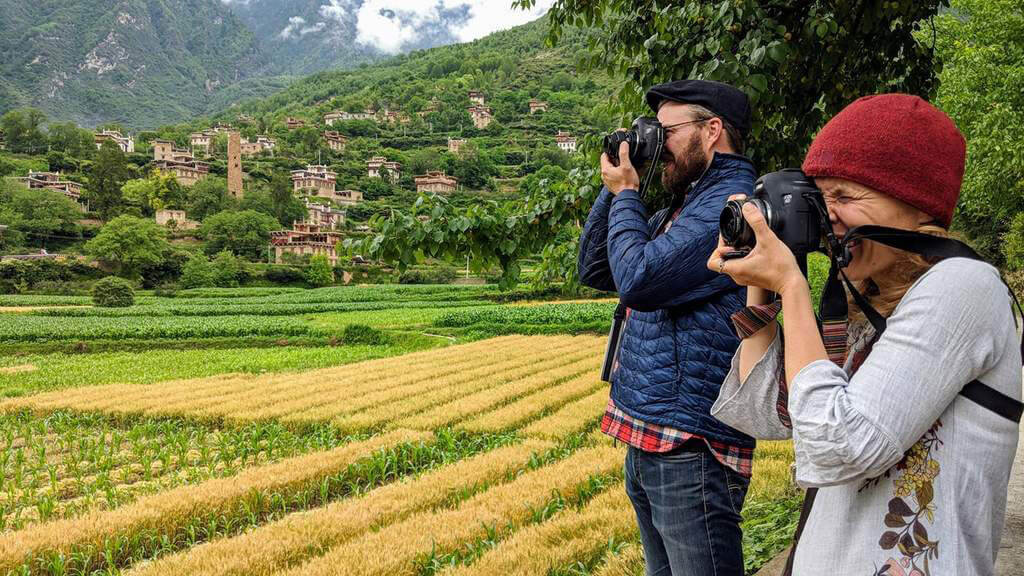
Talk to us today about putting together your own private itinerary, where everything you encounter is just waiting to be captured.