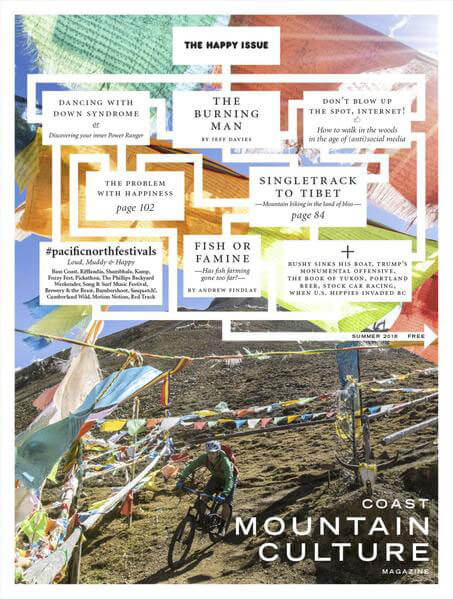
Last year we had the honour and privilege of leading an awesome group of riders through some of the best singletrack in Eastern Tibet. Photographer Ryan Creary and Freelance writer Ryan Stuart were among them. Together they published a couple of articles highlighting their first-hand experience of our Eastern Tibet Backcountry Mountainbike Tour. The first article was published in Action Asia Magazine, and now they've done it again!
We're excited to be published in Coast Mountain Culture Magazine. If you're on Vancouver Island (or the Pacific Northwest in general) pick up a copy and flip to page 84. Drop us a line, tell us what you think, and if you want a two-wheeled Tibetan adventure of your own, come join us October 11-21, 2018 with pro-riders Mark Matthews and Brian Kennedy.
Click below to read about The Highs and Lows of Mountain Biking Tibet
If you’re interested in joining our 7-day Mountain Biking Backcountry Tibet trip click here to learn more or drop us a line at info@extravagantyak.com.
This year a University from Canada, decided to partner with Extravagant Yak for a portion of one of their travel studies. Extravagant Yak organized 7 days for them between Chengdu, Lijiang, and Shangri-la.
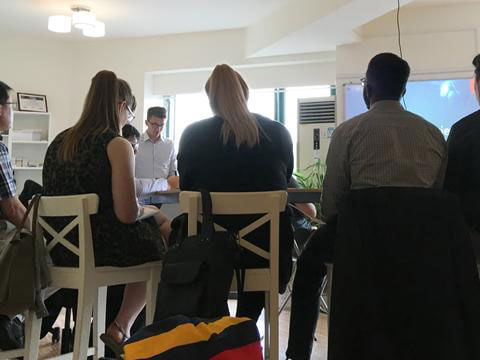
The travel study started in Chengdu where they visited a few businesses in and around the city. Extravagant Yak (and our sister company Simple Bikes) hosted the group at our office to introduce our business(es), values, and answer the students’ questions as they related it to what they were learning in their courses (predominately focused on human resources and marketing).
They had several other company visits in Chengdu (through some of their own connections), but they also had a little time to have fun. They spent their second morning at the Giant Panda Research Center, which is an iconic stop before leaving Chengdu.
As the students had visited a few businesses in Chengdu already, we planned some activities for them to do in Lijiang that took them beyond the classroom and their business visits. On the day they arrived in Lijiang, we took the group to watch the Lijiang Impression Show in the afternoon. The Lijiang Impression Show is a cultural performance which demonstrates the traditions and lifestyle of the Naxi, Bai, and Yi ethnicities in the area. Afterwards, the students got to explore Lijiang Old Town before settling down to dinner.

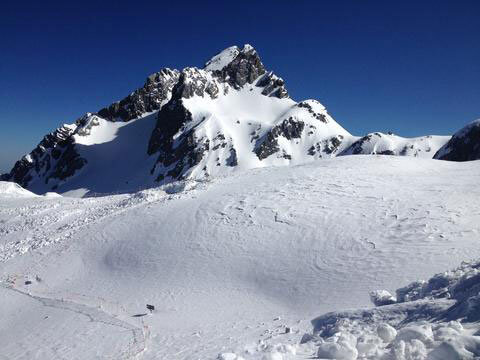
After breakfast, we took them to Jade Mountain (approximately 4400 meters high). Some of students had never been this high before but they overcame the change in altitude and enjoyed the sights of Jade Mountain. In the afternoon, they drove to Shangri-la, with a stop at Tiger Leaping Gorge along the way.
Still being business students, they visited Nixi Pottery to learn how these locally made products are bringing benefit to local people through enhancing the tourism industry. The students not only learned about the pottery business, but also had a little experiential learning as they tried their hands at making pottery cups.

In the afternoon, they visited Songzan Lugu Lodge and had another business visit there. The general manager (ZhangLing) of the lodge shared Songzan’s business development to date, and their vision for the future. She also answered the student’s questions about HR and marketing in their local business setting. After a big day of presentations and discussions, the students enjoyed dinner at this wonderful lodge to see a little of this business in action!

In the morning, the students visited Benzilan Wood Bowls production sites, followed by a visit to the Shangri-La Beer factory. Students had a tour of the beer factory and got to see some of the steps it takes to produce food products in a factory setting. The founder of Shangri-la Beer shared his story about being an entrepreneur, some of the business challenges, and plans for future. Students were particularly interested in the sales and marketing this company has done to become a nationally recognized product.

In the morning, they visited Arokhampa Boutique Hotel. The founder Tapa shared how he started the business, and how he’s working to introduce and preserve Tibetan culture through the hotel industry. Both he and the students appreciated discussing HR, staff management, and marketing topics, etc. The group enjoyed lunch at Arokahampa, to further see the culture and service of this boutique hotel.

After lunch, they visited a handicraft shop managed by Tashi Reqing. Tashi has been working in the handicraft field for a long time, so he was a great local professional to ask due to his history in the local business setting. He walked the group through how his work and his team benefited the local Tibetan community through their business ventures.
Overall, we only got to show this group from Canada around for a week before they continued on to other parts of China, but we enjoyed every minute that we got to spend with them. There’s something really exciting about watching others learn – particularly when it’s in a setting we’ve come to know well. Extravagant Yak has known for quite some time that there are some Tibetan small business gems that are flourishing in the communities around us, so to have a group of business professors and students come here to see, encourage, and learn from our Tibetan neighbors was a joy!
Curious about Student trips and Travel study programs? Get a taste of what we have to offer and email us your questions.
Something is wrong. I can tell by the flight arrival board that my photo tour group has arrived long enough for them to go through customs and get their bags. By now they could have even stopped for a leisurely meal. I’m standing on tip toes and craning my neck just in case they didn’t go to the other exit gate.
Then I see him by the baggage carousels—Ron Nickel, the Digital Media instructor for Prairie College in Alberta, Canada, waves his hands. He approaches. The rope barricades keep about 40 feet between us. Ron yells, “our bags didn’t make it.” (Not a great way to start a tour in Tibet). We fill out forms and cross fingers (that the bags arrive before we leave Chengdu in two days). Then, our fourth annual Prairie Digital Media Eastern Tibet Photo Tour commences as we head to the hotel. Despite missing their bags because of a too-tight connection in Beijing, the group is in high spirits.
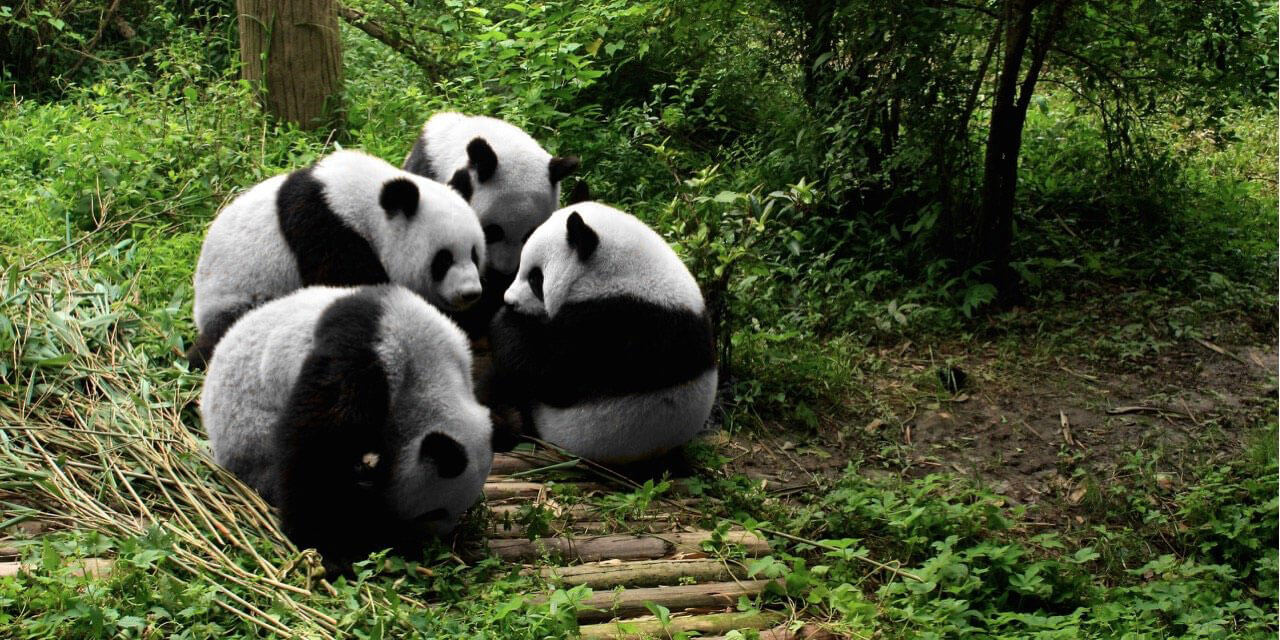
The hotel is warm, welcoming and serves an amazing international buffet breakfast. So, after a good sleep and hot shower, the group is cheerful and excited for the Giant Panda Research Breeding Center tour scheduled for the morning. Throughout the day our operations manager calls the airport every couple of hours. Still no bags. We plan to leave the next morning for Kangding.
We hit Jinli Walking Street for hotpot and Sichuan Opera dinner-theater style. Even after seeing it dozens of times, the face changing performance amazes and bewilders me. Just like that, we are kids again at a magic show. Delighted and slightly overwhelmed by the sensory overload of the Jinli commercial atmosphere, we weave through tens of thousands of tourists who have descended upon Jinli for the May 1st holiday. My phone rings. The bags are at the hotel. Relief.
The next morning, we load the van and sing “The Greatest Showman” tunes on the way out of Chengdu. Spirits are very high. A Million Dreams and expectations flutter through our imaginations of what we may encounter when we reach Eastern Tibet.
Thanks to a newly constructed highway from Ya’an to Kangding, our driving time is kept to under four hours. This is Ron Nickel’s fourth trip and he and I are the only ones who know how fast four hours is. Four years ago, the same leg took 13 hours due to a landslide and traffic accident. The song Come Alive keeps us dreaming with our eyes wide open as we pull into Kangding.
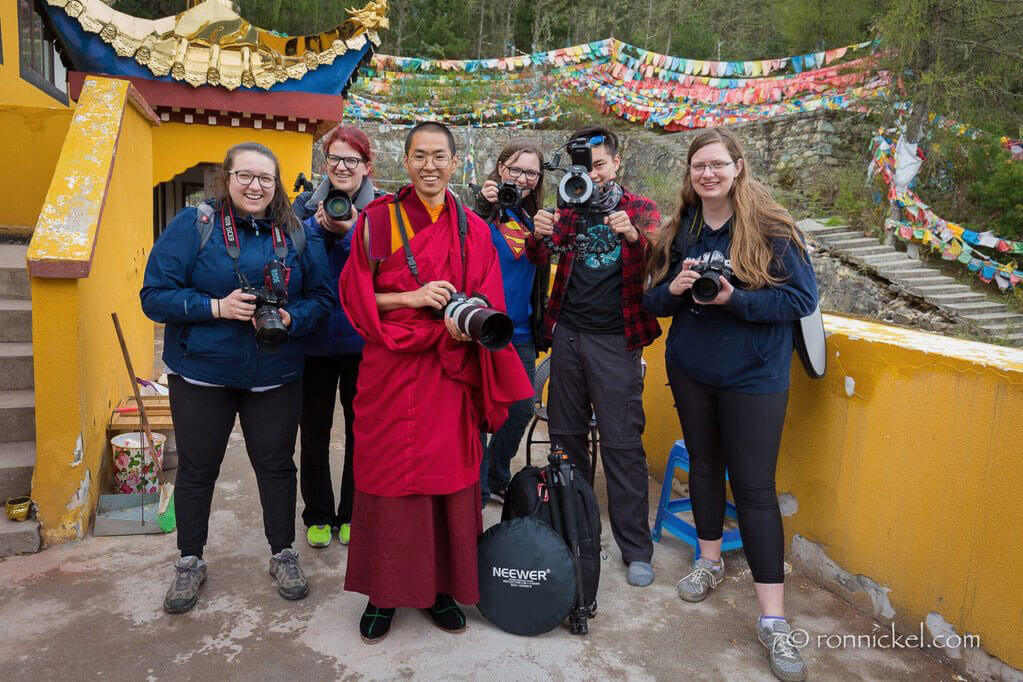
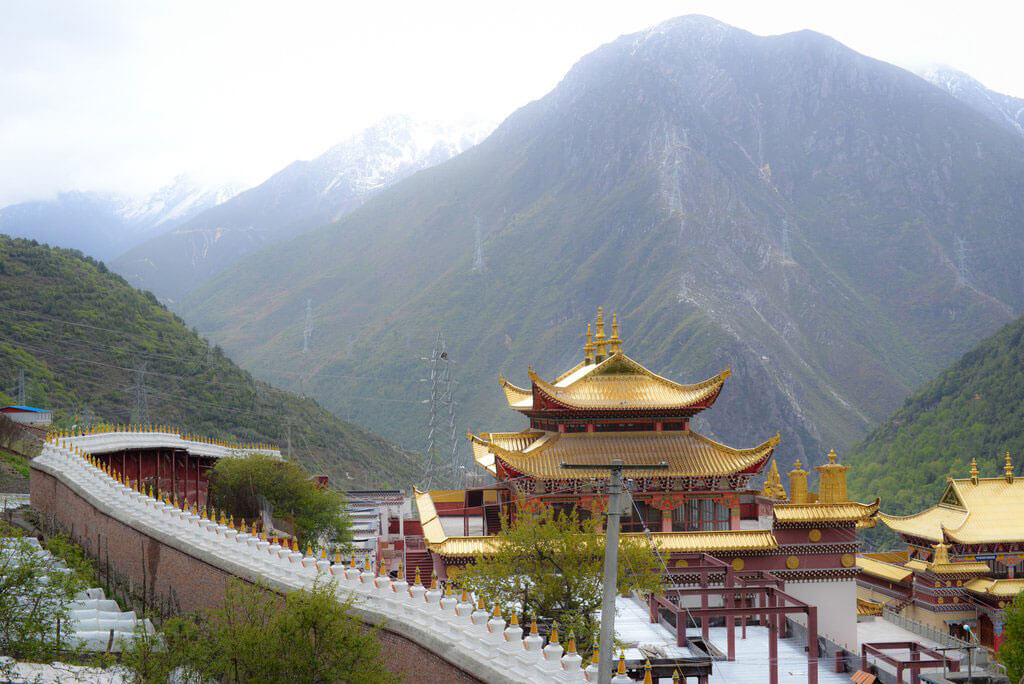
The next day we hear there is a monk who has recently graduated from Harvard and is keeping the temple on top of Paoma Mountain. Through Kris, our friend at Zhilam hostel, we schedule a time to interview him, but the climb up the mountain stairway proves that most of us do not yet have our “altitude legs” under us.
We arrive over an hour late to our appointment. But Shamba is still smiling as we arrive haggard and catching our breath. Shamba is a handsome man in his late twenties and graciously forgives our tardiness. He gives us a brief tour of the temple and then takes us up to the roof for a breathtaking view of Kangding. It feels like we’re Walking a Tightrope. Shamba turns out to be an avid photographer. Ron and he geek out for a bit on camera bodies and lenses and then he sits for a quick photo shoot.
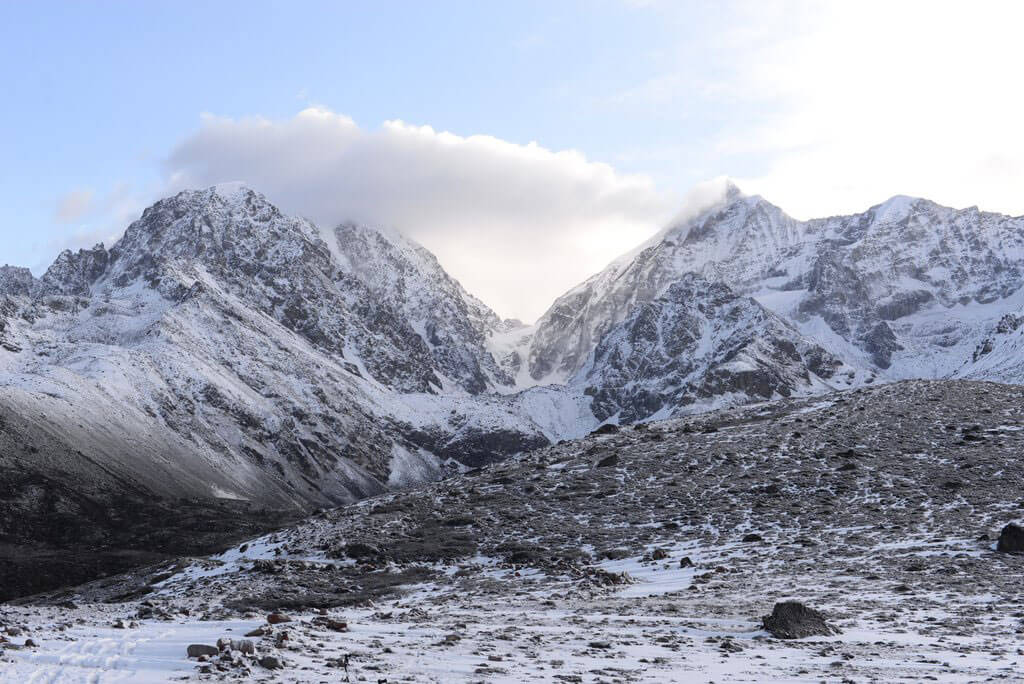
The next morning we rise early (4:30am!) to drive up to the Yajiagen pass for a sunrise shoot of the mountains. Negotiating lack of sleep for the promise of great time-lapses in the cold feels a bit like getting the short end in The Other Side, but proves to be totally worth it! That afternoon, the staff at Zhilam hostel help us arrange a couple of Tibetan models to sit for a photo shoot.
We find a beautiful, old, abandoned, broken-down house that works really well for a backdrop. It starts to rain just as we get set up, so we quickly run down the hill to a new Tibetan guesthouse below the monastery. The glassed-in atrium is a perfect plan B.
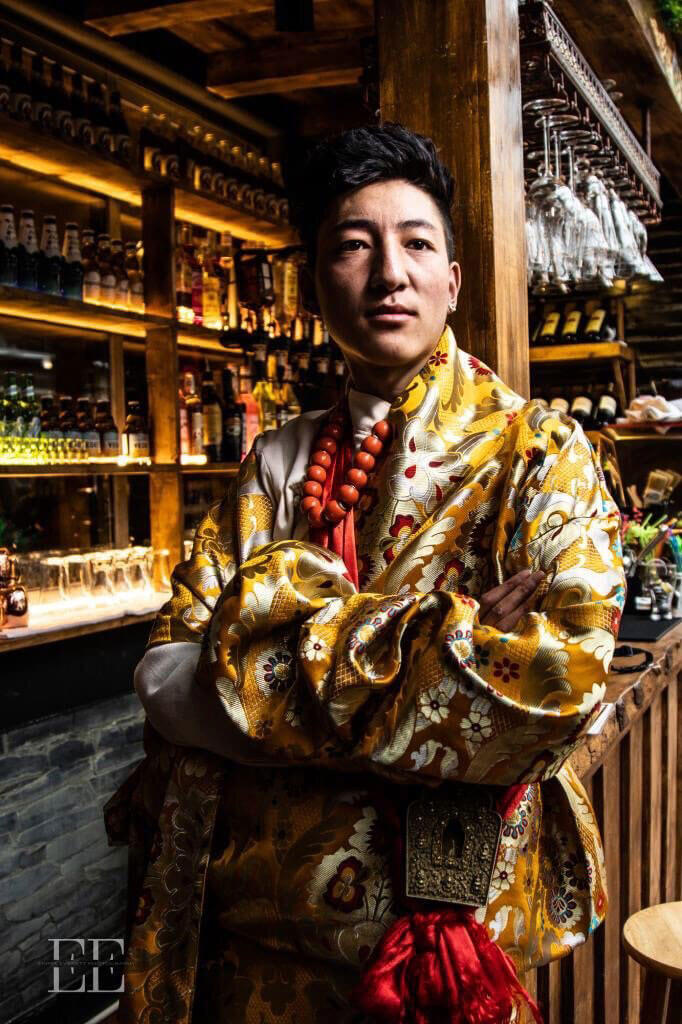
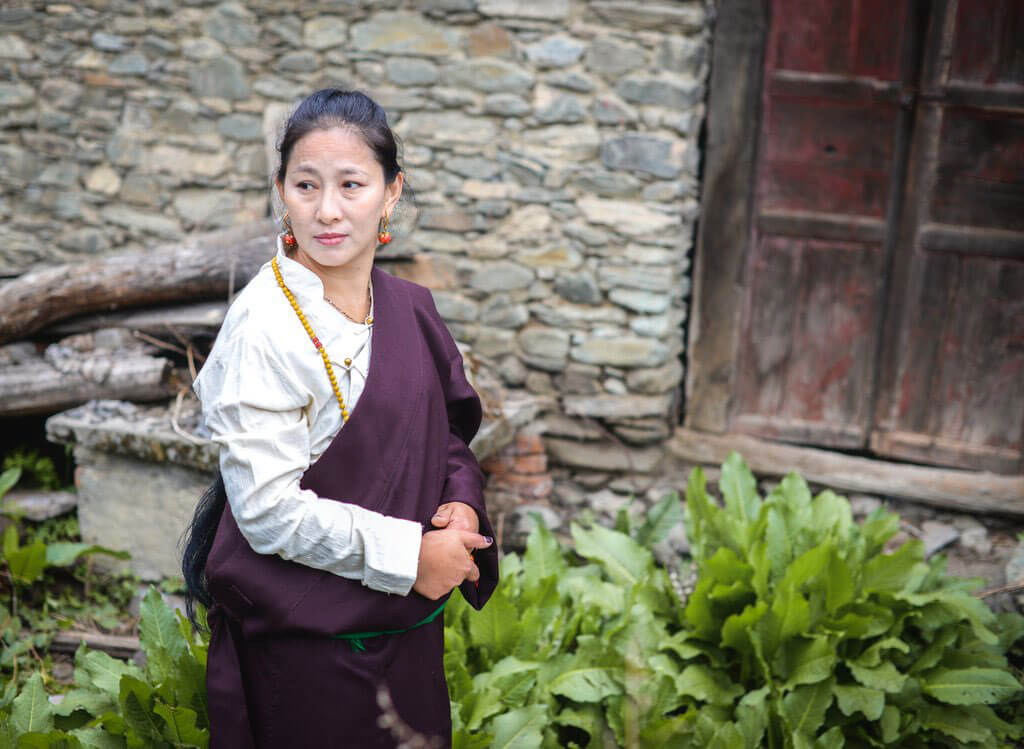
After two days in Kangding, feeling full and acclimated, we drive out to Tagong in search of our next adventure. The pass takes us up past 4200 meters. Come Alive beckons us to reach for the sky and to keep dreaming with our eyes wide open. With our eyes wide open, we see Mt. Gongga on the horizon. The peak emerges for about 40 seconds from surrounding thunderclouds—enough time to snap a few pixelated iphone shots.
We zoom past an old man on the side of the road and Ron yells, “Stop!…Turn around. I want to talk to that man.” I obey and somehow turn my 8-passenger van around on the narrow road with ditches on both sides. The man is a 67-year-old Khamba nomad and is selling yoghurt.
I translate for Ron, “These photographers would like to pay you to take your photo. Is that ok?” The man smiled an enthusiastic yes and quickly shuffled into his little hut. “Where is he going?” Ron asks. “I don’t know,” I reply. After a few moments, the old man comes out wearing his sheep wool Tibetan coat. Now Ron is smiling, “Perfect.”
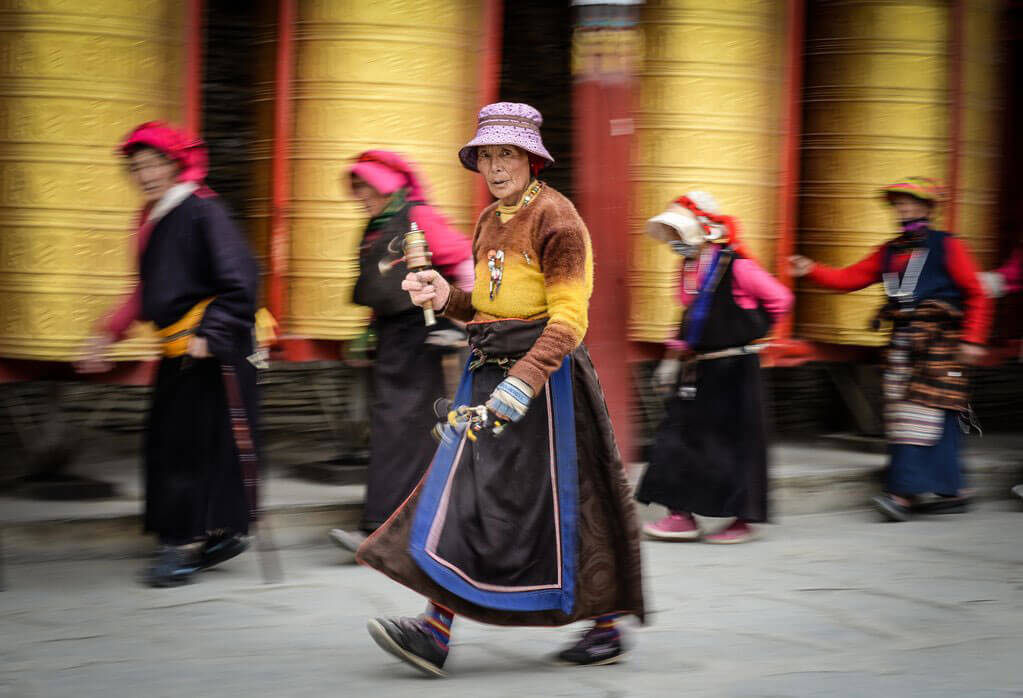
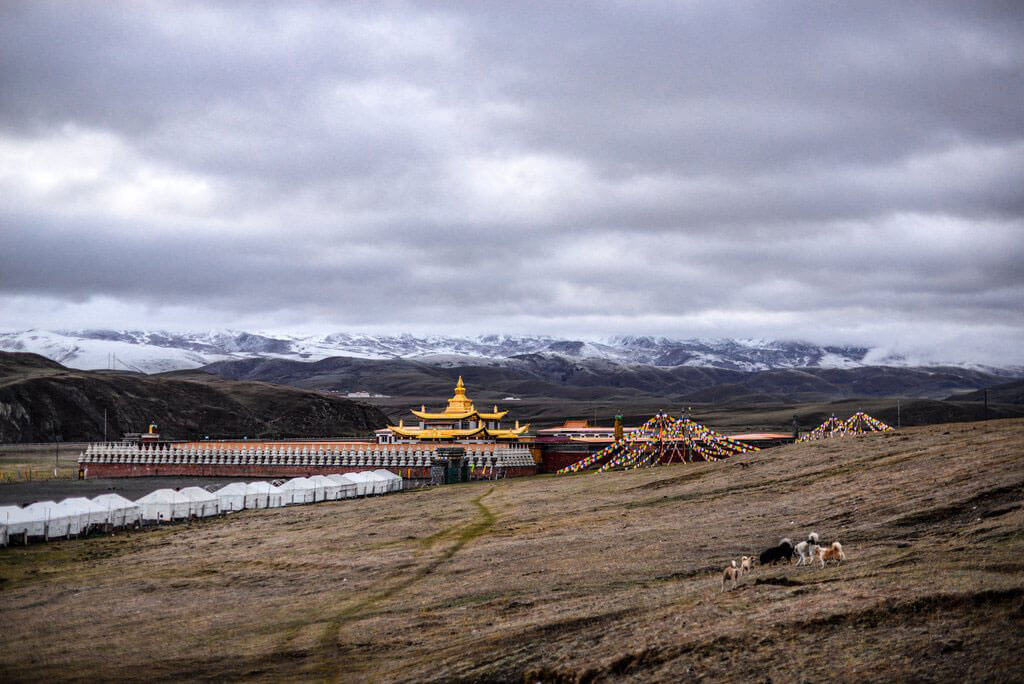
The next morning, we rise stupid-early, to catch the sunrise over the golden-roofed temple in Tagong. Somehow, Never Enough echoes through my head as we hike up the Tagong hill in the brisk cold of the dark morning: “towers of gold are still too little…”
Khamba Cafe proves to be an excellent spot for a western breakfast. Orders of fried eggs sunny-side-up, toast, bacon, and crepes show up on our table accompanied by steaming cups of hot tea and coffee. A most welcome breakfast. We are all sunny-side-up now.
On our way out of town, we stop by the Black Stone Forest National Park. The park has only been open for one year. The wooden bridge walkways still appear new and carry us right into the heart of the Emyn-Muil-esque forest of purply rock outcroppings. Every angle is a beautiful photo op.
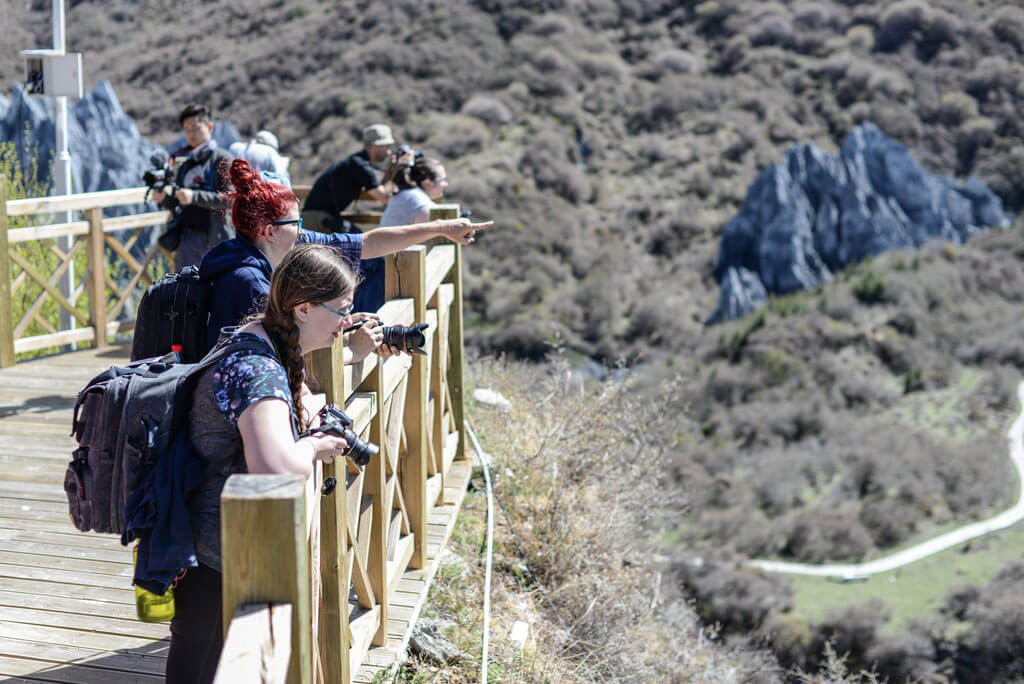
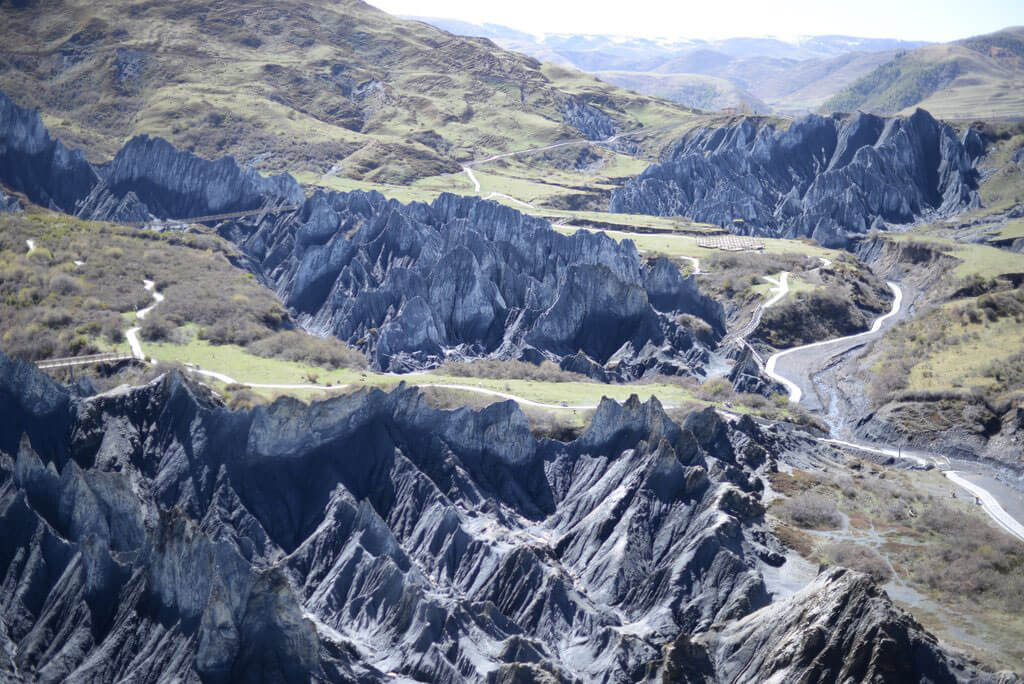
We hop back in the van and continue toward Danba. About an hour outside of Danba, we stop beside a swimming hole. We discovered the spot last year and Ron says it was one of his highlights. He came prepared this time with a bathing suit.
Nervous about undressing my less-than-chiseled frame in front of others, I remember the lines to This is Me, “I am brave, I am bruised [or chubby around the waist], this is who I’m meant to be,” and finally work up the courage to jump into the still-thawing snow melt…and then immediately yelp like a six-year-old girl as I clumsily scramble out of the water before hypothermia sets in. The shock and the rush of blood to my extremities gives me a sense of relaxed euphoria. We dry off, hop back in the van, and play Come Alive again. Totally worth it.
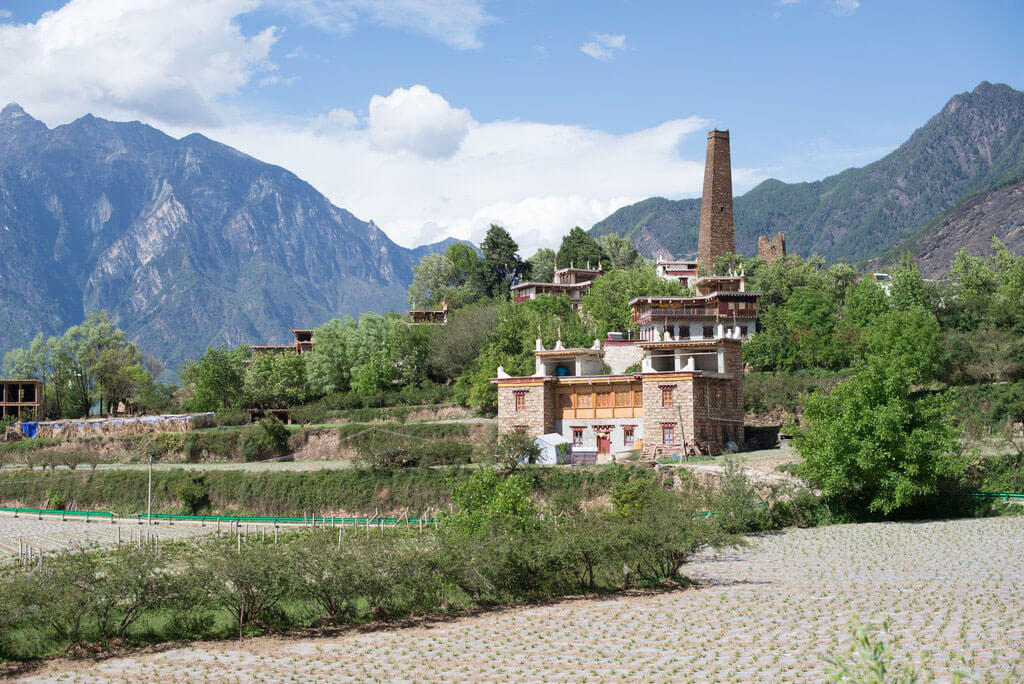
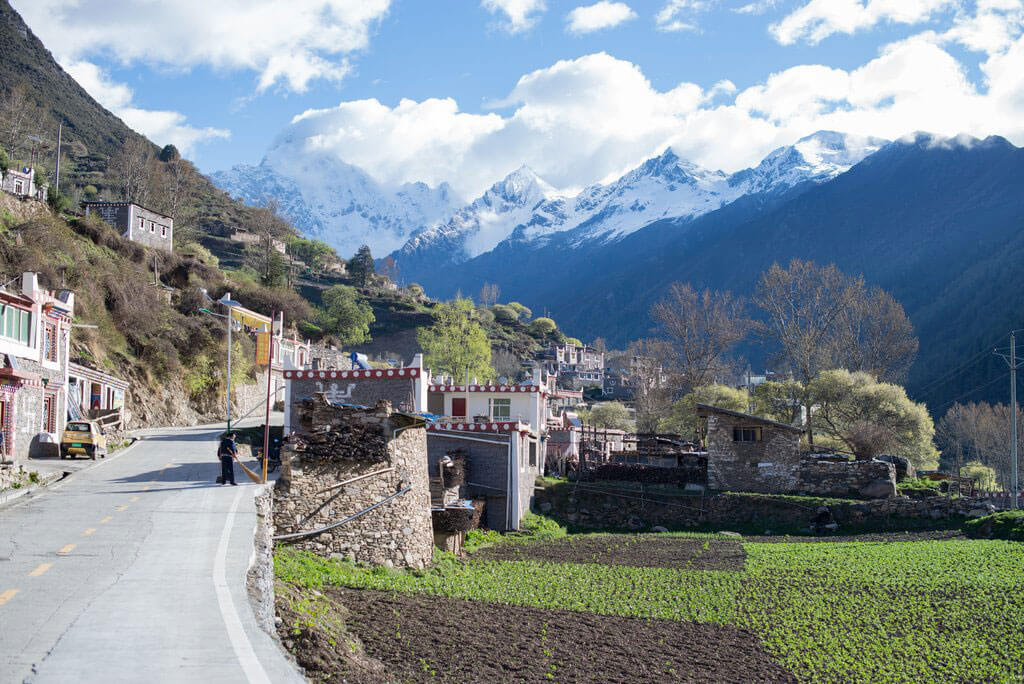
Danba is a little slice of heaven. It’s the good life. For a farmland town perched high above a river valley, the view is heavenly; the people, hearty; the food, healthy. Ageh, our guesthouse proprietor assures us there are no GMO’s, no harmful pesticides and no hormones given to animals. We believe him because the food leaves you feeling refreshed and satisfied with no sluggishness afterwards.
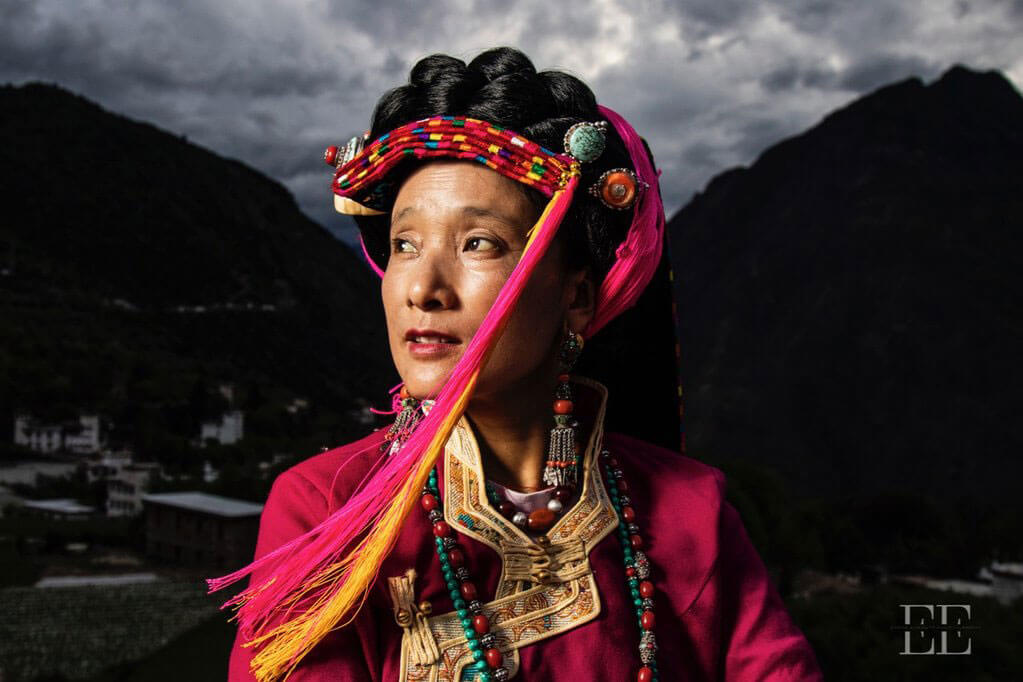
In the course of a meal, our appetites get recalibrated. Who knew that a day in Danba would redefine “food” for us. Ageh’s sister-in-law agrees to be a model for a photo shoot at dusk on the rooftop. The photographers each have their turn shooting and holding flash umbrellas.
Our last full day is spent in Four Sisters Mountain Town in a newly developed boutique tourist section. Newly renovated boutique guesthouses, hostels and restaurants line the streets—all with a wood-log facade that reminds us vaguely of Whistler ski resort town in British Columbia. It’s cute. And still in development.
We catch private vehicles up to a ridge where you can see every snow mountain in a hundred miles in every direction. Some of us hike up to 4,500 meters for an even better view. It is both literally and figuratively the summit of our amazing ten-day journey through Eastern Tibet.
As we drive back to Chengdu, we sing From Now On, “And we will come back home. We will come back home…Home Again!” The four-hour drive goes quickly. We reward ourselves with a hefty meal from the Blue Frog in Taikooli. And, yes…it gives us all a food coma and fogs our memories of the heavenly manna from Danba.
After a light lunch the next day, we head to the airport, say our farewells and our see-you-next-years. The Extravagant Yak-hosted Prairie Digital Media photography practicum hits another home run and looks forward to doing it again in 2019.
If you’re interested in joining an Extravagant Yak photo tour, exploring any area of Tibet, or just singing The Greatest Showman on repeat on beautiful mountain roads, contact us at info@extravagantyak.com.
Want to explore these areas yourself? Drop us a line at info@extravagantyak.com.
This is our 4th year working with Leman International School (LIS). At the beginning of April, seven students, three teachers, and two guides from Extravagant Yak took an adventure to an area in Eastern Tibet. Although the tour was short with a few challenges, they were willing participants and found ways to give back to their host communities through partnership with a local school and a few small businesses.
This was the hardest day as it was a long drive to Leman’s destination (Kangding) and the road was quite challenging. Even with this, the students enjoyed getting to see the mountains as they drove by, and what school trip wouldn’t be complete without a bus ride to provide plenty of time for group bonding?
In the evening, Leman joined some of the local people at the square to watch and learn traditional Tibetan circle dancing. Some of the students even gave it a shot, so hopefully they picked up some new moves!
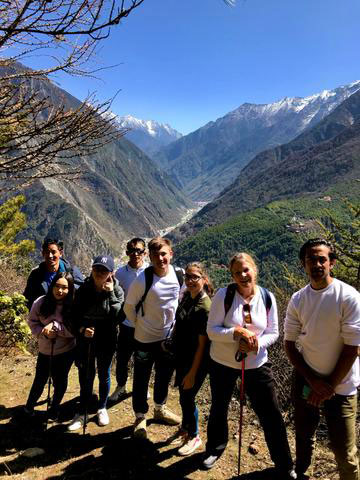
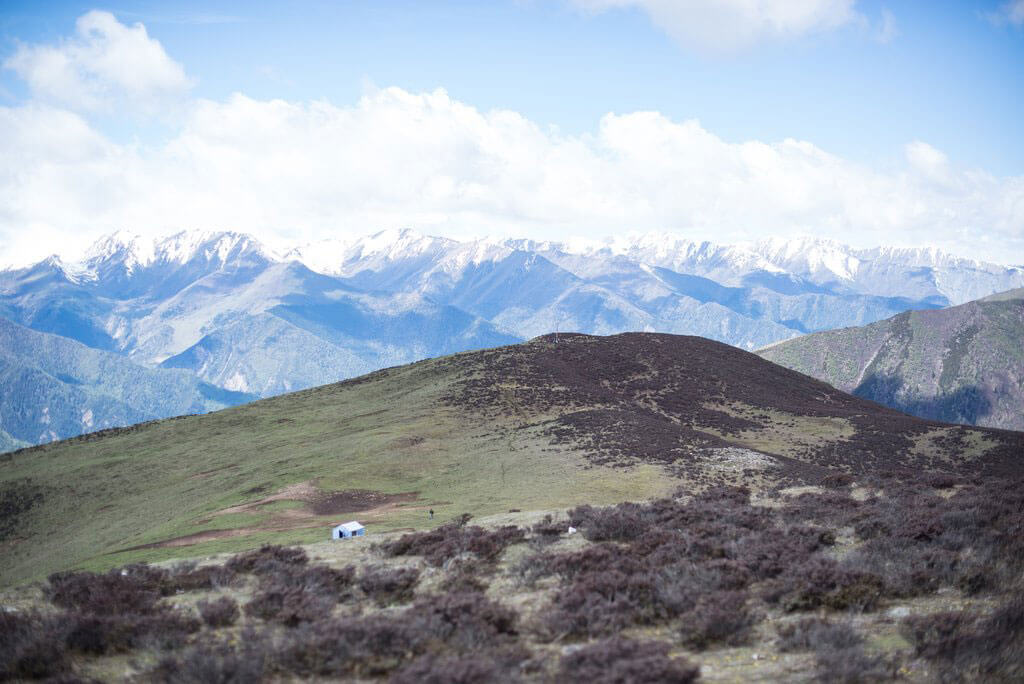
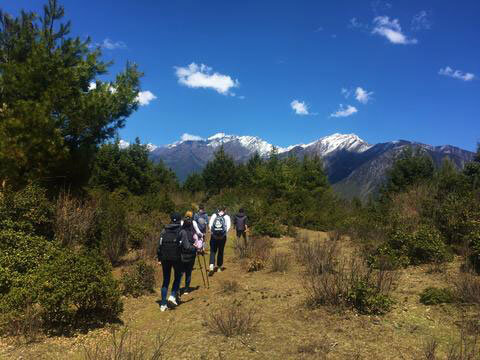
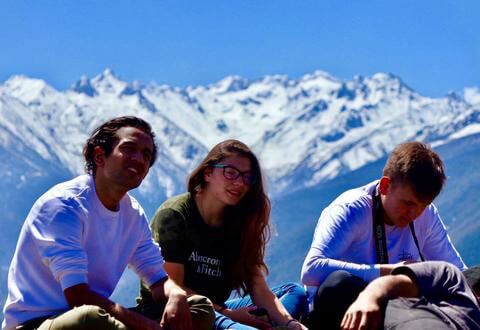
After breakfast, the group packed a picnic lunch and started on a hike to the top of Kangding grassland where nomadic families herd yaks during the summertime. This hike takes two and a half hours, and the grassland plateau sits at 3,200 meters high.
While it is a decent hike for participants who aren’t used to hiking, the students were good sports about the adventure, and everyone made it to the top still smiling. The group enjoyed the gorgeous views from the grasslands as they got to marvel at the surrounding snowy mountains, colourful Tibetan prayer flags, and all the blue sky (something you don’t always get in the city).
In the afternoon, the group visited two local Tibetan restaurants to interview the owners as the students will be writing articles about these small businesses (to be posted on the www.Tibetpedia.com website in the future). For dinner, they enjoyed local Tibetan food, particularly as they got to try yak meat and Tibetan momos.
As the group left Kangding, they purchased some food for the local migrant school they would be visiting in Tagong and set off for the grasslands. The journey may have felt like the bus kept going up, up, and up because in order to get to Tagong, they went through Zheduo Mountain Pass which sits at an elevation of 4,200 meters. The students loved the beauty of the mountains and were captivated by the villages of nomadic families.
Continuing their exploration of Tibetan small businesses, the group stopped in Xinduqiao to visit a barley beer factory which is run by a Tibetan nomad. While at the factory, they learnt about the process of brewing, and the time and effort it has taken to start a new business and build the processing plant as they have. Two students interviewed the owner to prepare an article for Tibetpedia.
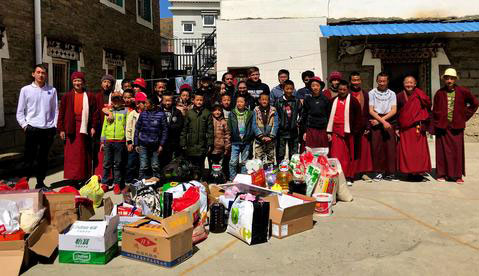
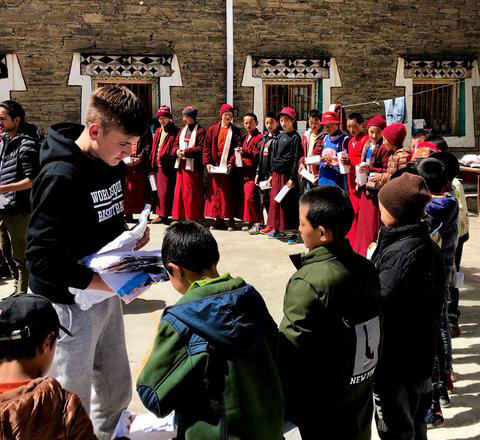
It was late afternoon when the group arrived in Tagong, and their first stop was the local school. Leman brought donations in the form of food and warm clothing for Tagong’s local school.
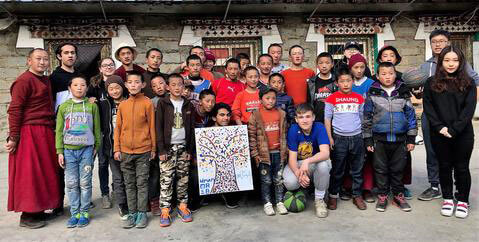
The local students and teachers were grateful for Leman’s generosity, and the students from both schools spent the rest of the afternoon painting, playing basketball, and generally spending some quality time with one another. These students might come from different backgrounds, but it’s amazing how much people (or children) can have in common. It was a busy day, but an overall enjoyable one for all involved.
The group spent the night at a beautiful homestay in a mountain valley where they star watched and enjoyed the amazing night sky! The students interviewed the owner about the homestay and the horseback trekking business.
One their last day, the group visited the Tagong Monastery that was originally built in 1644. After experiencing the amazing buildings and grounds, and hearing the history from our guides, the group headed to the airport which is the third-highest in the world.
The group took the short, 45-minute flight, back home to Chengdu. While they may have been sad to leave this place of beauty, and even more beautiful people, we think the students will be talking about this trip for quite some time.
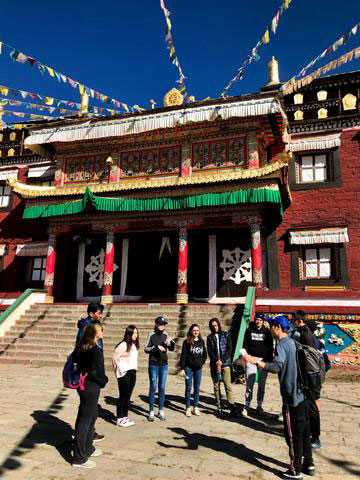
We appreciate Leman International School and the partnership we have continued to have with them. Education is important to us as a company, and no matter the age of the guests we want to immerse them into the Tibetan culture so that they may take away an experience of a lifetime. We appreciate it all the more when our guests are young because we know they will carry the experience with them for a very long time!
To learn more about Extravagant Yak Student Trips click here or email us at info@extravagantyak.com for more info.
Training, training and more training. Extravagant Yak has been in a season of saw sharpening this month. We all passed our AHA First Aid and CPR certification. We are also now qualified to facilitate the Duke of Edinburgh award for the British family of schools. And we also hosted our own tour guide training for our growing network of Tibet tour guides.
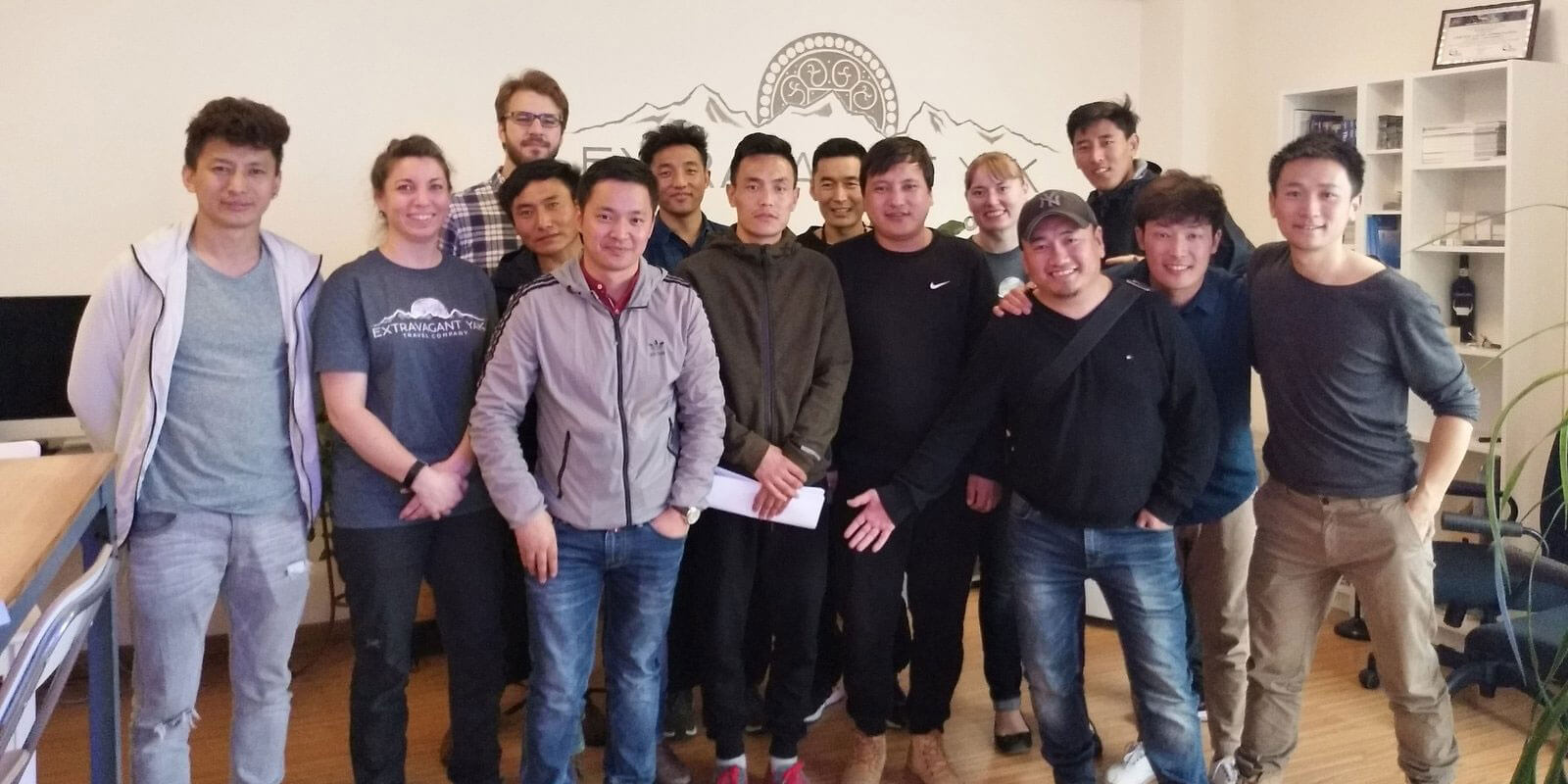
On the 26th of February, we had the privilege of having two instructors from the American Heart Association (AHA) join us in the office for the day to certify our staff and guides in their Heartsaver® First Aid CPR AED course. The office was a hive of activity between the human bodies and the dummies spread around the room as we practiced our skills of what we could do if faced with a life-threatening emergency.
Covering a variety of situations from sprained ankles, choking dinner guests, or a heart attack on the sidewalk, we watched demonstrations, practiced hands-on skills, and discussed some of the best responses in some very unpredictable situations.
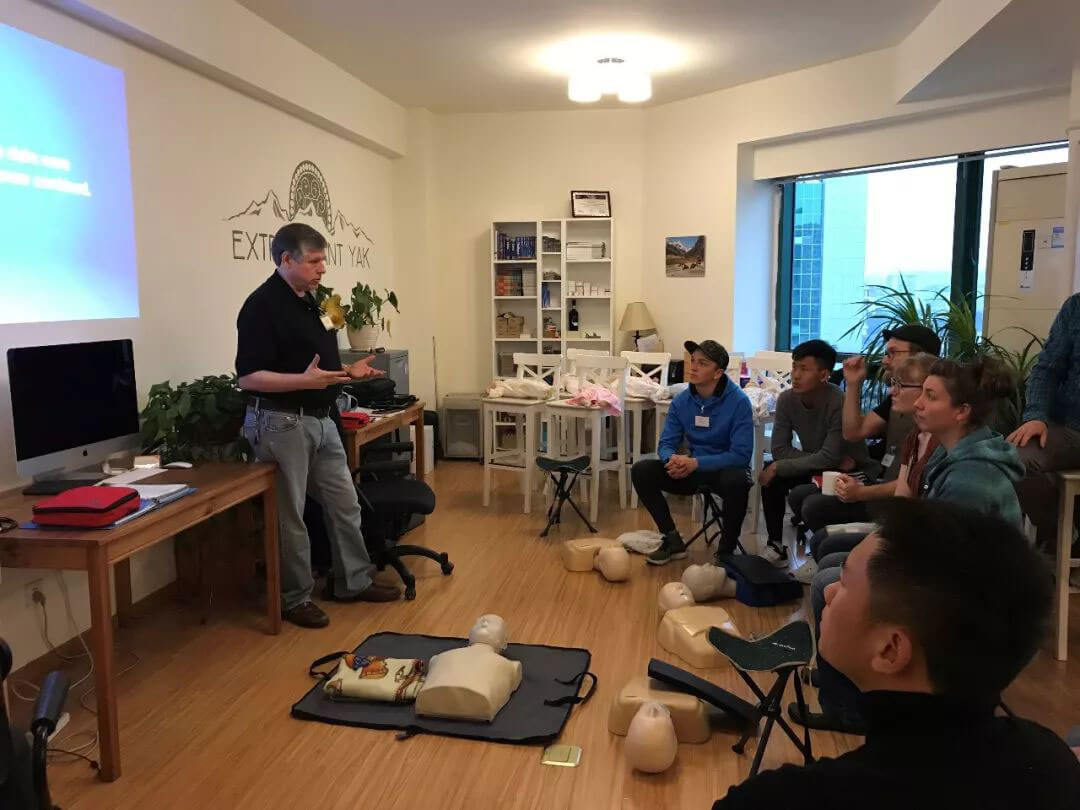
The room was alive with voices brainstorming, directing mock emergency situations, and asking a lot of what-if questions to be better prepared for contingencies. After ten hours of training and exerting more physical effort than we bargained for, we were exhausted and thankful. We left the day feeling like we had a better grasp on how to handle the unexpected. Better equipped to potentially save lives, including our own.
Since the training, Abu (our Director of Operations) has been busy researching and organizing additional updates to our First Aid kits as recommended by our AHA instructors. Beyond the obvious training we received, it was also great to see the guides and office staff interacting with one another as communication and comradeship grew among everyone. Last week, someone spilled their water and another yelled, “Is the scene safe?” The repetition built into the training really has a way of sinking in.
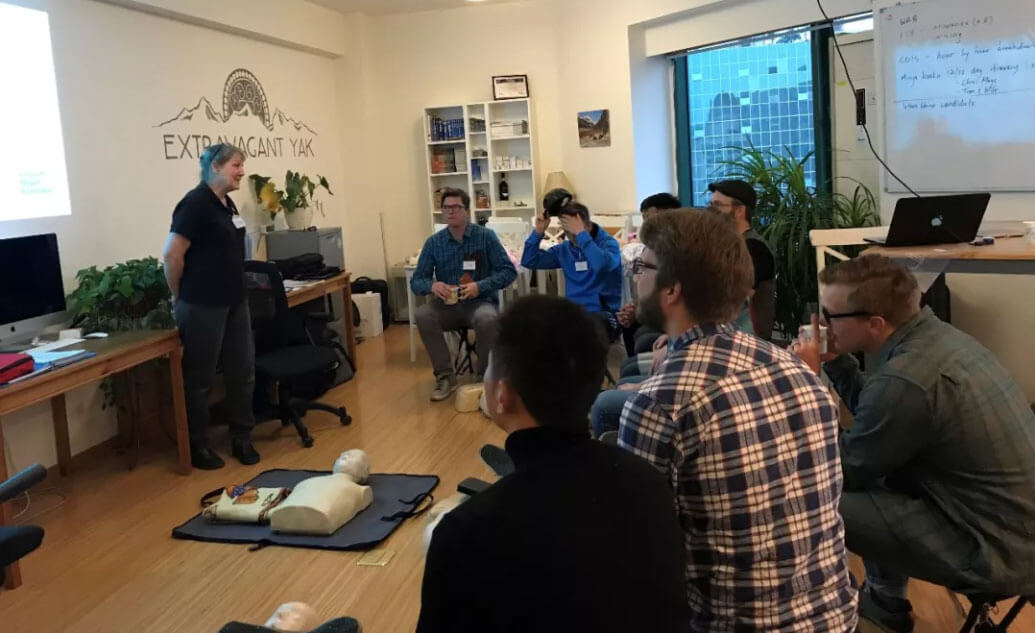
On March 10th and 11th, our staff went to Shanghai WISS International School to attend a Supervisor and Assessor Training Workshop organized by The Duke of Edinburgh's International Award Foundation. It was a compact weekend with excellent trainers. As an external activity provider, we learned how to assist our students the best while they are work to earn their Duke of Edinburgh award.
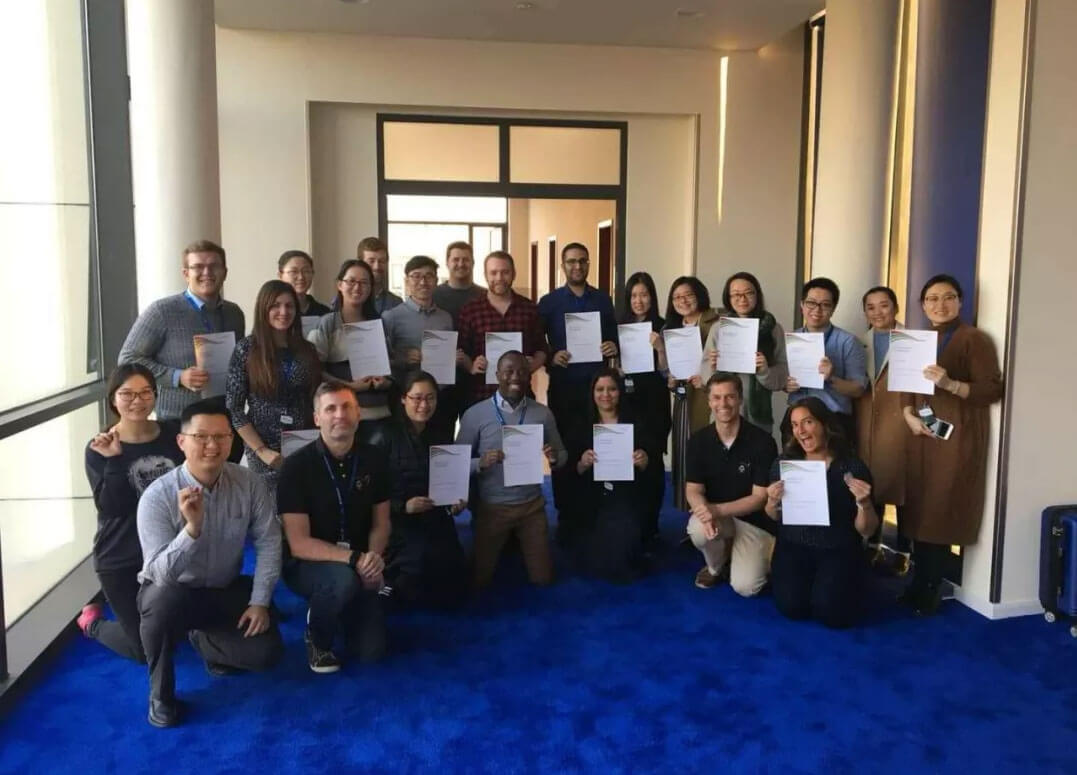
On March 23rd, we organized a Tour Guide Training for our Tibet tour guides. Ten Tibetan guides and two Western guides participated in our training. The training focused on improving customer service by becoming more familiar with our company values, culture, expectations, and policies.
In the morning, we touched on these important topics: client orientation, handling client complaints, expectations of EY guides, emergency procedures and accident report forms. These brought out some great stories and discussions among the participants. The more experienced guides had a lot of personal experience to share with those newer to the industry. All found these discussions very practical and helpful.
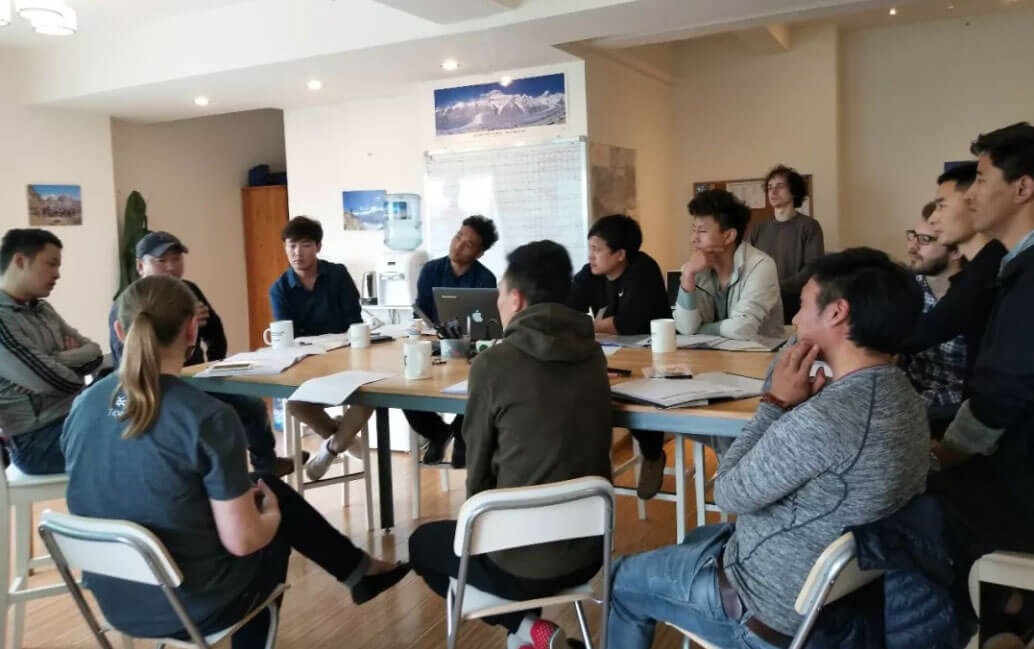
In the afternoon, we talked about risk assessment, child protection policy, student expectations, anti-bullying policy, and trekking safety information. We have a growing number of schools that are sending student trips with us, so we spent a lot of time focusing on guiding student trips. Overall, it was a great training and learning day for both EY staff and guides. All of the guides gave great feedback and shared how helpful the training was. They also all expressed great interest in working even more closely with us in the future.
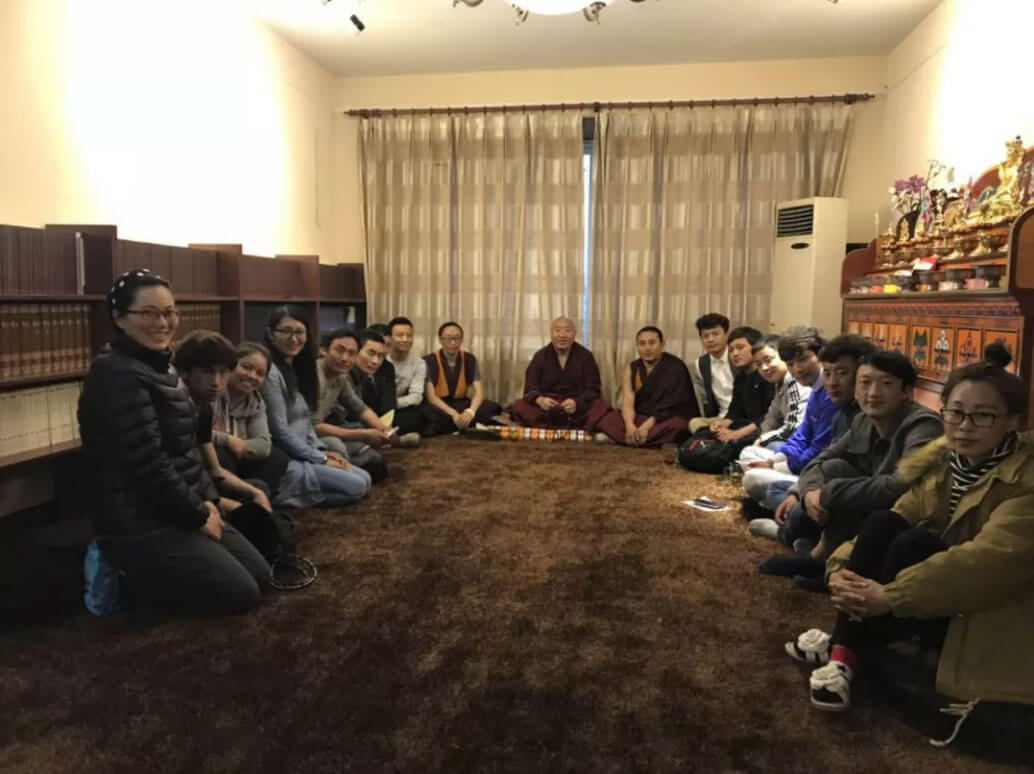
On March 24th, our guides had a workshop with a Buddhist Master on Tibetan culture, history, and Buddhism. Educating clients is one of the biggest challenges that guides face. Therefore, guides asked a lot of questions about Tibetan culture and history and how best to introduce it to others. It was a very fulfilling day. With the training and workshop, our guides feel well-equipped to start a new season of tour guiding in 2018.
Do you have questions about travelling in Tibet? Contact us for answers and see how we make your dream trip both safe and rewarding.
We ran our third annual photography workshop tour in Tibet with Prairie Digital Media students from Canada and the United States. This year we used our Tibet Wild Frontier itinerary through Eastern Tibet and it was a huge success.
The tour commenced in Chengdu, where we visited the Pandas, ate hot pot, and walked with the crowds down the “ancient street” at Jinli. We then drove to Kangding, where we acclimatized, had a snow mountain sunrise shoot at Yajiagen Mountain Pass, and a meandering hike on Paoma Mountain. After two full days exploring the beauty of Kangding, we departed for Tagong.
We then took the scenic way through Xinduqiao, stopping every five minutes (a slight exaggeration) for photo ops. The next morning, we beat the sun to the top of the hill to capture a spectacular dawn over Yala Mountain and the monastery. That afternoon we explored the Anyi Gompa (nunnery) and nearby monastery where we were surprised to discover a large colony of rabbits on the monastery grounds (literally hundreds). We made our way back to town and enjoyed an incredible meal at the Khampa Cafe. We departed early the next morning for Danba via Bamei.
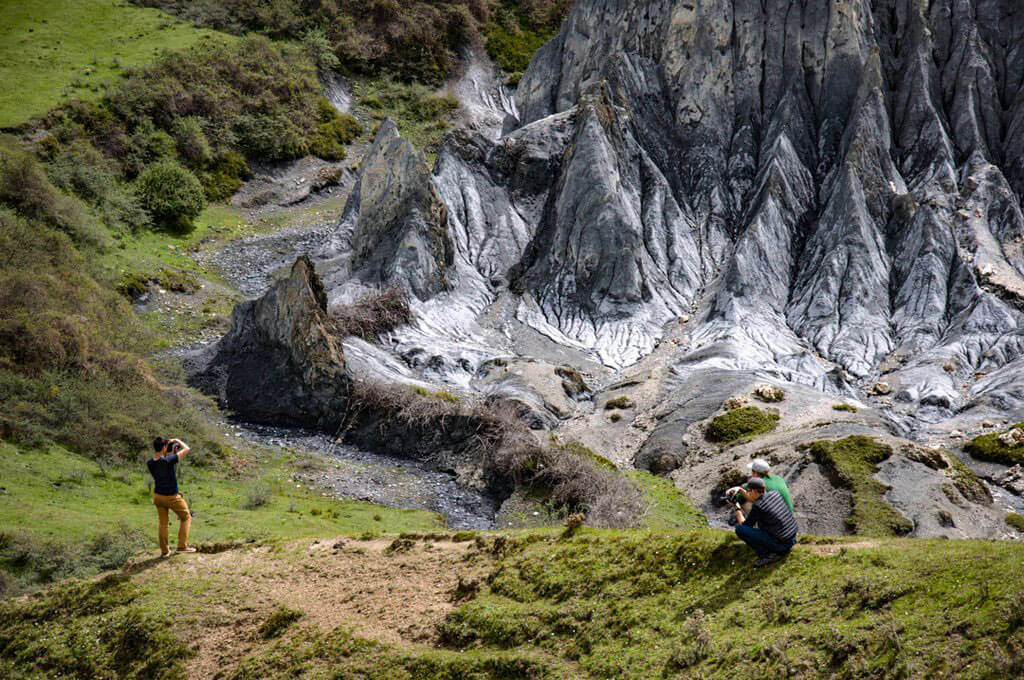
Just before arriving at Bamei, we stopped at the newly opened National Black Stone Forest Park. It was Extravagant Yak’s first time at the park, but we are always interested in finding new places for our guests to explore. The raised walkways, stunning rock projections and the scenery blew us away. We had planned to spend an hour or so there, but it quickly stretched to three.
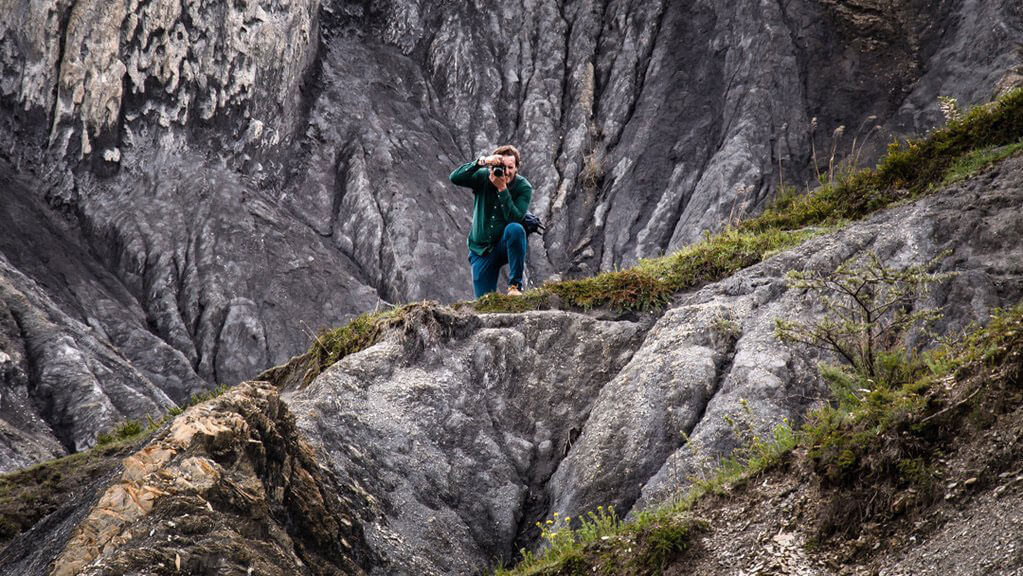
After a late lunch in Bamei and some more photo ops in town, we veered off of the 317 highway toward Danba. The weather that day was superbly favourable for epic landscape shots as we climbed the pass that drops you on the north face of Yala. The stretch of road between Bamei and Danba is my favourite in all of China.
On that three-and-a-half-hour ride, you get a bit of everything: vast plateau valleys, snow mountains, and a steep, winding river valley that eventually opens up into the green valley towns of the Danba area. I can’t think of another road in the world that is as enjoyable to drive. One of the photographers pined after his motorcycle and hoped to one day return to do a motorbike tour through the area.
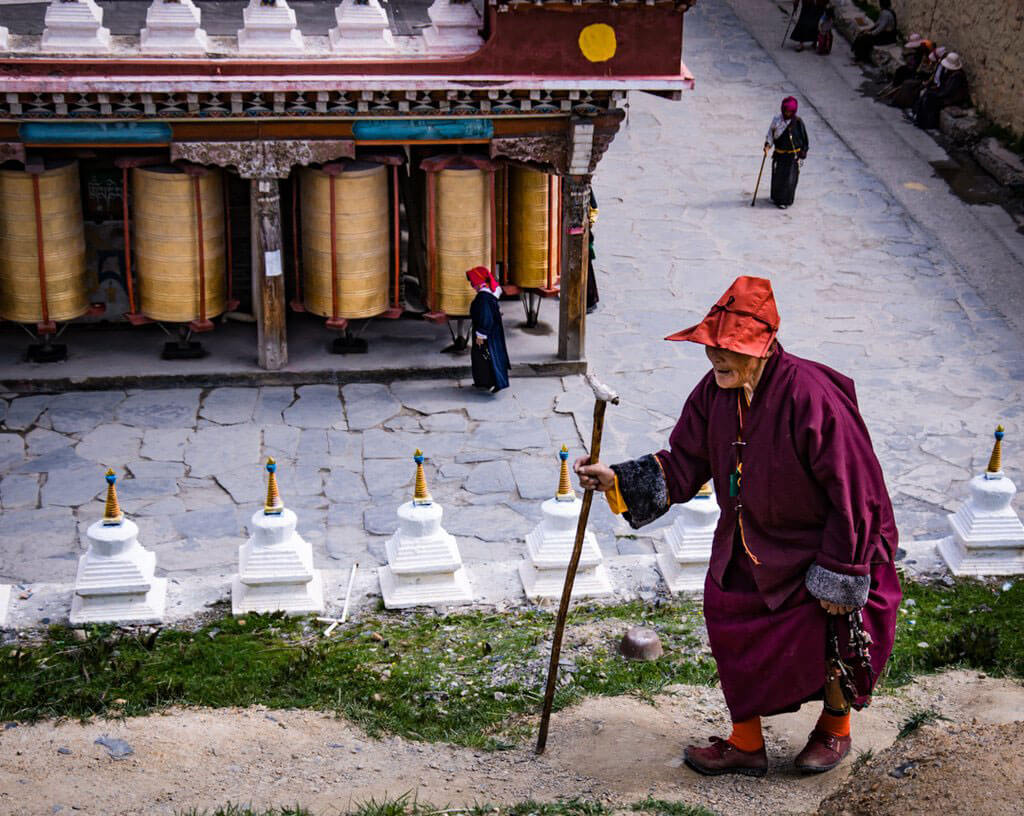
After pulling through Danba town, we crossed a tall, arched bridge and wound our way up a newly paved mountain road to Zhonglu village. Perched high up on the side of a mountain, the village is host to several of the ancient towers that pepper the valley. We enjoyed fresh, organic, home-grown, home-cooked meals at our guesthouse.
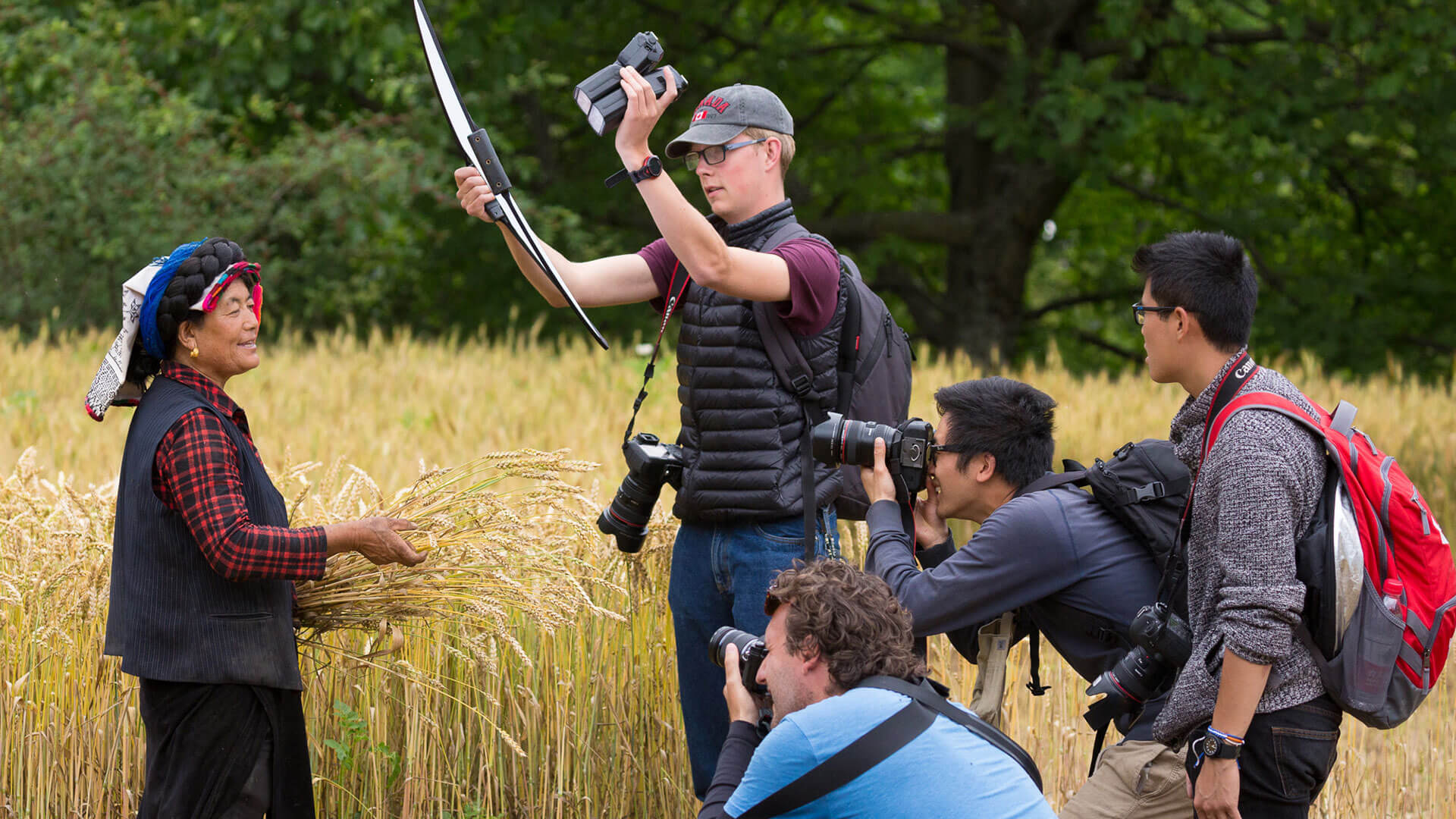
A famous model from the village was willing to “sit” for a couple of hours of shooting. The photographers each took twenty minutes with her to create their desired shots. After two nights in Danba, we stayed a night in Four Sisters Mountain Village and caught a sunrise shoot of the mountain from the lookout.
The drive back to Chengdu from Four Sisters Mountain was incredibly beautiful, until close to Dujiangyan, where the greens and blues from the mountain passes faded into the different shades of gray of the urban lowlands. Yet, Dujiangyan also had its own mystique. We visited the Ancient Irrigation System in town (after Apple Maps led us on a wild goose chase) and enjoyed the ancient Chinese architecture, which somehow goes well with the misty fog of the Qingcheng Mountain river basin.
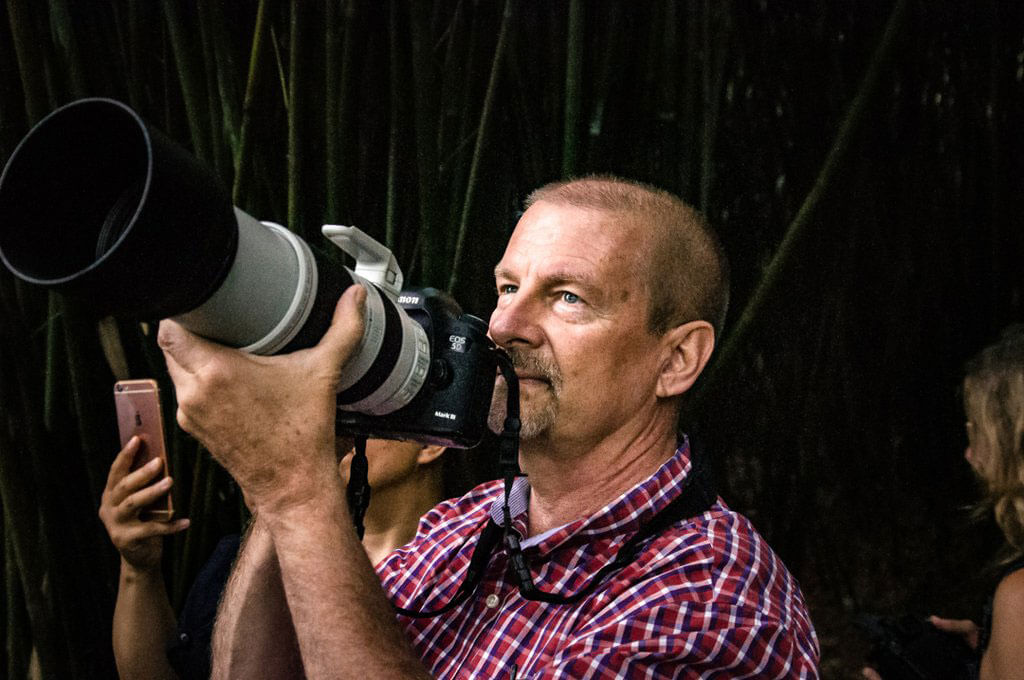
We arrived back in Chengdu still with enough time for everyone to do their souvenir shopping and a couple more photoshoots. I was especially blessed by this group, as their tip to me was in the form of taking an hour to do some family shots for us. I’ve included some of my favourite photos from the trip dotted throughout the article. I hope you enjoy them as much as I do, and maybe this will stir the longing in you to see the mystic Tibetan lands for yourself someday soon.
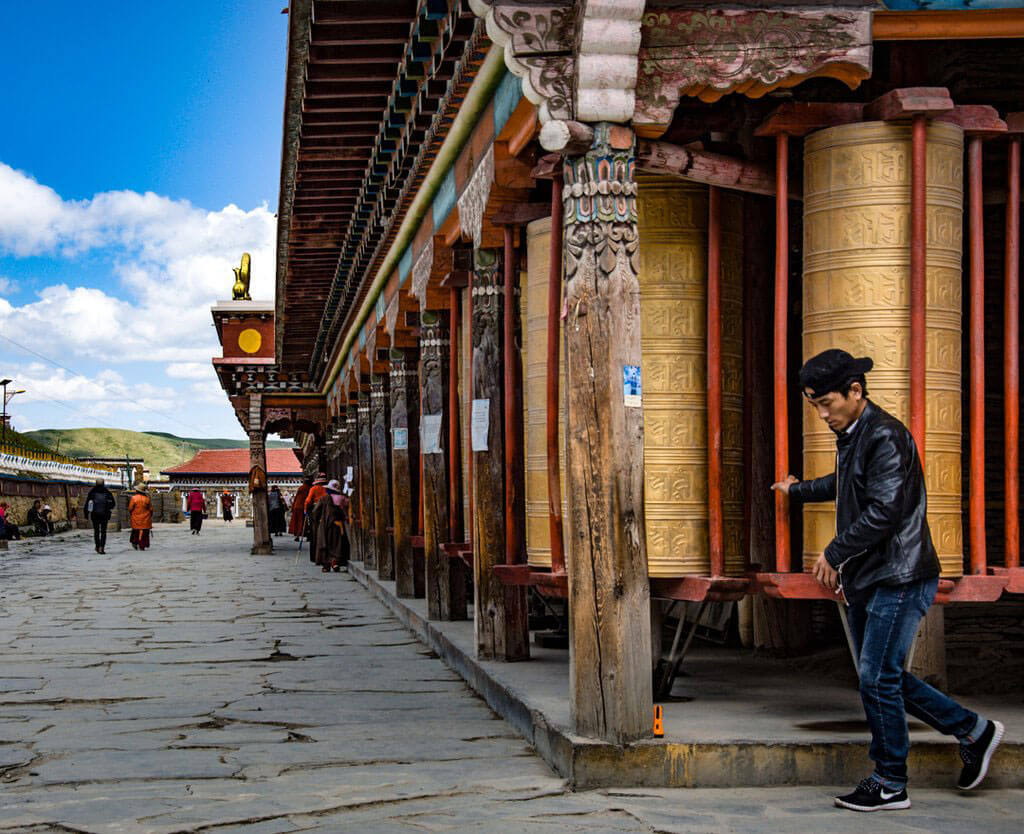
If you like the sound of this itinerary check out our Eastern Tibet Photo Tour.
Our expertise in Tibetan culture and travel along with our value for empowering the communities with which we work attracts various organizations focused on service and education such as Beanstalk International School, Malvern College and the Chengdu Rotary Club.
Recently, we have connected with these organizations who are inspired by our stories and desire to provide opportunities for their students and members to experience our services and hospitality. Extravagant Yak shares the corporate values of responsible tourism practices and philanthropy with these organizations. We look forward to working alongside them to make changes in the rural areas of Tibet.
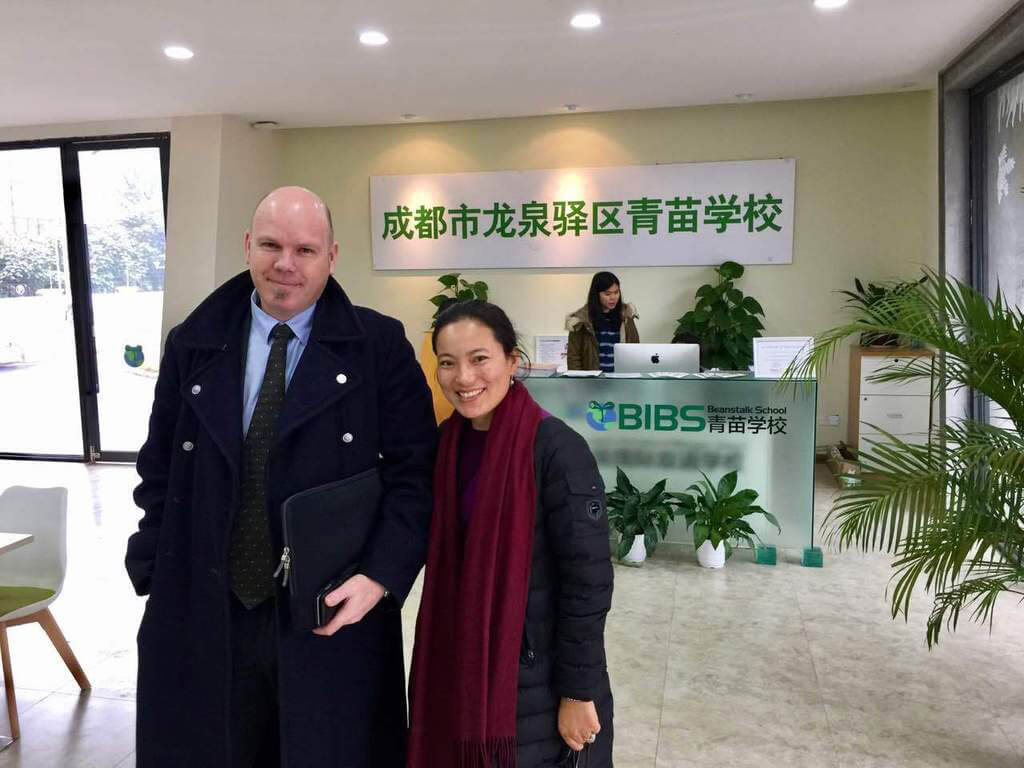
Responsible tourism practices guide every tour that we plan. Our work and heart are never separate from the local Tibetan community. We always work with local guesthouses, restaurants and guides. Together with them, we strive to discover more of Tibet’s mysterious culture and fascinating land. Further empowering these business owners to realize their potential and achieve their dreams is a major focus of our company. We have found that the secret of happiness and success is not how much money you make; it is about how many positive changes you make in other peoples’ lives.
In addition to partnering with these local businesses, we have created a platform from which we strive to share the stories of these small-business owners: Tibetpedia. Amazing accounts of Tibetan entrepreneur's businesses along with free resources regarding Tibet travel information can be found on Tibetpedia. Extravagant Yak sponsors and puts our heart into these businesses. Our constant search for small, creative Tibetan businesses enables us to continue sharing their inspiring stories with our friends from around the world.
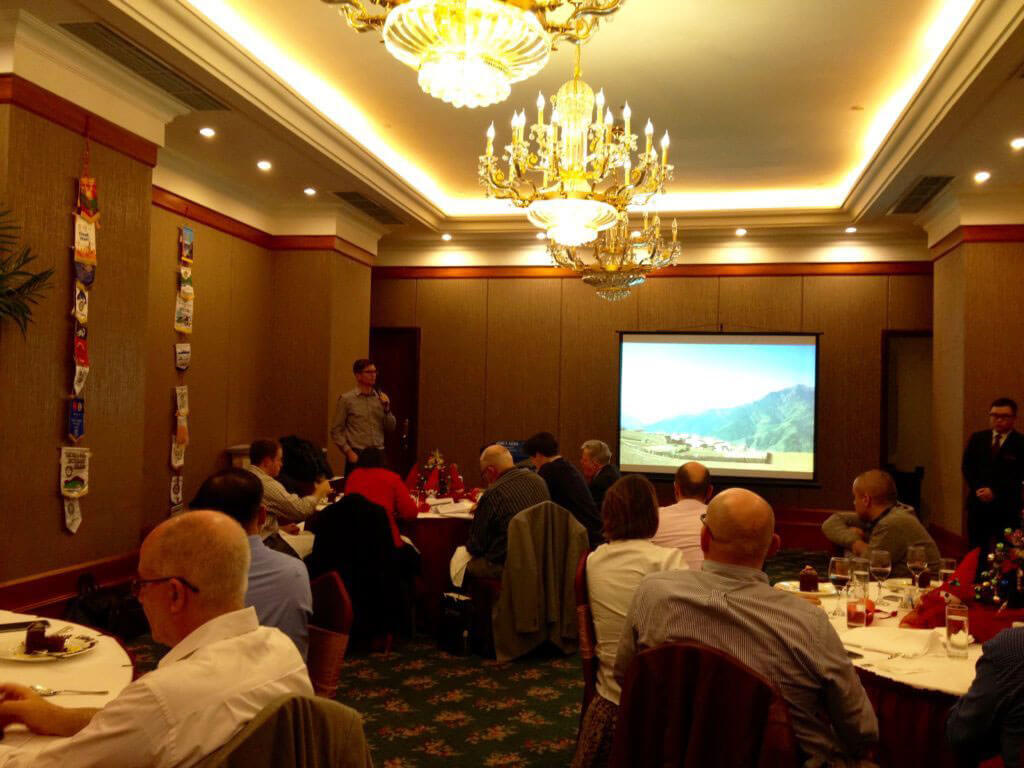
We love what we do. As a tour company, we feel honoured to help people discover the beauty of authentic Tibetan culture and the richness of the land. We are thrilled to see our clients enjoy their adventure on the roof of the world. We want people to explore the beauty of Tibetan people while coming alongside our work to empower these local communities in a sustainable way. We look forward to our future engagements with these two international schools and the Chengdu Rotary Club.
In our low season, we always travel to different Tibetan areas to survey the newest travel-service businesses available and to develop new itineraries. This time our development trip to Shangri-la was a success. We met local entrepreneurs and build relationships with them. We visited local restaurants, hotel owners and guides.
Both Kelsang Phuntsok and Tashi are young Tibetan entrepreneurs who are the owner of Kelsang Desti Youth Park hostel and Boddhi Inn. We were fortunate to meet and interview them. We also had a pleasant stay at Boddhi Inn for a few days. Their stories along with more information regarding their businesses can be found on our https://tibetpedia.com website.
We hope visitors can enjoy their services and hospitality in the future. Both of them embrace the Tibetan ideals of benefiting other sentient beings as a core principle of their behaviour. Exchanging ideas with them and sharing the experience of our work with each other was exciting! We look forward to working with them in the future.
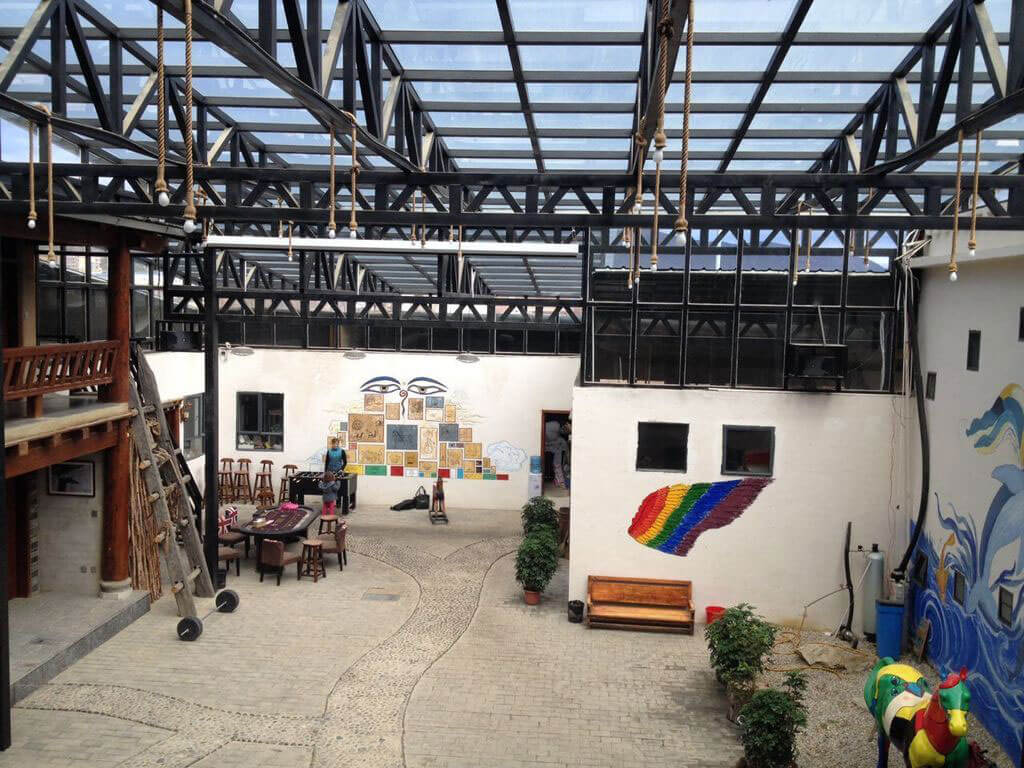
We also visited Peima Dorjie, the local Tibetan owner of Songtsan Lodge. In 2001, he opened a small guesthouse and since then he has grown as an entrepreneur. In the past 15 years, he has built 6 boutique lodges throughout the Kham and Lhasa areas. All of the lodges are away from the tourist craze, in the most beautiful and peaceful locations. Yet the environment of his lodges enables guests to engage with the local community and culture.
All of the lodges are located within or near a local village and are built using the same architecture like that of the local village. Most of the staff is from the local community. The mission of the business is to protect local culture, work alongside locals, and benefit locals. We are so excited to take our clients to this beautiful and luxury Tibetan lodge in the future.
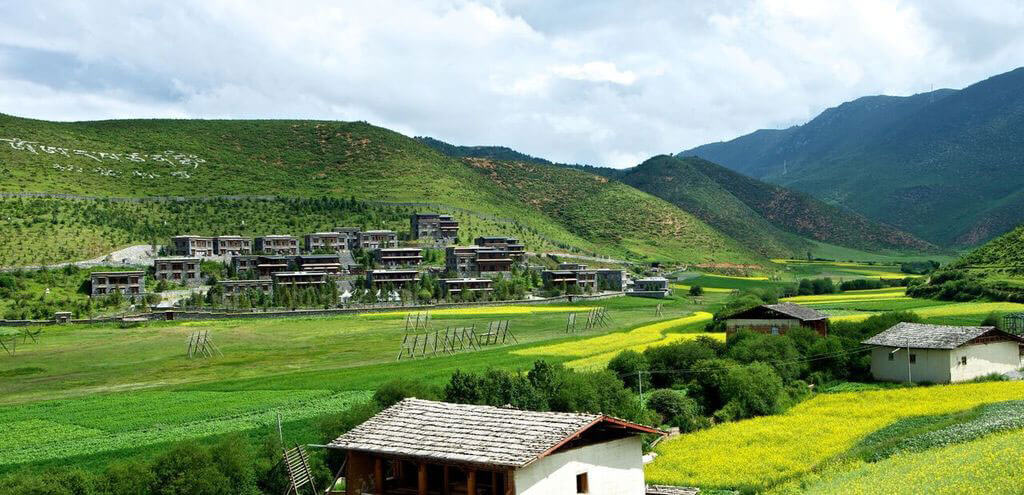
We had a chance to eat delicious food at two local, Tibetan-owned restaurants. Kelsang and Tashi are from Shangri-la. Both of them used to work as guides in Shangri-la, but now they provide authentic local food through the restaurants that they run. Their most popular menu item is the local Tibetan hot pot. We enjoyed its unique flavour which was very different from Sichuan’s famous hot pot. I am sure our visitors will enjoy their food!
Suonam and Tashi have been working in Shangri-la as guides for many years. Suonam gave us a wonderful tour of Songtsan monastery, explaining its detailed history and culture. Tashi took us to Tiger leaping gorge and he took care of us very well. We were encouraged and motivated by their passion and energy for introducing their culture and land to visitors. They always try their best to make their client feel happy and comfortable. They are considered two of the most experienced and knowledgeable guides in their area of Tibet. We hope to partner with them during more tours in the future.
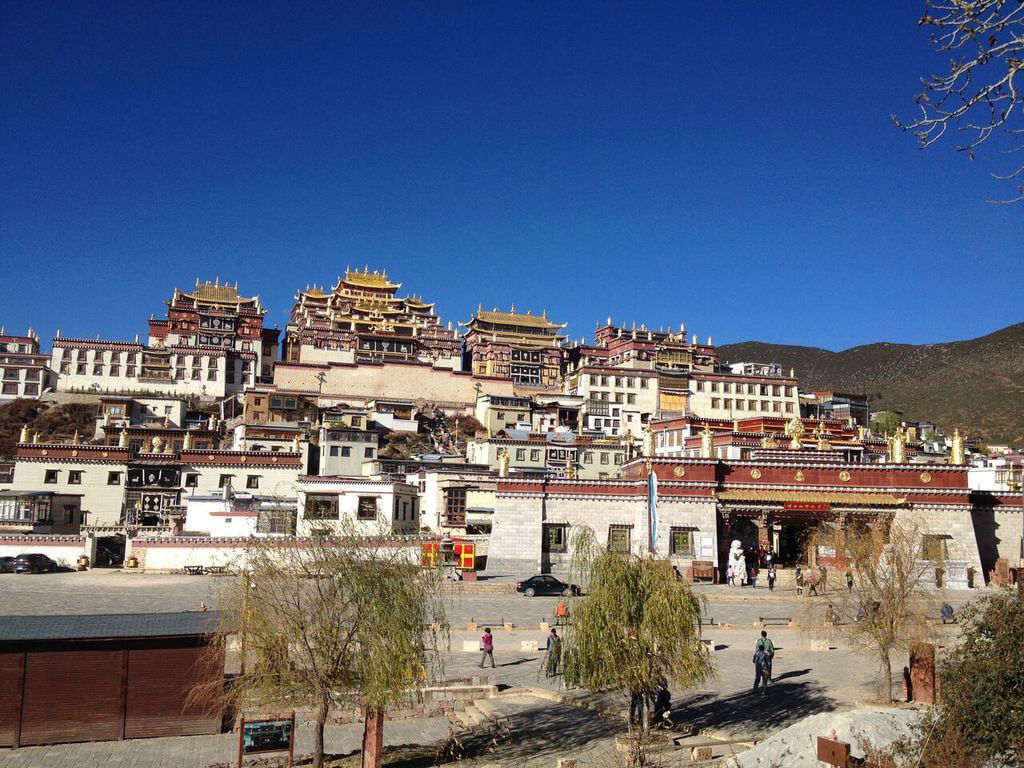
Our development trip to Shangri-la was fulfilling. We returned home with new friends and a passion to bring more guests to these new places!