
Travelling Tibet can be a dream for many people, but we often get questions from those who are concerned that they won’t be able to enjoy their experience due to their dietary restrictions. Whether it is a food allergy or a lifestyle choice, a key step in making your Tibetan adventure a reality is to know what your options are.
With cooperation from the locals and a little bit of preparation, food allergies, intolerances, or dietary preferences do not need to stop your adventure. If you are travelling with a guide, it is important to let your guide or tour company know as soon as possible if you have any questions about your specific dietary situation.

Not all of the locals (especially in the more rural areas) are familiar with the idea of allergies, etc., so if you have allergies, you will need to make sure at each meal the right people are aware and understand what you can or cannot eat (your guide, servers & cooks, homestay host, etc.). Be sure you let them know that you don’t want any of *insert particular item*, rather than only wanting less of it.
Continue reading below as we briefly cover some of the common dietary restrictions and preferences.
No problem. A lot of Tibetans are religious vegetarians, so every restaurant will have something for you to eat. Traditional diet relies a lot on potatoes, barley, various cabbages/green leafy vegetables, and yak products (butter, milk, yogurt, cheese). However, due to the elevation of Tibet, the variety of vegetables is a little more restricted in the rural areas, so you may want to pack yourself a few treats just to add a little variety.

Vegans may find travelling in Tibet a little more difficult as the Tibetan diet is heavily reliant on Yak products. When ordering dishes, check that your vegetables and bread do not come pre-buttered. Beans are not traditionally found in the Tibetan diet (although tofu might be available in some of the Chinese dishes), so for your protein sources, you may want to pack some of your own.
In Lhasa and the TAR specifically, the food is influenced by Nepal and other surrounding countries, so here you can enjoy some curries and dhal, etc.. Additionally, some of the Eastern Tibetan regions grow walnuts, making these a common snack served to guests. Vegans will probably also want to skip the yak butter tea, sweet tea, and milk tea, opting for a straight black or green tea instead. Maybe it’s also a good excuse to try the local barley wine!
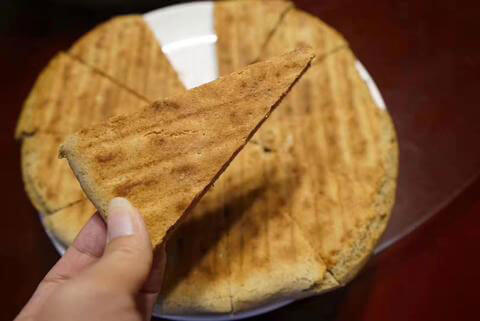
If this is you, it is important to know that barely is a staple of the Tibetan diet. Whether it is tsampa (ground barley powder) for breakfast, tsampa for dessert, or as a snack (Tibetan popcorn!), barely can be eaten at every meal of the day. Thankfully, potatoes are also a staple in the Tibetan diet, and rice is also readily available. Those who are gluten-free will want to stay away from the noodles (thukpa), momos, and flatbread, but that just means you can enjoy more yak meat, lamb, and other vegetable dishes!

If you are dairy-free, you should find a lot of things to eat, but you should also know that the Tibetan diet relies heavily on the use of yak milk. There are several versions of milk tea (yak butter tea, sweet tea, and regular milk tea) that are commonly drunk, although black, green, sea buckthorn or any number of local varieties of tea are also consumed. Additionally, watch for yak butter in your food, yak yogurt (often eaten as a snack or served as a sort of dessert), and yak cheese (which is often eaten with tsampa).
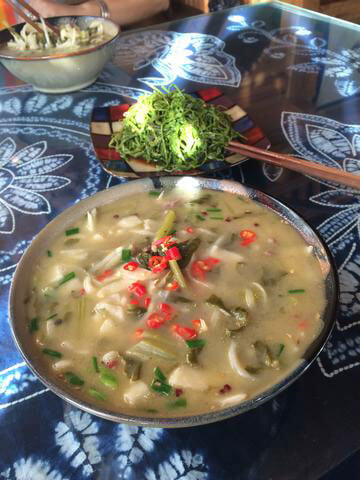
If you have a nut or peanut allergy (especially if it is serious), it will be very important for you to communicate this clearly to your hosts. Walnuts are commonly grown in the Tibetan region, and peanuts and peanut oil are commonly used in cooking (particularly in the Eastern Tibetan regions in Western Sichuan. Sichuan is known in China as the Home of the Peanut!). In some places, yak butter tea includes ground walnuts (for example, Danba area), while in other places you can find ground peanuts (Shangri-la area) in this comfort drink. Peanuts and nuts are also served as a common snack to guests (but this should be obvious when offered to you).
If you require an EpiPen, please make sure you have enough with you for your trip. EpiPen’s are virtually impossible to get in China, and in some areas, the local hospital may not even have epinephrine. If you (or someone you are travelling with) are at risk of going into anaphylactic shock if an allergic reaction were to occur, please make this very clear as soon as possible to your guide or travel company (if you are using one). If this is a concern for you, a good travel company should be able to look into the availability of treatment at the nearest hospital at different points in your itinerary in case of an emergency.
Don’t let food allergies or restrictions stand in the way of your dream trip to Tibet. If you are ready for an adventure, click here to see our upcoming small group tours, or contact us and start a conversation about your dream trip!
While Tibet is known for its sweeping landscapes and awe-inspiring scenery, did you know that it also offers one of the most distinct and delicious cuisines?
What makes Tibetan cuisine so different is that it draws influence from neighbouring countries such as India and Nepal, while maintaining its unique character that’s reflective of the local climate and landscape. The high elevation of Tibet means that traditional Tibetan cuisine is also mainly based on dairy products (such as yak milk and cheese), yak meat, barley, and a few vegetables that can grow at high elevation (like potatoes).
We’ve narrowed down a list of our top 5 Tibetan foods below that you’ve got to try!
Tsampa is one of the staple foods of Tibet and is considered to be an essential part of every Tibetan’s daily diet. This roasted and ground barley flour is most commonly consumed by mixing it with butter tea in a bowl and formed it into small balls using your hands. Sometimes tsampa is also presented as an offering in the temples and during other religious ceremonies.

Momos are Tibetan dumplings which are filled with either yak meat or vegetables. With a skin typically made out of wheat flour, momos are usually steam cooked, but you can also find some fried varieties. While fillings vary between different meats and vegetables, they’re usually accompanied by a special chilli sauce that give this meal a delicious kick!

Yak butter tea is another staple of the Tibetan lifestyle. This black tea uses milk, salt, and a good serving of yak butter mixed in. Some family recipes even include ground walnuts making this drink wonderfully satisfying on a cold winter’s day! If you’re a fan of bulletproof coffee, you’ll want to try this! Its salty flavor often catches first-time drinkers by surprise, and can make it seem more like soup rather than tea. Yak butter has a bolder flavor than cow’s milk or butter, and has a taste closer to goat milk or cheese, but a lot of the flavour depends on how salted or aged it is.
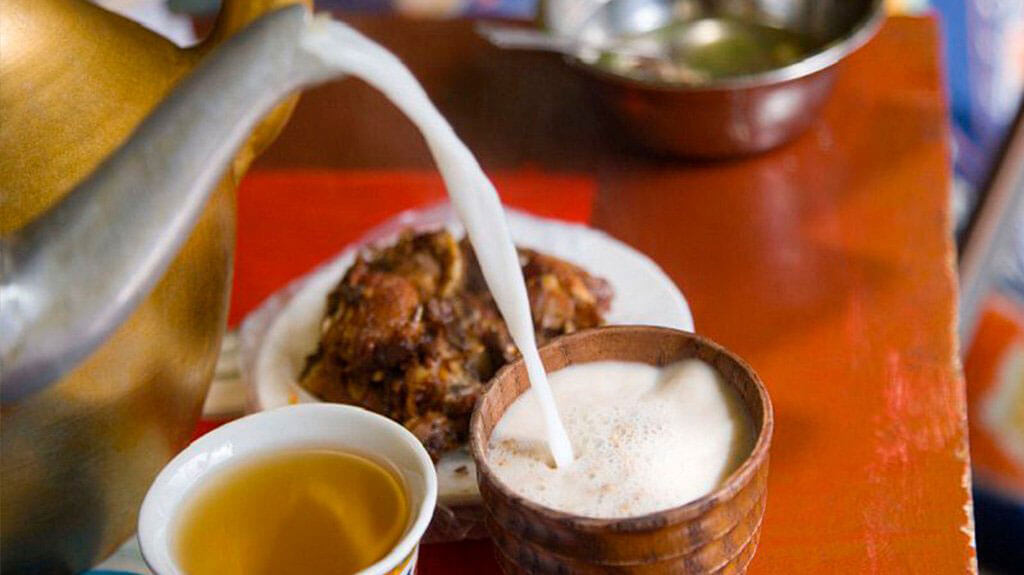
Yaks play a pivotal role in Tibetan life, as they serve many uses like transportation and food. Yak meat is the most popular protein eaten by Tibetans due to the size of each yak, with the meat of one animal often being shared between multiple families. While it shares a similar taste to beef, yak meat has a much more gamey flavour to it, and is naturally lean with a high protein content. It’s prepared and cooked in many forms—boiled, dried, stewed, and cooked into curries and momo fillings, to name a few! Feeling extra adventurous? Try Tibetan blood sausages or spicy yak jerky!
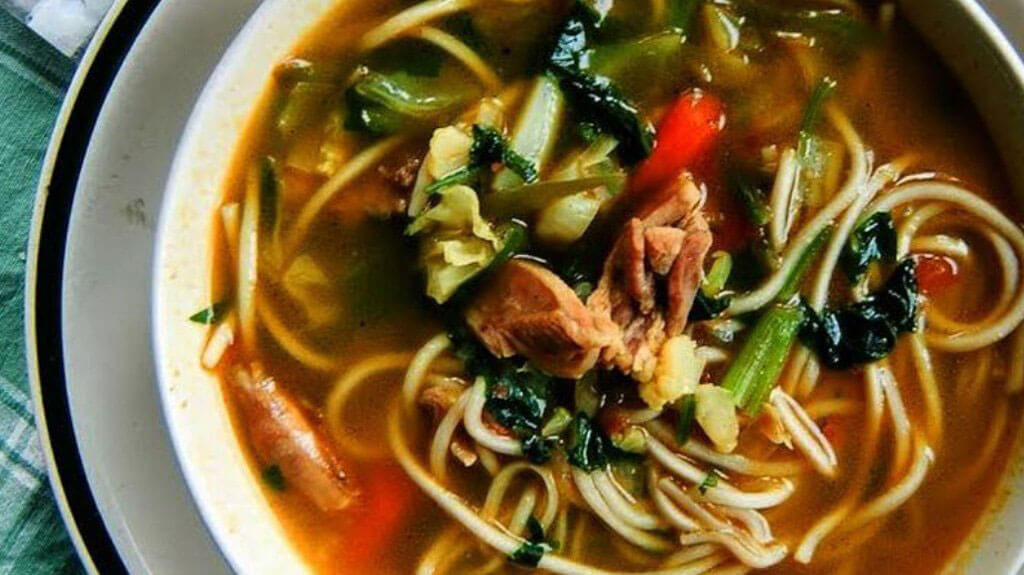
Originating in the Eastern Tibet, this noodle soup is Tibetan comfort food. Slurp on a hot bowl of thukpa on a cold day to stay warm in those higher elevations! The flavor of the dish varies depending on which region of Tibet you’re in, but is usually served with simple vegetables (like potato or cabbage), yak meat, and fresh handmade noodles! As you travel, watch for how different chefs prepare their noodles (i.e. hand pulled, rolled, cut with a knife), and see if you can learn something about your cook!
Ready to dig in? They say food nourishes the soul, so be sure to indulge in Tibetan cuisine on your next trip. Shoot us a quick message as we’d love to help with planning your trip to the Roof of the World.