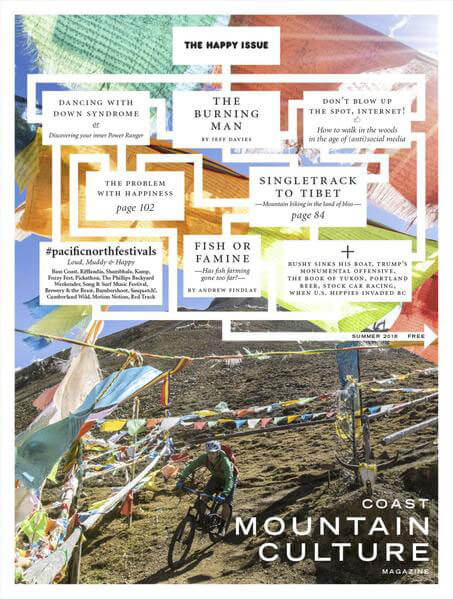
Last year we had the honour and privilege of leading an awesome group of riders through some of the best singletrack in Eastern Tibet. Photographer Ryan Creary and Freelance writer Ryan Stuart were among them. Together they published a couple of articles highlighting their first-hand experience of our Eastern Tibet Backcountry Mountainbike Tour. The first article was published in Action Asia Magazine, and now they've done it again!
We're excited to be published in Coast Mountain Culture Magazine. If you're on Vancouver Island (or the Pacific Northwest in general) pick up a copy and flip to page 84. Drop us a line, tell us what you think, and if you want a two-wheeled Tibetan adventure of your own, come join us October 11-21, 2018 with pro-riders Mark Matthews and Brian Kennedy.
Click below to read about The Highs and Lows of Mountain Biking Tibet
If you’re interested in joining our 7-day Mountain Biking Backcountry Tibet trip click here to learn more or drop us a line at info@extravagantyak.com.
I only had three things to remember: breathe deeply; drink a lot of water; and put the toilet paper in the wastebasket, not the hole. That was my mantra for fourteen days. The first two were essential for surviving a mountain bike expedition above 4,000 metres. The third was necessary for avoiding the awkwardness of a clogged Tibetan toilet. Remembering to practice all three is not as easy as it sounds; habits and routines are hard to change. How much can a person transform during a two-week trip? Can you become a different person through travel? If so, is it possible to bring that person home?
These questions were far from my mind six months earlier. I was home in Canada, lazily scrolling through Facebook, when a posting caught my attention: A group is going to Tibet for a 10-day epic mountain bike adventure and we are looking for people to join us. At that time, my knowledge about Tibet was basic–Mount Everest, the Dalai Lama, Prayer Flags. I asked my partner, “Should I go mountain biking in Tibet”? His response, as usual, was “Hell yeah.” I signed up the next day.
To prepare, I Googled my fellow travellers. Among them were a mountain bike guide, a racer, and a pro rider. I imagined them travelling all over the world in exotic locations, with massive thighs and nicknames like ‘Shredder’ and ‘Count Huckula’.
I love mountain biking; it makes me, a 56-year-old woman, feel like a kid. I ride a couple of times a week at the local trail affectionately known as ‘The Dump’. My mountain bike buddies call me ‘Crash’. Doubts started to march through my mind. An Army of Insecurities ordered me to stand down. How can Crash keep up with a group of fit, professional riders who get paid to bike for a living?
Nevertheless, I trained the best I could, and six months later my bike and I boarded a plane to China. Jet-lagged and bleary, I arrived in Chengdu. My bike had other plans–and an unknown destination. Cool. My first test. Breathe deeply. I didn’t need my bike for another four days. The next morning, we flew to the Tibetan capital Lhasa to tour and acclimatize. That night my head pounded–the dreaded altitude headache. Cool. Test number two. I guzzled five litres of water, which cured my headache but led to frequent tests of mantra number three–wastebasket, not hole.
After four days of visiting Lhasa, the City of Happiness, we travelled to eastern Tibet to start the biking adventure. My bike had arrived, and I no longer felt the effects of altitude–until the first climb. I gasped and gulped for air, desperate to introduce oxygen into my starving lungs. My head exploded, and then my stomach and I spewed my lunch behind a bush on a pile of yak dung. I questioned myself, and the nearest yak–what was I doing on a trip like this?
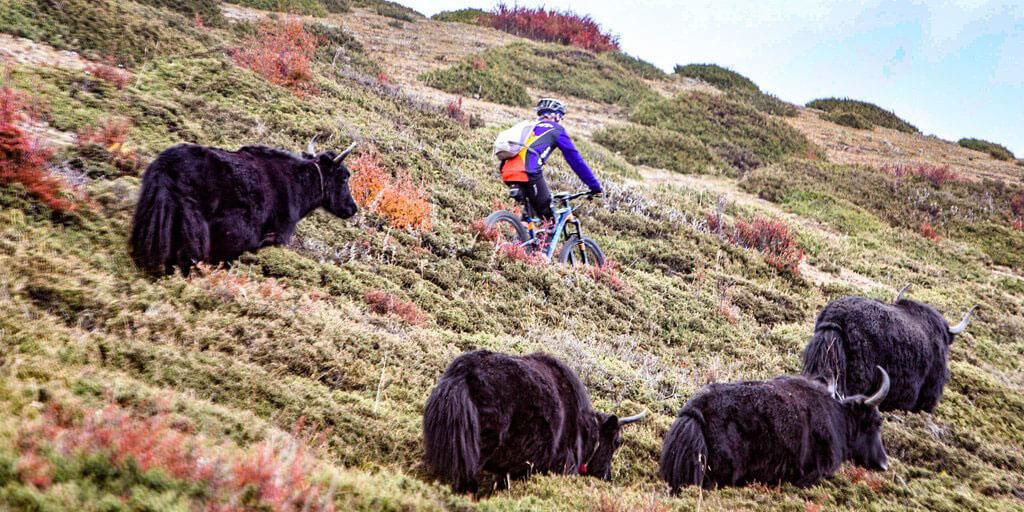
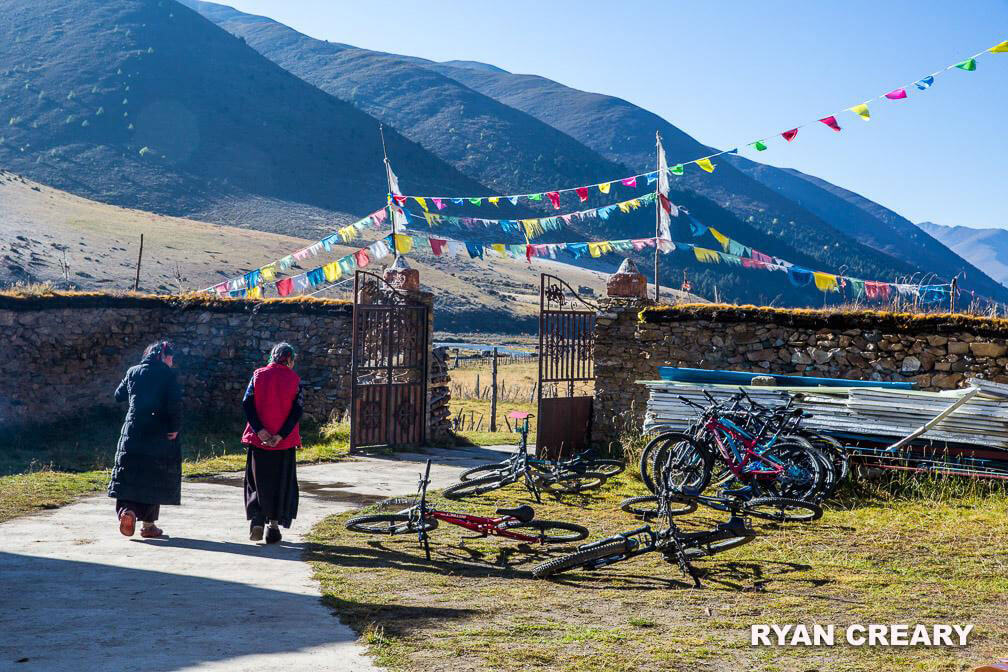
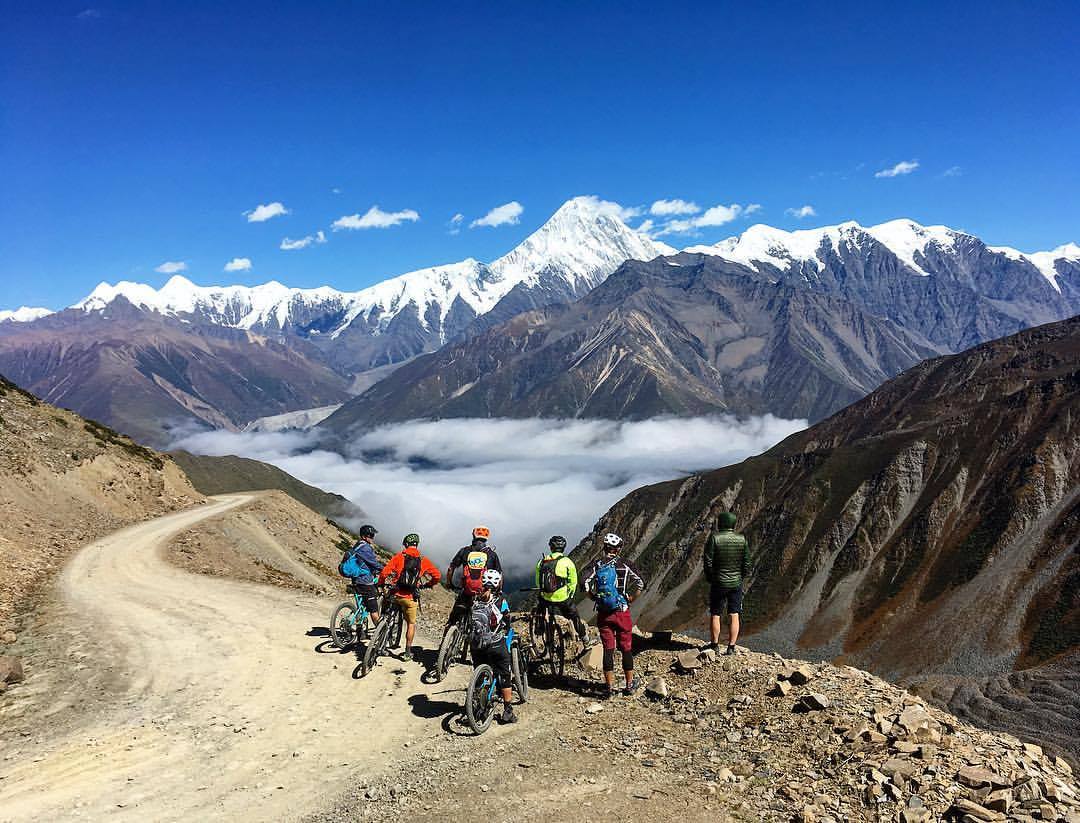
Over the next week, we pedalled eight to ten hours per day. We grunted our way over mountain passes, down rocky yak tracks, and through nomadic villages. Raging creeks tried to swallow us as we traversed their banks. We hoisted our bikes on our shoulders to scramble up slippery slopes. Exhausted, we descended upon remote guesthouses where the owners greeted us with local foods like yak meat, yak momos, and yak butter tea.
Somewhere along the way, I began to notice that I felt…nothing. Sensations of hunger, cold, soreness and sickness dissipated into the thin air. I didn’t miss my family, or friends, or home comforts. Worries and negativity drifted away from my reach. From my consciousness. I was filled with a deep spiritual joy and contentment (as well as a newfound respect for yaks). I experienced my own personal Nirvana, and in my mind, I was no longer Crash; I was now the Biking Buddha.
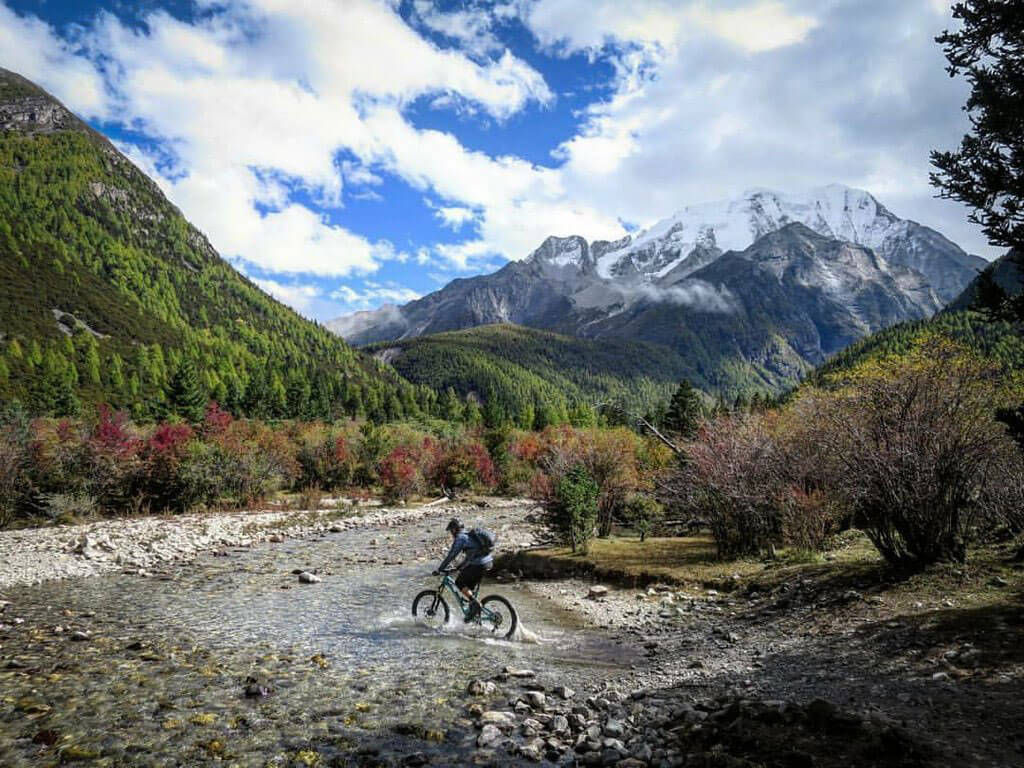
I don’t consider myself a spiritual person. I am a true Virgo–practical, logical, in control. During that trip to Tibet, I shifted inside. I awoke each day, mounted my bike, and rode blissfully at my own pace accepting whatever came my way. I felt present and profoundly peaceful.
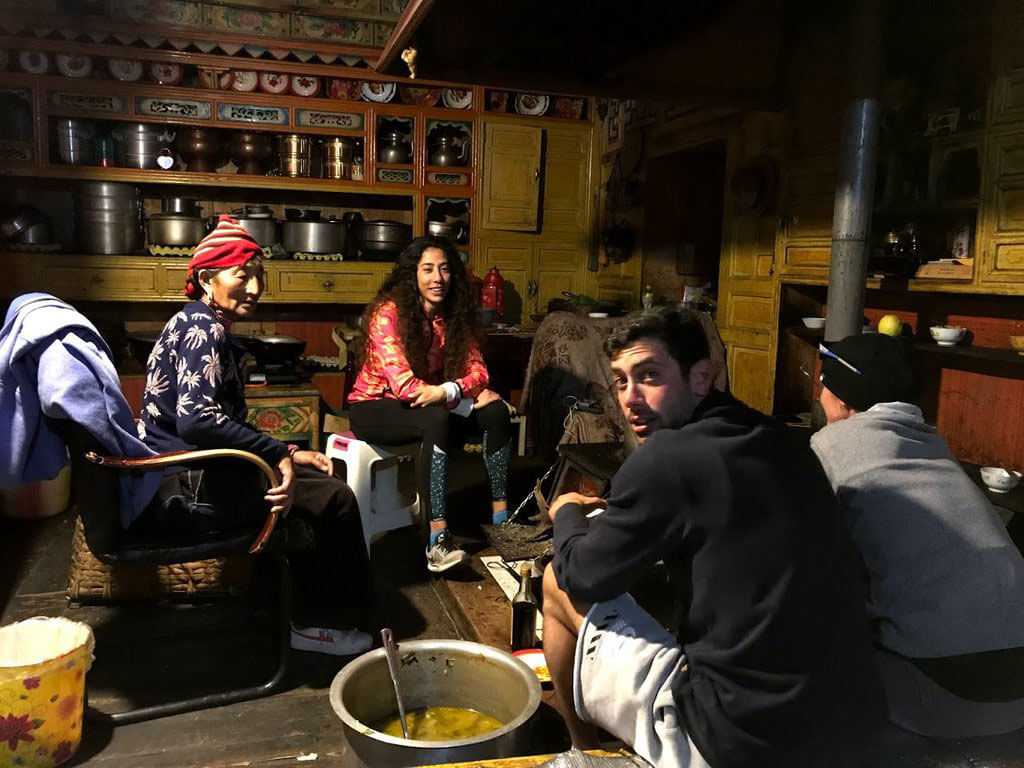
There were many occasions where feeling peaceful was easy. Sharing meals with my new friends, stabbing forkfuls of freshly made noodles as delicious Tibetan dishes whirled by on a lazy Susan. Cozying up to the fireplace where grandma was feeding yak dung into the stove and serving yak butter tea; the old woman and her daughter giggling conspiratorially when I sipped the butter in the tea rather than blowing it away. Spending hours laughing and talking with a wizened Tibetan monk–not understanding a single word. Our van driver presenting me with a gift of his family’s prayer beads. Riding above the clouds, locals gaping incredulously as our cycling entourage sped by.
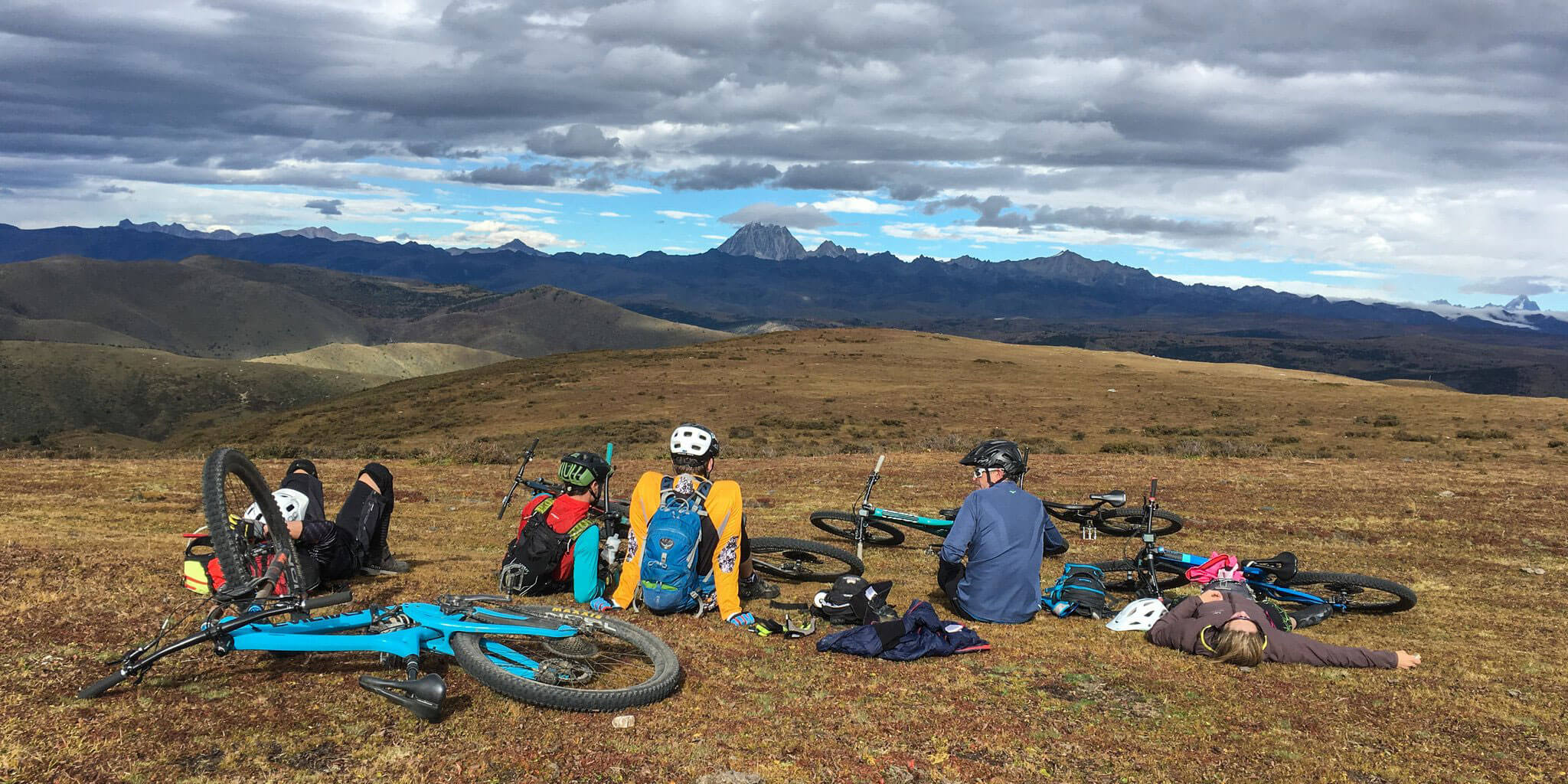
There were also occasions where my newfound serenity was challenged. The second day of riding included endless declarations of ‘one more climb before the summit.’ We reached the final peak as the sun changed guard with the moon; its toothless grin our only light as we dropped over the edge into the darkness.
Another time, I found myself solo, separated from everyone. I didn’t know where I was, where I was going, or if I was on the right trail. Miles of vast countryside loomed before me. I was utterly alone, but it didn’t matter–I wasn’t fearful or anxious. For what seemed like hours I journeyed on, thinking– This is my new reality, riding through eternity on a back road in Tibet –until I eventually reunited with the group.
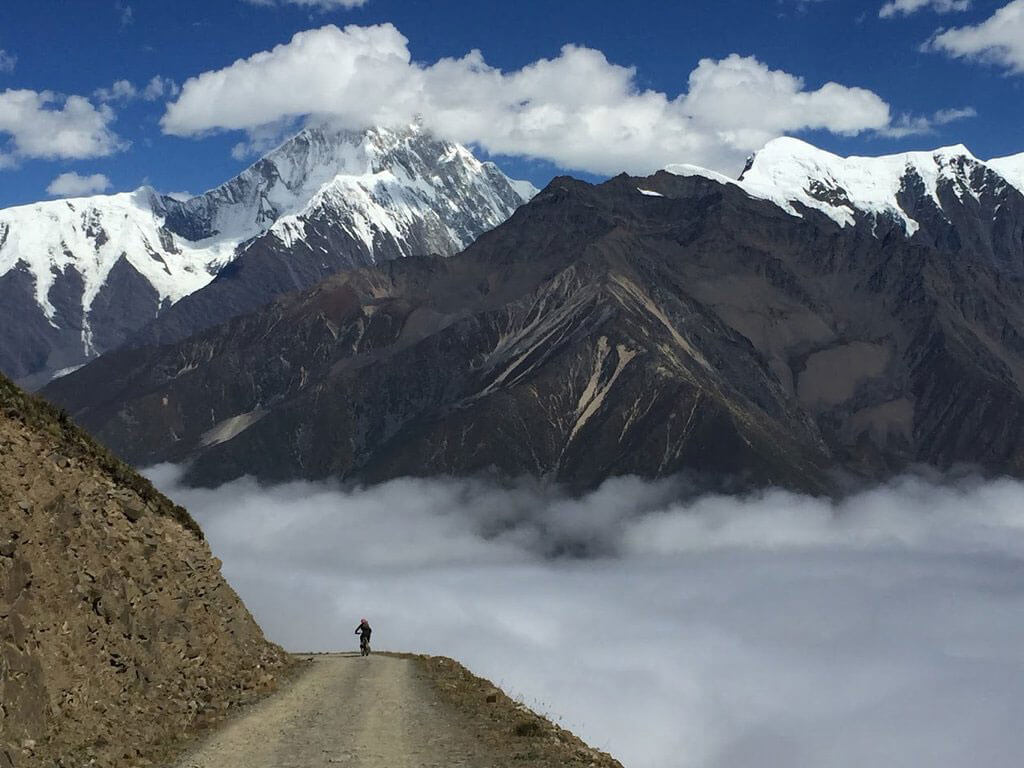
Landing back in Canada after the long flight from China, I waited calmly at the baggage area to claim my bike. A man waiting for his luggage looked over, and remarked, “You look like you just got back from the Himalayas.” I smiled. My question was answered–I can bring that different person home. But how long will the Biking Buddha stay before she plans her next journey?
Originally titled "Constellation Realignment", this is a personal retrospective of an Extravagant Yak Mountain Bike Tour of Tibet written by Maureen Scott. Images by Maureen Scott and Ryan Creary
Click here to read more on how you can experience your own two-wheeled path to transformation on our 7 Day Backcountry Tibet Mountain Bike Trip
Fritz Liedtke, a fine art photographer from Portland, Oregon, joins forces with Extravagant Yak to host a photo tour in Eastern Tibet. (Written by Garrett Jones)
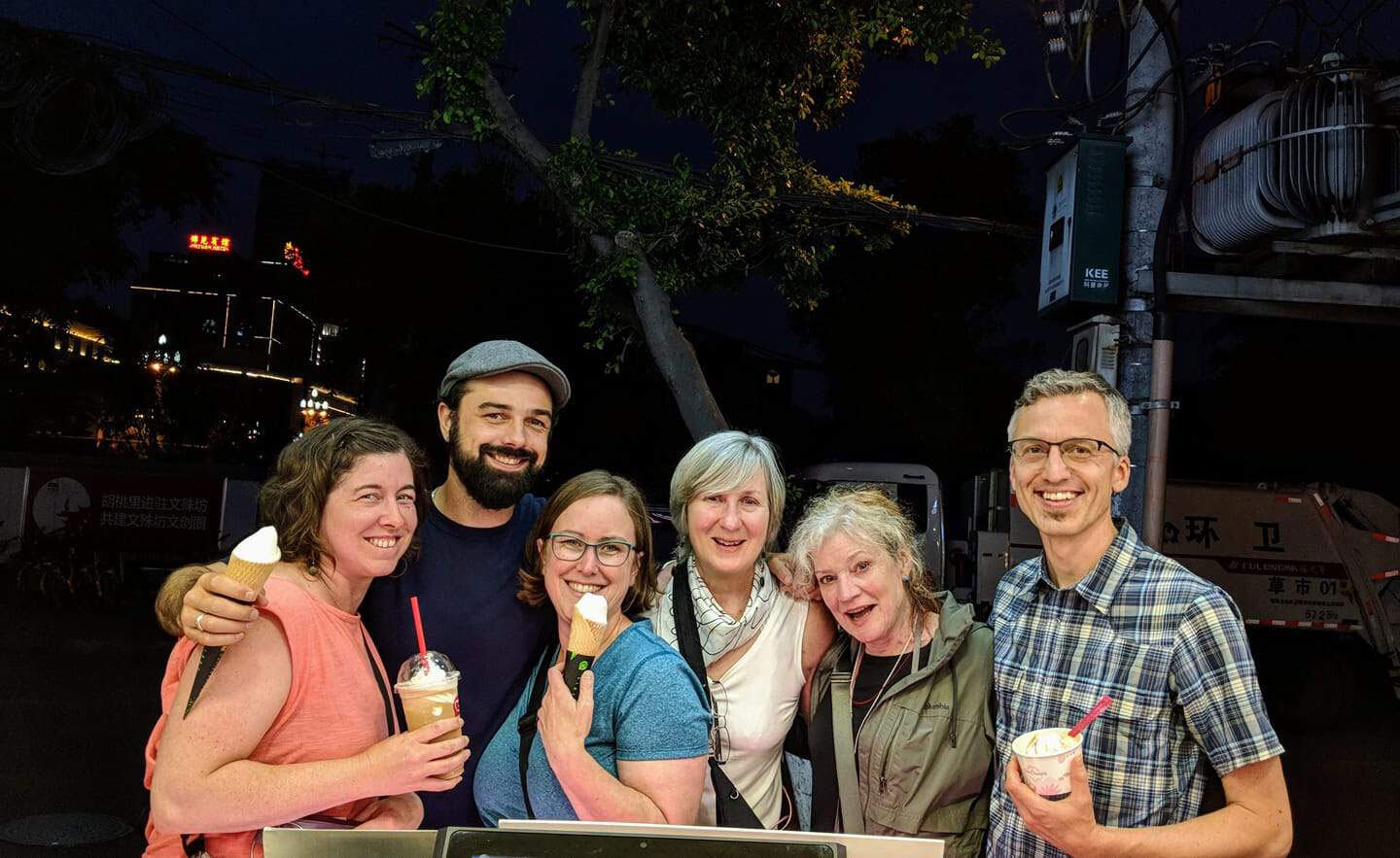
When Fritz arrives into Chengdu on his 10:30pm flight from Beijing, he greets me with a hug. As the other guests arrive at their Buddha Zen hotel at Wenshu Temple Monastery, I notice he greets everyone with a hug. Super friendly; building rapport from the first hello. He’s bound to be a great teacher.
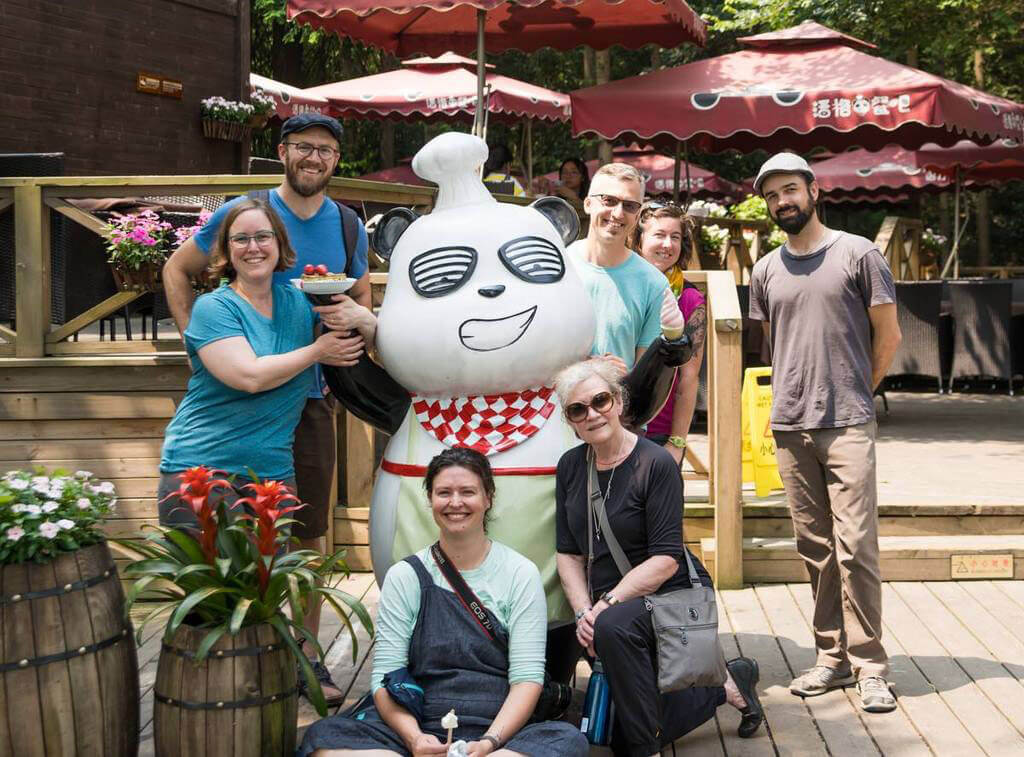
Our tour group is diverse: seven people from all walks of life—all eager to improve our photography skill in some way. Sherry, the oldest in the group, has a point-and-shoot, and says, “My goal out of this tour is to learn at least one thing about photography that will make my point-and-shoot taking better.” Fritz assures her, “you’re going to learn a lot more than one thing.”
Our first class is in the Buddha Zen hotel courtyard. It is an open-air courtyard and reminds me of a fight scene from a Kungfu movie. Everything is old-style China. Wooden pillars hold up the old, wood-shingled roofs that curl up at corners like skin on the bones of some old, scaly monster. It’s not raining, but it feels like water should be dripping into the courtyard.
Instead, a curtain of sunlight shines on a gazebo, beneath which sits a golden statue of the Buddha. Antique Ming Dynasty chairs are placed like wooden thrones around the space, inviting commoners like myself to enjoy the past life of a wealthy landowner. Small fish ponds and streams break up the stonework to create perfect fengshui. Like yin and yang, the balance of light, colors, sounds, and elements make one feel you have fallen into a painting.
Fritz has us play with light. Literally. We move around the courtyard and observe how light bounces off of surfaces and how it shows up differently on faces. We then practice taking photos of subjects with different sources of light. He shows examples to us on his camera how he captures reflections of light from the stone work. The sense is felt by all: We are learning from a wizard.
Our transportation for our Sichuan journey is a Toyota Coaster, a 17-seater that feels like the cabin of Air Force One. It has leather captain’s chairs and desktops with cupholders. Fritz takes the opportunity to hold our second class while we are driving upward to Kangding. He hands out printouts of famous quotes around the subject of art, of seeing and of living.
He says, “I don’t want this tour to just be an opportunity to learn technical skills of photography. I also want you to get the spirit of photography, by being inspired by others’ thoughts.” We read the first quote aloud. It’s about slowing down to see. Everyone shares their thoughts freely like poets discussing Milton, like collectors appraising a work of art, like philosophers discussing ethics.
We feel validated and too big for our shoes all of a sudden. We have several of these “deep thoughts” pow wows throughout the trip. It binds us together on a deeper level and provides the language for our technical learning, too.
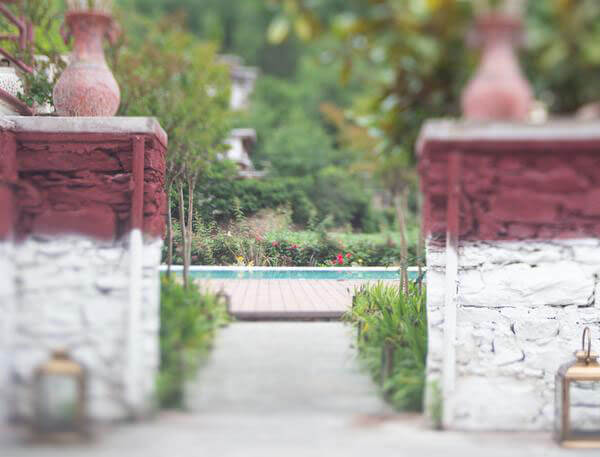
In Danba, after one of our meaning-of-life-meetings, Fritz gives us all a challenge: go on a walk and take 20 steps as slowly as we can manage, making sure to see everything around us, to notice things we may normally walk past. I take the challenge seriously and head straight for the pool. He didn’t say you had to do 20 steps on land. Besides, walking in water makes walking slowly even easier. (The pool is an outdoor, heated, infinity pool in the middle of a Tibetan, mountainside farming community.
There have possibly been more leprechauns in this valley than swimming pools, but given the rise of tourism and outside investment, this enterprising family converted their farmhouse into a 5-star resort in the style of a ClubMed.) So, there I am, in this pool, taking in my surroundings. I have never felt like I was swimming inside of a painting before, but that is the best way I can describe this experience. It is surreal.
Then a revelation hits me. Surreal is that feeling of reality and unreality happening at once. And seeing both is what it means to see. It means being in that space where you acknowledge that all of this isn’t necessary. It’s all extra. Everything around us can be received as an “I get to do this.” Not have-to, not same-ole, not been-there-done-that, but all of life is a painting we get to swim in and have fun with.
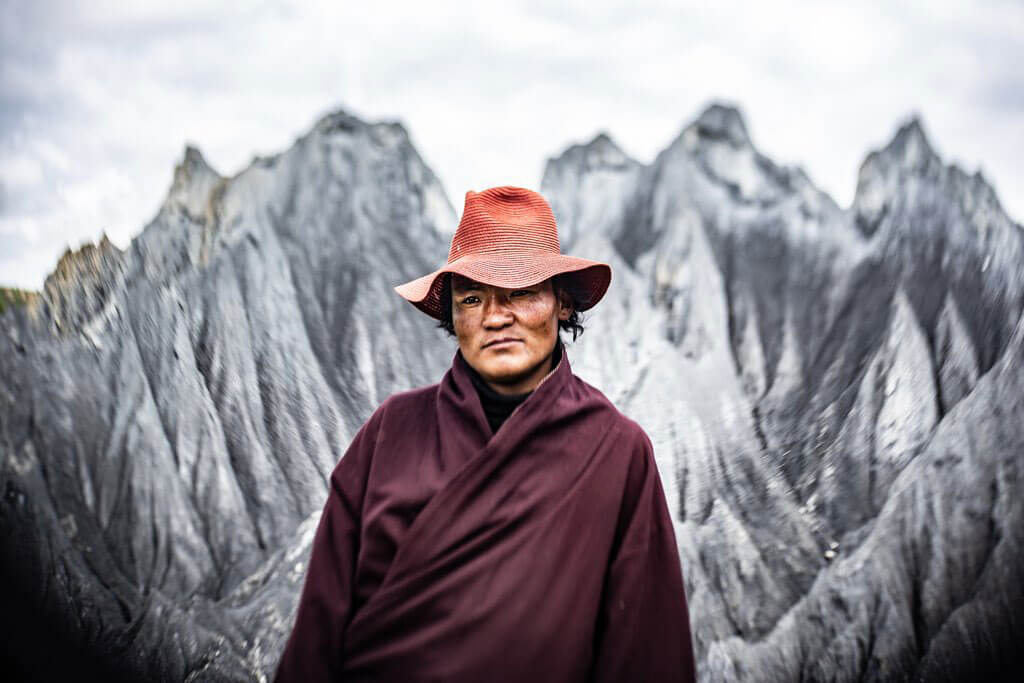
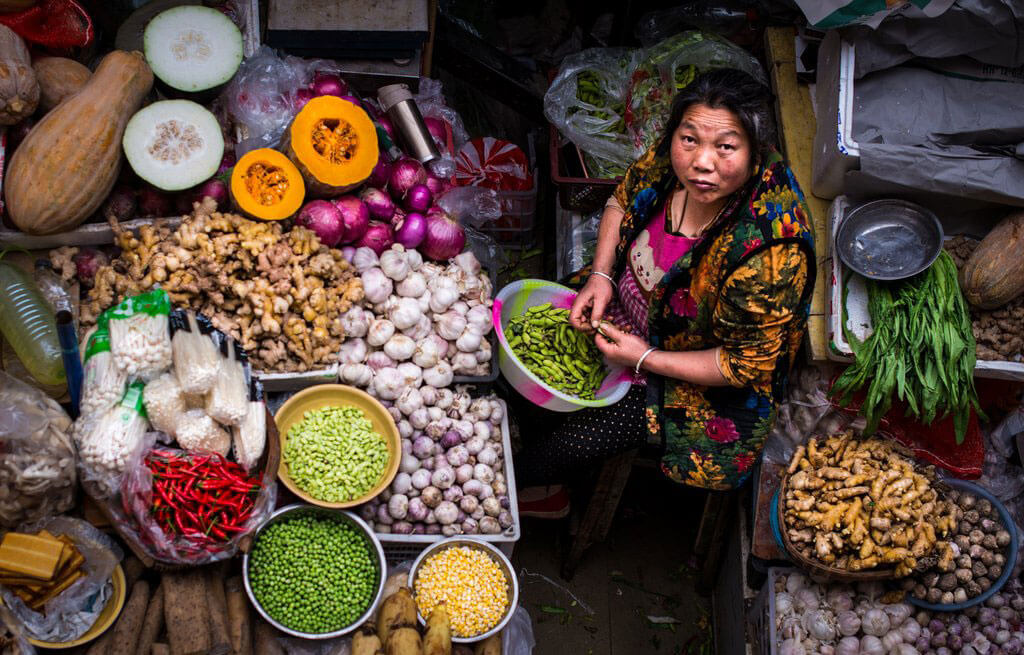
We get tons of technical photography practice, too: shooting models in exotic places, being tourists on horseback in Tagong, catching landscapes from mountain passes and spying out the hustle and bustle of life in a fresh market. Some smells were better than others, but it is all visually amazing.
Fritz is eager to review our pictures with us in the moment, on the backs of our cameras, while we are still shooting to give critique on how we can improve on our composition. He tells us to think of our cameras as our brush and our subject, setting, light, props, etc. as our paints and canvas.
He gives us permission to not simply capture what we see with our physical eyes, but to create what we want to see, or in other words, to arrange things and frame our shot so that it reflects the concept in our mind’s eye, not necessarily reality as it is. He makes the distinction between photojournalism and fine art, and quotes Picasso on more than one occasion: “Art is a lie that tells the truth.”
By the end of the tour, I think everyone is going to be hankering for a burger, but they all prefer to eat Chinese again. After dinner, we all go back to my house for dessert and a time to share photos. It is a perfect evening for reminiscing and saying farewell.
New friends have somehow, in the span of ten days, become old friends. We promise to stay in touch and invite each other to visit our home towns. What a sweet time of simply being together. Hats off to Fritz. By teaching us all to see, he has given us the greatest chance to be excellent photographers, and even, dare I say, fine artists. Thank you Fritz!
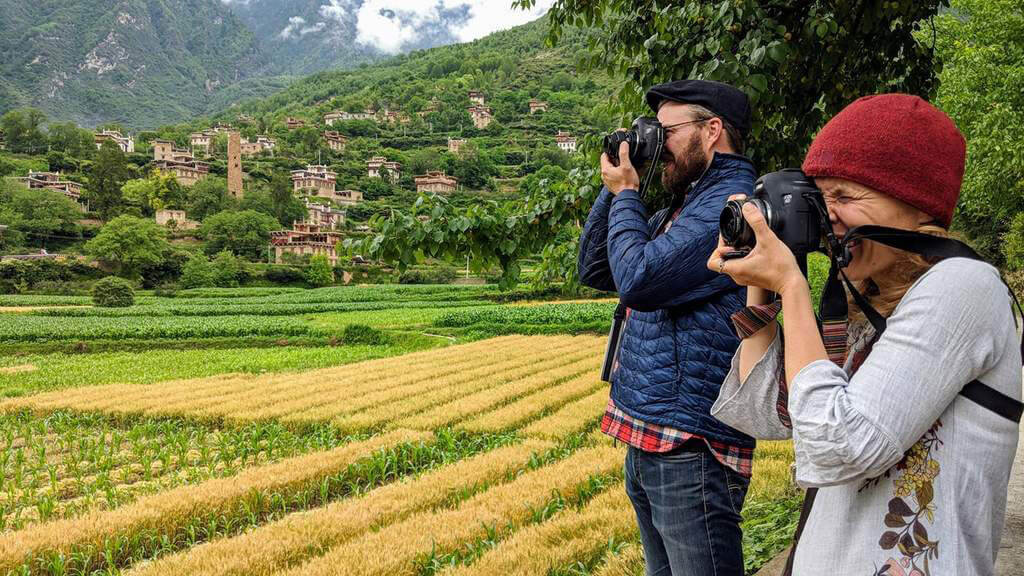
Talk to us today about putting together your own private itinerary, where everything you encounter is just waiting to be captured.
Something is wrong. I can tell by the flight arrival board that my photo tour group has arrived long enough for them to go through customs and get their bags. By now they could have even stopped for a leisurely meal. I’m standing on tip toes and craning my neck just in case they didn’t go to the other exit gate.
Then I see him by the baggage carousels—Ron Nickel, the Digital Media instructor for Prairie College in Alberta, Canada, waves his hands. He approaches. The rope barricades keep about 40 feet between us. Ron yells, “our bags didn’t make it.” (Not a great way to start a tour in Tibet). We fill out forms and cross fingers (that the bags arrive before we leave Chengdu in two days). Then, our fourth annual Prairie Digital Media Eastern Tibet Photo Tour commences as we head to the hotel. Despite missing their bags because of a too-tight connection in Beijing, the group is in high spirits.
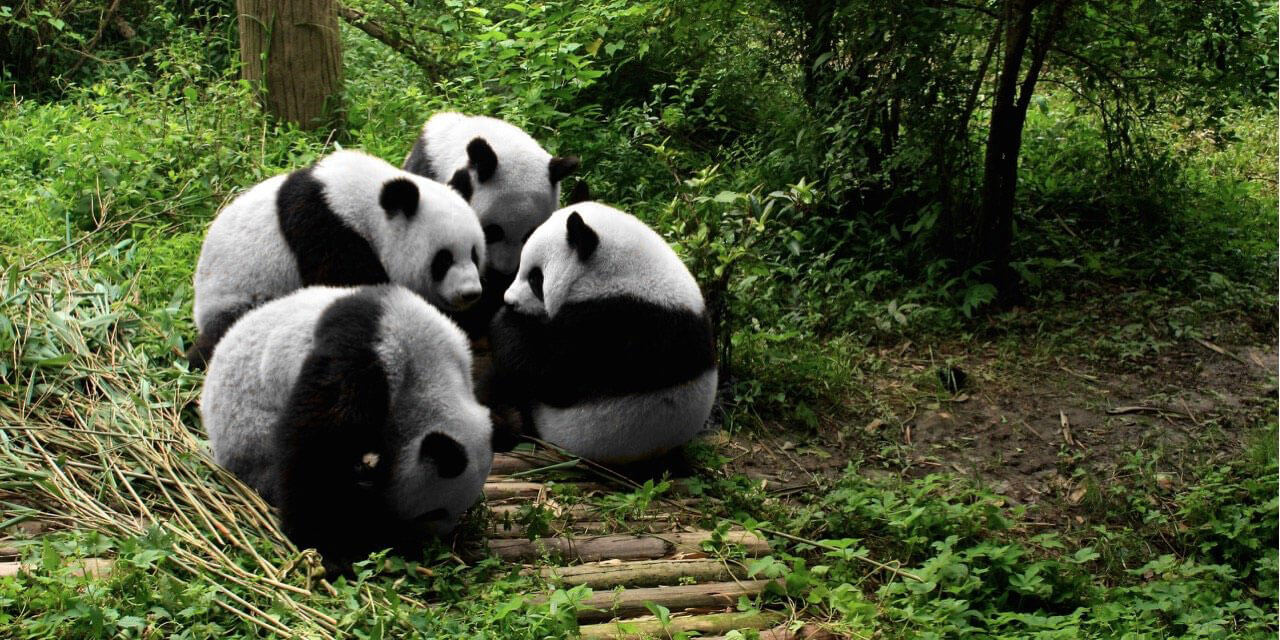
The hotel is warm, welcoming and serves an amazing international buffet breakfast. So, after a good sleep and hot shower, the group is cheerful and excited for the Giant Panda Research Breeding Center tour scheduled for the morning. Throughout the day our operations manager calls the airport every couple of hours. Still no bags. We plan to leave the next morning for Kangding.
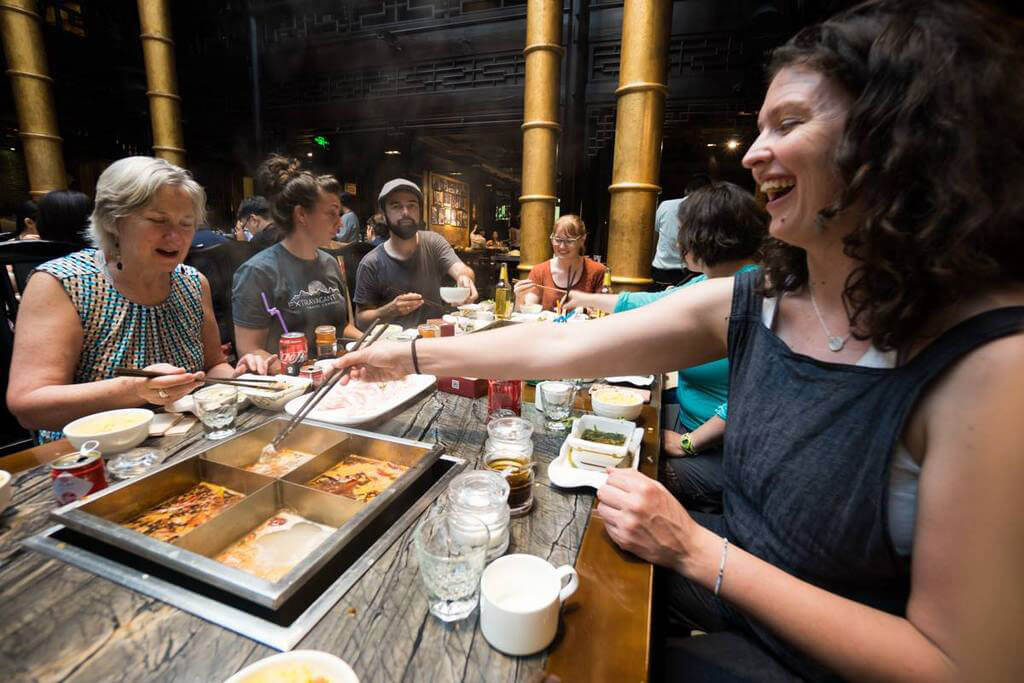
We hit Jinli Walking Street for hotpot and Sichuan Opera dinner-theater style. Even after seeing it dozens of times, the face changing performance amazes and bewilders me. Just like that, we are kids again at a magic show. Delighted and slightly overwhelmed by the sensory overload of the Jinli commercial atmosphere, we weave through tens of thousands of tourists who have descended upon Jinli for the May 1st holiday. My phone rings. The bags are at the hotel. Relief.
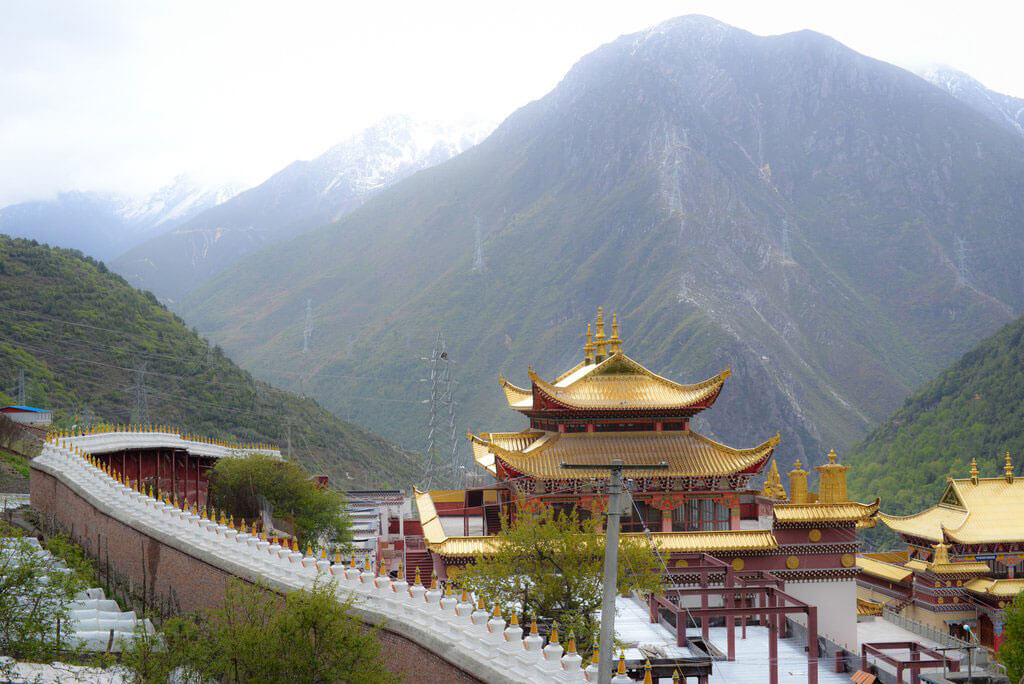
The next morning, we load the van and sing “The Greatest Showman” tunes on the way out of Chengdu. Spirits are very high. A Million Dreams and expectations flutter through our imaginations of what we may encounter when we reach Eastern Tibet.
Thanks to a newly constructed highway from Ya’an to Kangding, our driving time is kept to under four hours. This is Ron Nickel’s fourth trip and he and I are the only ones who know how fast four hours is. Four years ago, the same leg took 13 hours due to a landslide and traffic accident. The song Come Alive keeps us dreaming with our eyes wide open as we pull into Kangding.
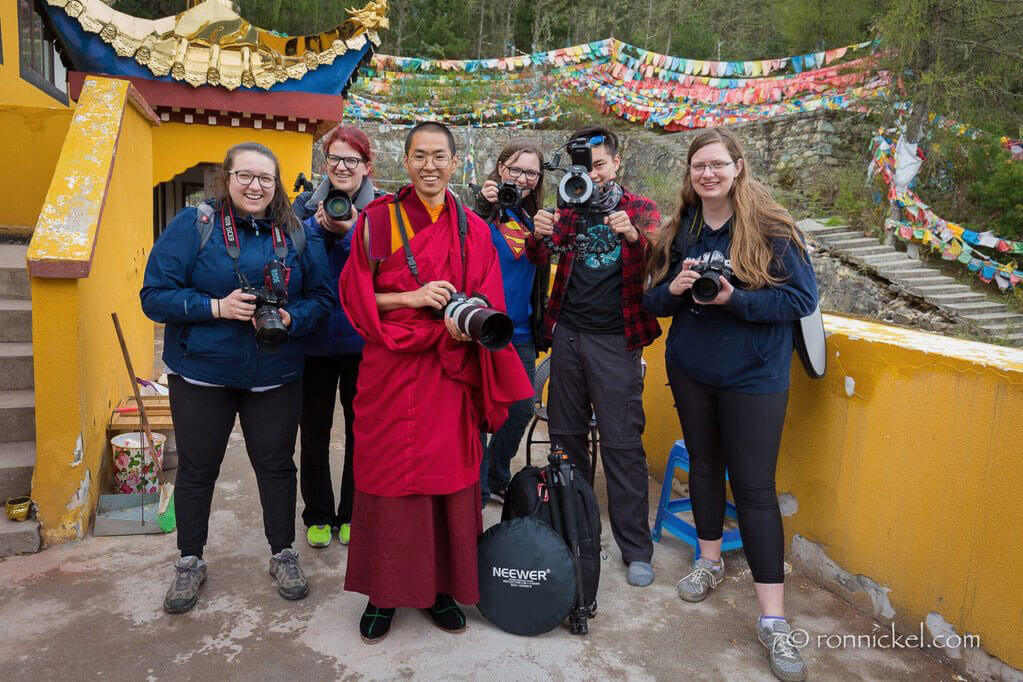
The next day we hear there is a monk who has recently graduated from Harvard and is keeping the temple on top of Paoma Mountain. Through Kris, our friend at Zhilam hostel, we schedule a time to interview him, but the climb up the mountain stairway proves that most of us do not yet have our “altitude legs” under us.
We arrive over an hour late to our appointment. But Shamba is still smiling as we arrive haggard and catching our breath. Shamba is a handsome man in his late twenties and graciously forgives our tardiness. He gives us a brief tour of the temple and then takes us up to the roof for a breathtaking view of Kangding. It feels like we’re Walking a Tightrope. Shamba turns out to be an avid photographer. Ron and he geek out for a bit on camera bodies and lenses and then he sits for a quick photo shoot.
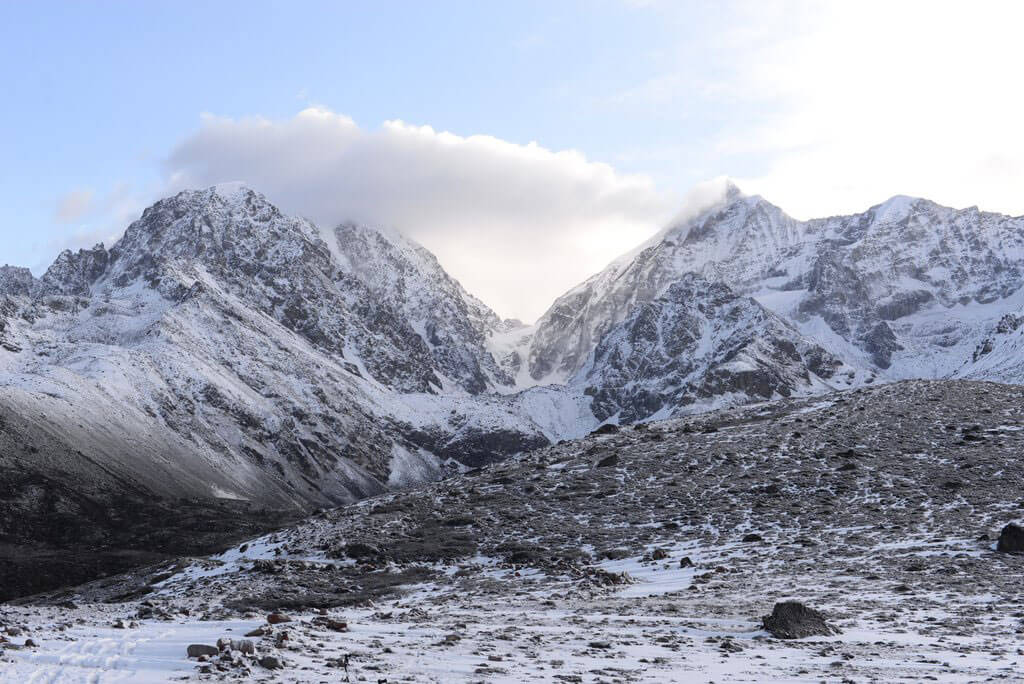
The next morning we rise early (4:30am!) to drive up to the Yajiagen pass for a sunrise shoot of the mountains. Negotiating lack of sleep for the promise of great time-lapses in the cold feels a bit like getting the short end in The Other Side, but proves to be totally worth it! That afternoon, the staff at Zhilam hostel help us arrange a couple of Tibetan models to sit for a photo shoot.
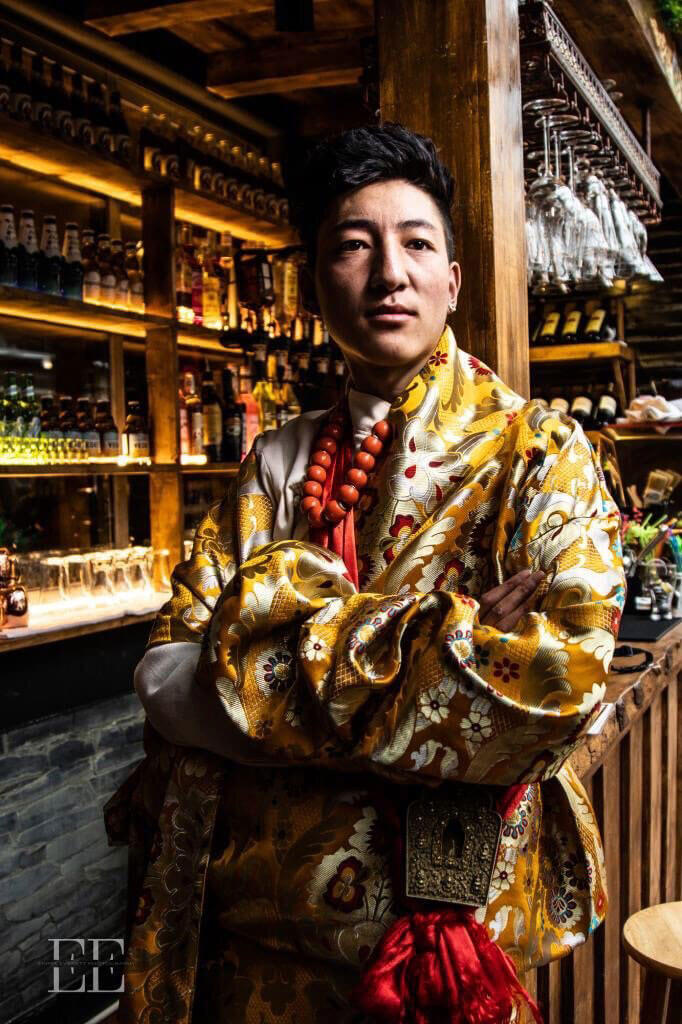
We find a beautiful, old, abandoned, broken-down house that works really well for a backdrop. It starts to rain just as we get set up, so we quickly run down the hill to a new Tibetan guesthouse below the monastery. The glassed-in atrium is a perfect plan B.
After two days in Kangding, feeling full and acclimated, we drive out to Tagong in search of our next adventure. The pass takes us up past 4200 meters. Come Alive beckons us to reach for the sky and to keep dreaming with our eyes wide open. With our eyes wide open, we see Mt. Gongga on the horizon. The peak emerges for about 40 seconds from surrounding thunderclouds—enough time to snap a few pixelated iphone shots.
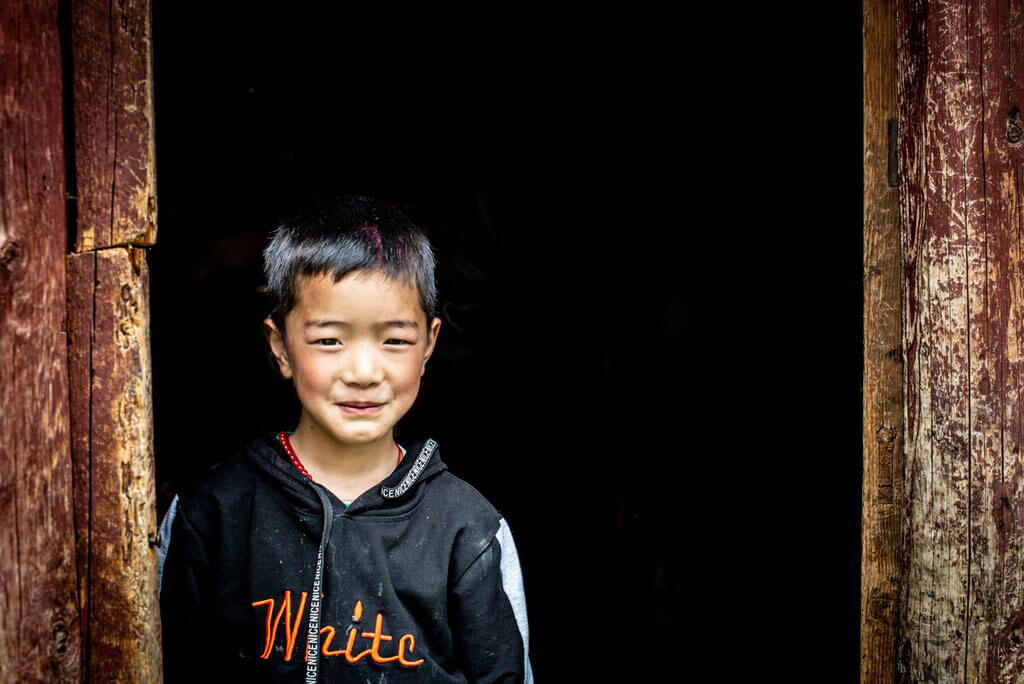
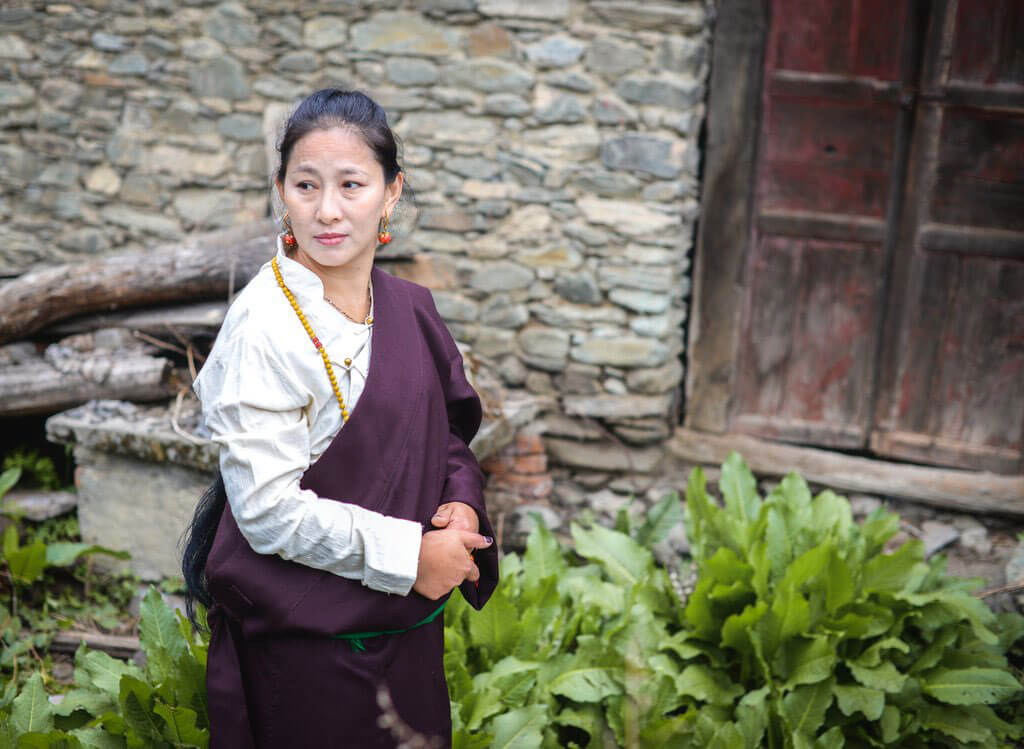
We zoom past an old man on the side of the road and Ron yells, “Stop!…Turn around. I want to talk to that man.” I obey and somehow turn my 8-passenger van around on the narrow road with ditches on both sides. The man is a 67-year-old Khamba nomad and is selling yoghurt.
I translate for Ron, “These photographers would like to pay you to take your photo. Is that ok?” The man smiled an enthusiastic yes and quickly shuffled into his little hut. “Where is he going?” Ron asks. “I don’t know,” I reply. After a few moments, the old man comes out wearing his sheep wool Tibetan coat. Now Ron is smiling, “Perfect.”
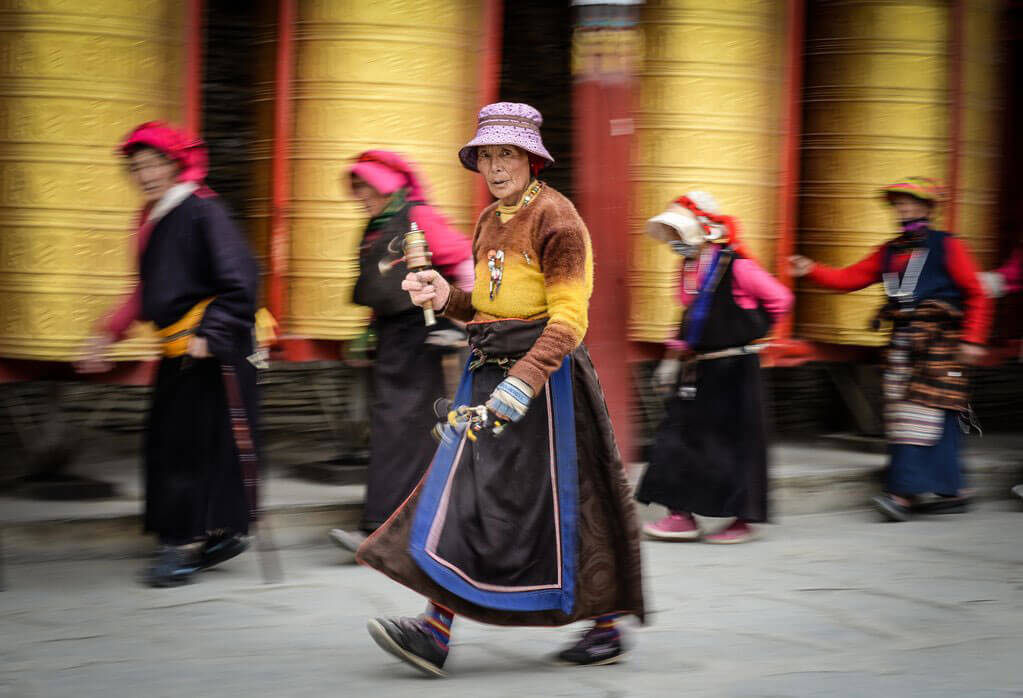
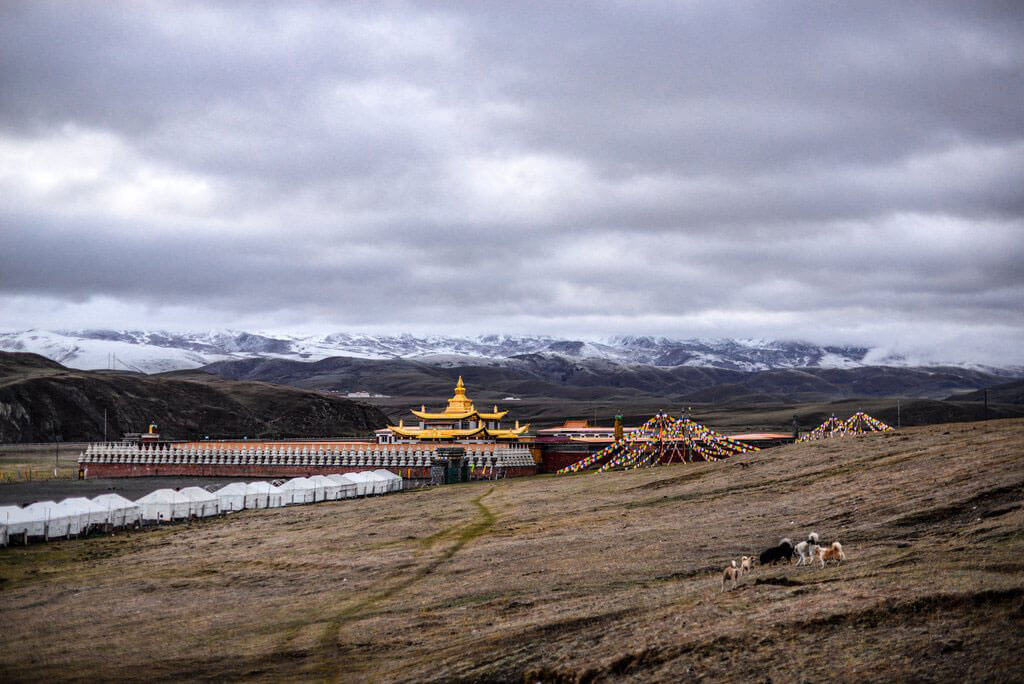
The next morning, we rise stupid-early, to catch the sunrise over the golden-roofed temple in Tagong. Somehow, Never Enough echoes through my head as we hike up the Tagong hill in the brisk cold of the dark morning: “towers of gold are still too little…”
Khamba Cafe proves to be an excellent spot for a western breakfast. Orders of fried eggs sunny-side-up, toast, bacon, and crepes show up on our table accompanied by steaming cups of hot tea and coffee. A most welcome breakfast. We are all sunny-side-up now.
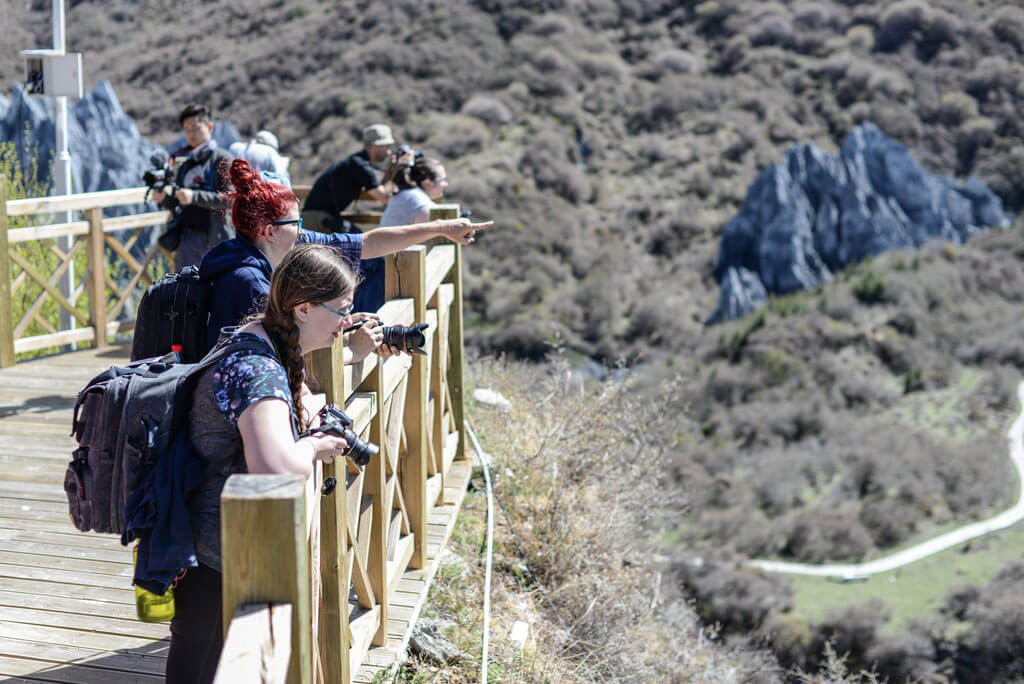
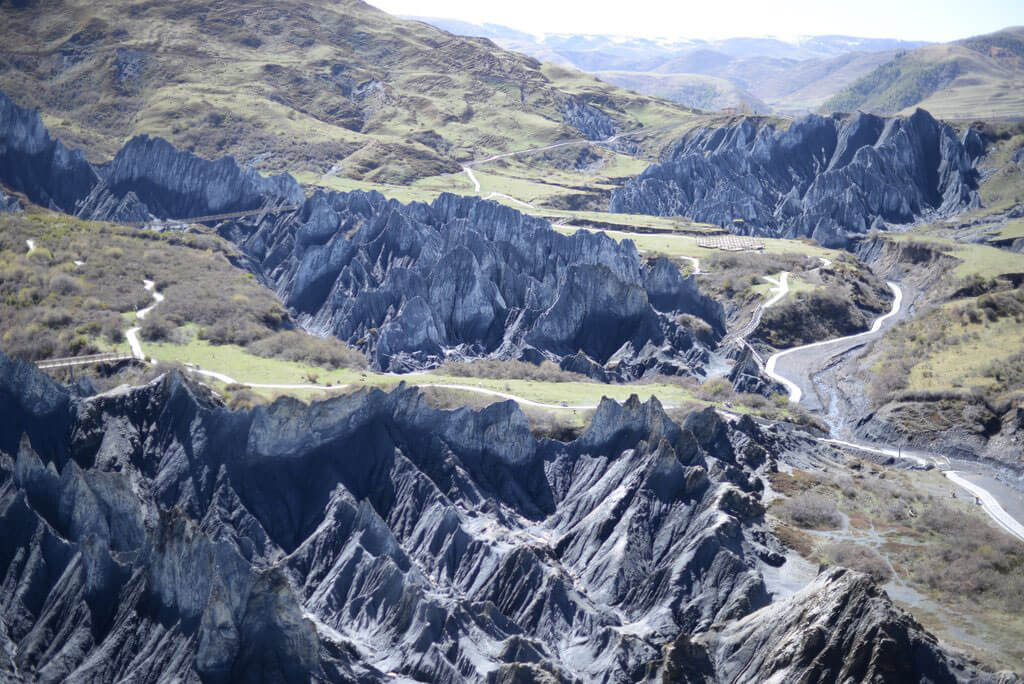
On our way out of town, we stop by the Black Stone Forest National Park. The park has only been open for one year. The wooden bridge walkways still appear new and carry us right into the heart of the Emyn-Muil-esque forest of purply rock outcroppings. Every angle is a beautiful photo op.
We hop back in the van and continue toward Danba. About an hour outside of Danba, we stop beside a swimming hole. We discovered the spot last year and Ron says it was one of his highlights. He came prepared this time with a bathing suit.
Nervous about undressing my less-than-chiseled frame in front of others, I remember the lines to This is Me, “I am brave, I am bruised [or chubby around the waist], this is who I’m meant to be,” and finally work up the courage to jump into the still-thawing snow melt…and then immediately yelp like a six-year-old girl as I clumsily scramble out of the water before hypothermia sets in. The shock and the rush of blood to my extremities gives me a sense of relaxed euphoria. We dry off, hop back in the van, and play Come Alive again. Totally worth it.
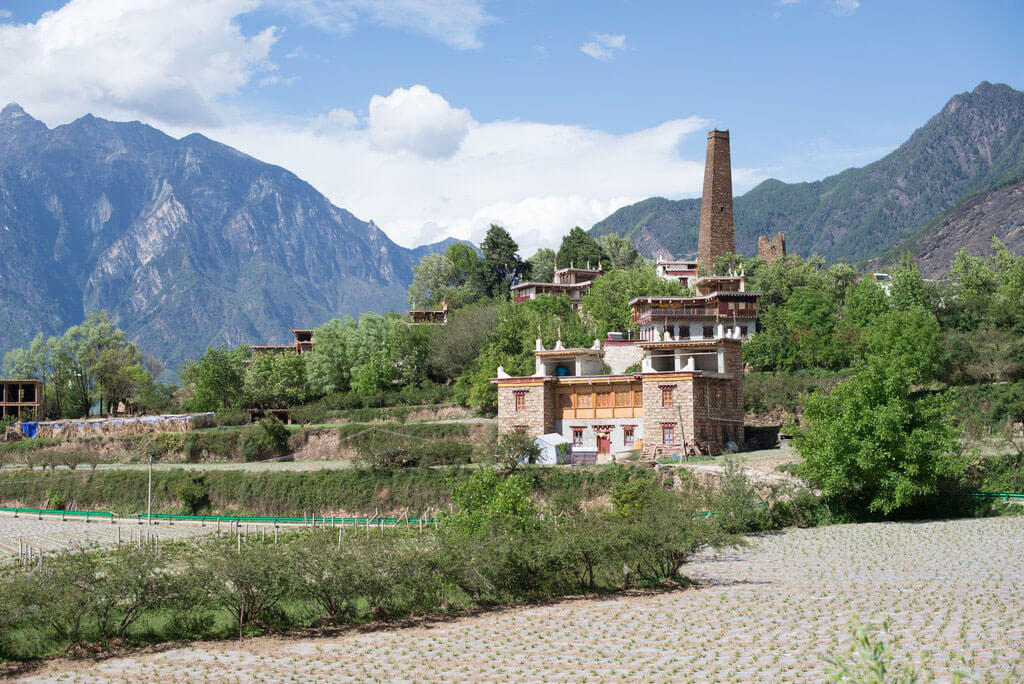
Danba is a little slice of heaven. It’s the good life. For a farmland town perched high above a river valley, the view is heavenly; the people, hearty; the food, healthy. Ageh, our guesthouse proprietor assures us there are no GMO’s, no harmful pesticides and no hormones given to animals. We believe him because the food leaves you feeling refreshed and satisfied with no sluggishness afterwards.
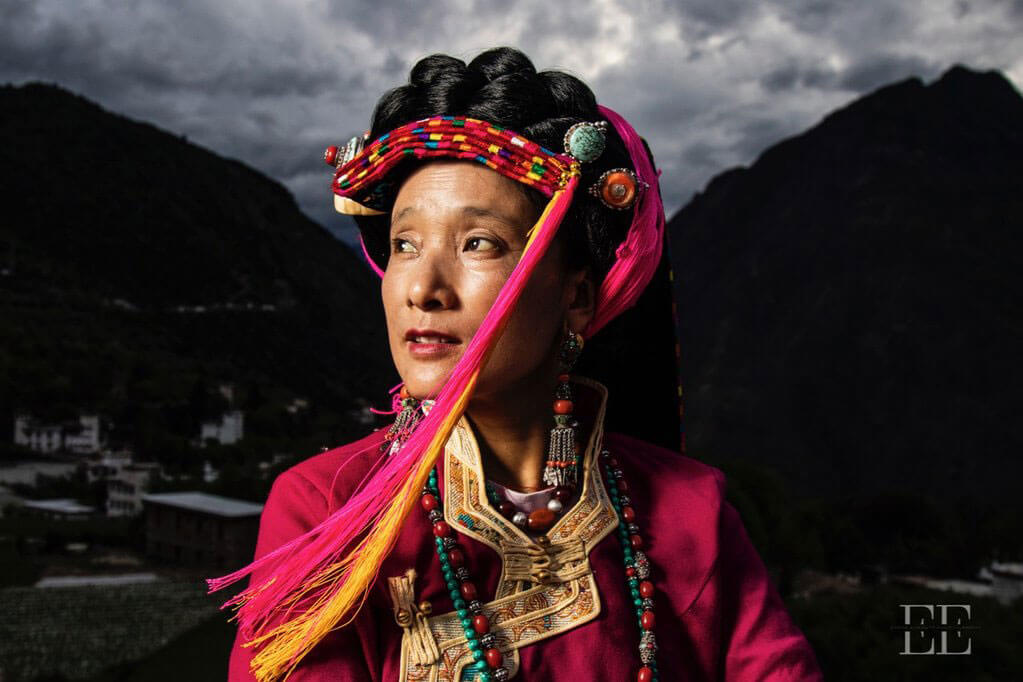
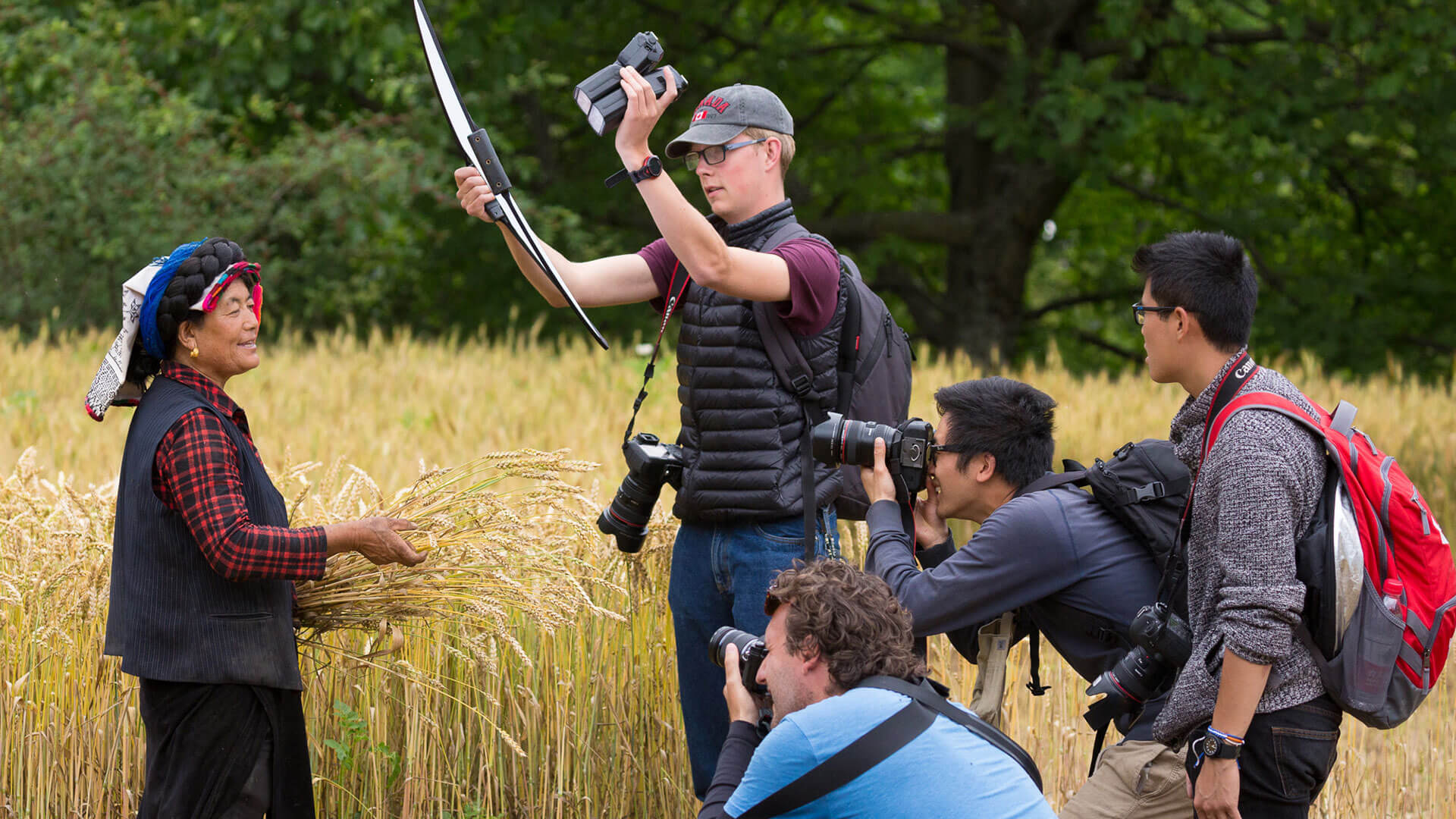
In the course of a meal, our appetites get recalibrated. Who knew that a day in Danba would redefine “food” for us. Ageh’s sister-in-law agrees to be a model for a photo shoot at dusk on the rooftop. The photographers each have their turn shooting and holding flash umbrellas.
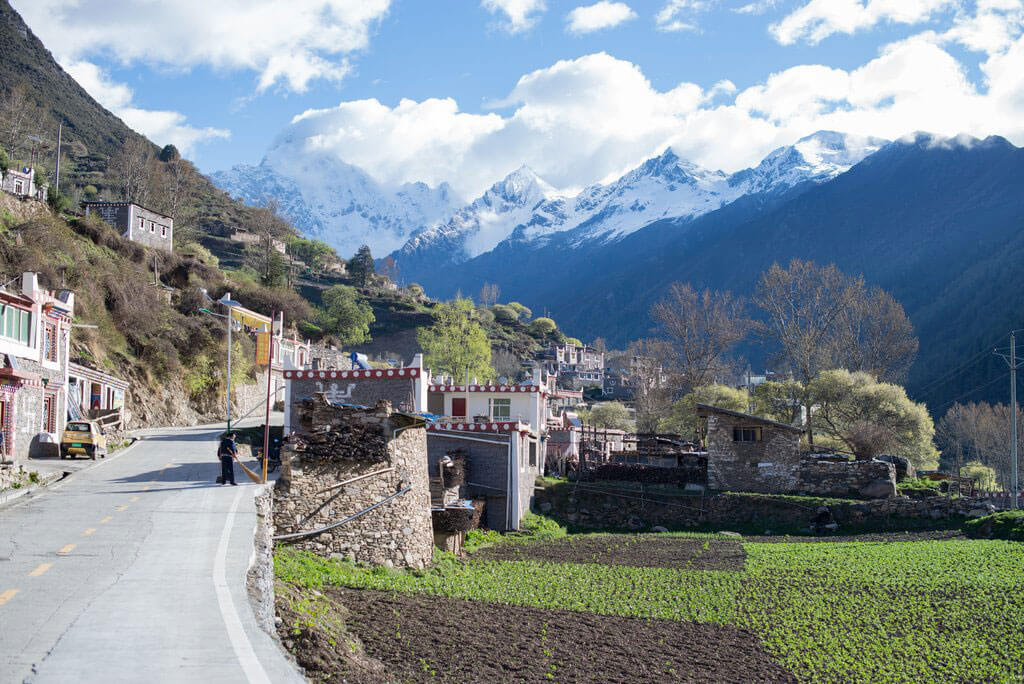
Our last full day is spent in Four Sisters Mountain Town in a newly developed boutique tourist section. Newly renovated boutique guesthouses, hostels and restaurants line the streets—all with a wood-log facade that reminds us vaguely of Whistler ski resort town in British Columbia. It’s cute. And still in development.
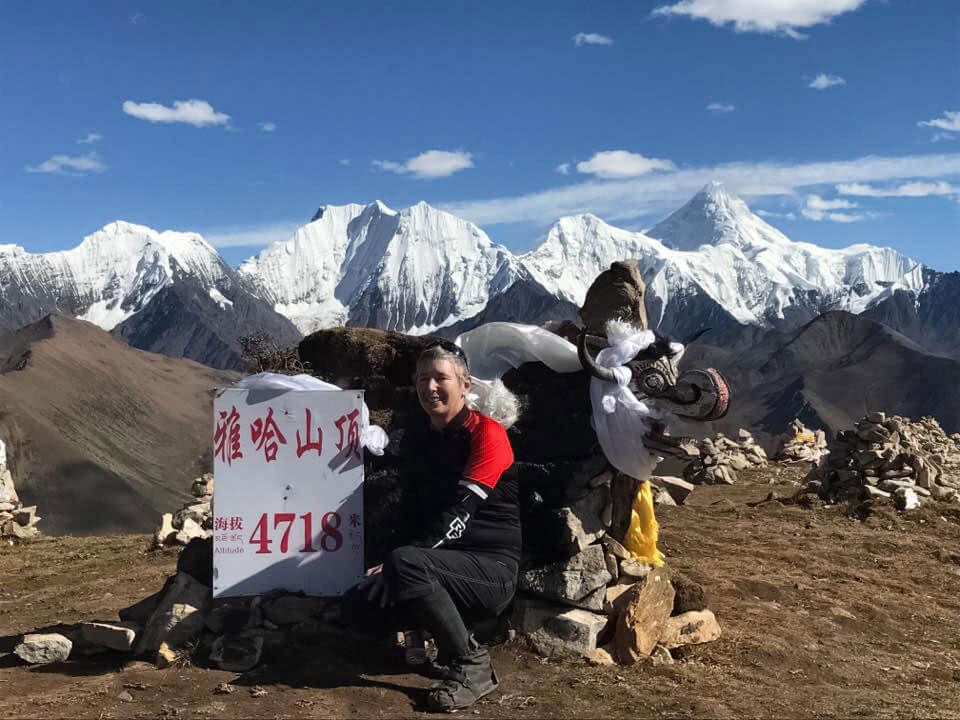
We catch private vehicles up to a ridge where you can see every snow mountain in a hundred miles in every direction. Some of us hike up to 4,500 meters for an even better view. It is both literally and figuratively the summit of our amazing ten-day journey through Eastern Tibet.
As we drive back to Chengdu, we sing From Now On, “And we will come back home. We will come back home…Home Again!” The four-hour drive goes quickly. We reward ourselves with a hefty meal from the Blue Frog in Taikooli. And, yes…it gives us all a food coma and fogs our memories of the heavenly manna from Danba.
After a light lunch the next day, we head to the airport, say our farewells and our see-you-next-years. The Extravagant Yak-hosted Prairie Digital Media photography practicum hits another home run and looks forward to doing it again in 2019.
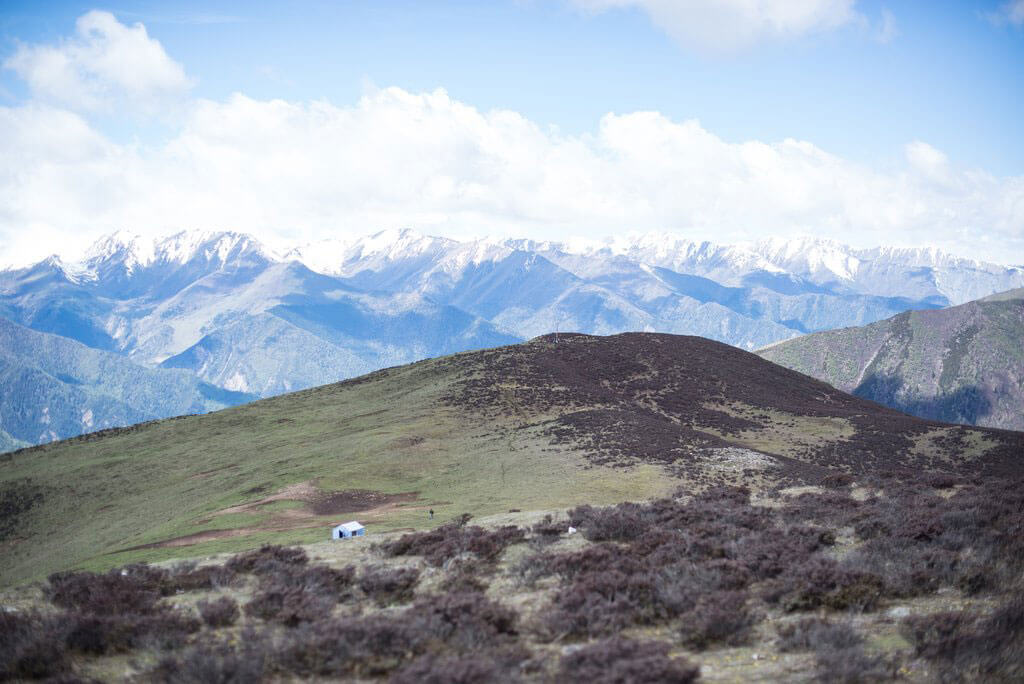
If you’re interested in joining an Extravagant Yak photo tour, exploring any area of Tibet, or just singing The Greatest Showman on repeat on beautiful mountain roads, contact us at info@extravagantyak.com.
Want to explore these areas yourself? Drop us a line at info@extravagantyak.com.
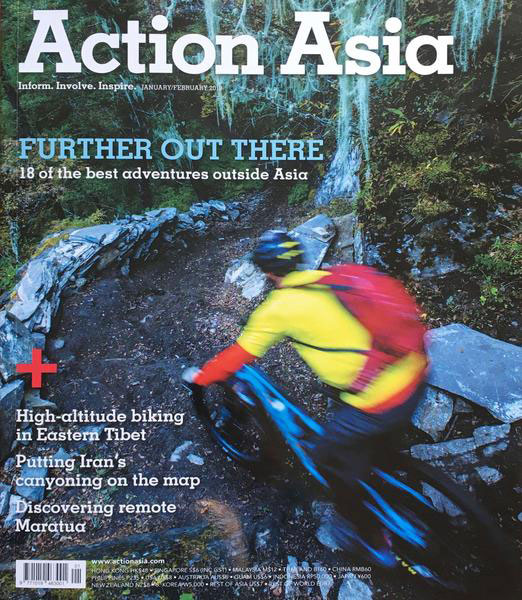
We've made the cover of Action Asia Magazine! The January/February 2018 issue has an amazing 10-page article, with words and photos from our clients Ryan Stuart and Ryan Creary, highlighting our exhilarating (and gruelling) Mountain Biking Backcountry Tibet tour. What an exciting honour to be featured here. If you're interested in experiencing this adventure for yourself click here for more information on how you can join our next tour in October of 2018. Click the cover below to read the full article.
If you’re interested in joining our 7-day Mountain Biking Backcountry Tibet trip click here to learn more or drop us a line at info@extravagantyak.com.
I was recently the driver and guide for an Extravagant Yak Tibet Photo Tour and learned some interesting things about hosting photographers. They are a unique breed of traveller. They appear less likely to feel cultural stress. Though I’m not an expert on the subject, in my thirteen years of cross-cultural living, I’ve observed that there are varying degrees of culture stress, from PTSD-type emotional trauma on the one end (very rare) to wanting to take more frequent naps on the other (super common).
Most of the time, it all gets thrown under the label of culture shock, but some shock can be…well, more shocking than others. Sometimes culture shock can make you want to curl up into the fetal position or click your heels together and say, “there’s no place like home, there’s no place like home,” like when you get lost in Hehuachi market or every time you go to IKEA. But a less dramatic, longer-term exposure can result in something called culture stress (often poorly labelled culture shock).
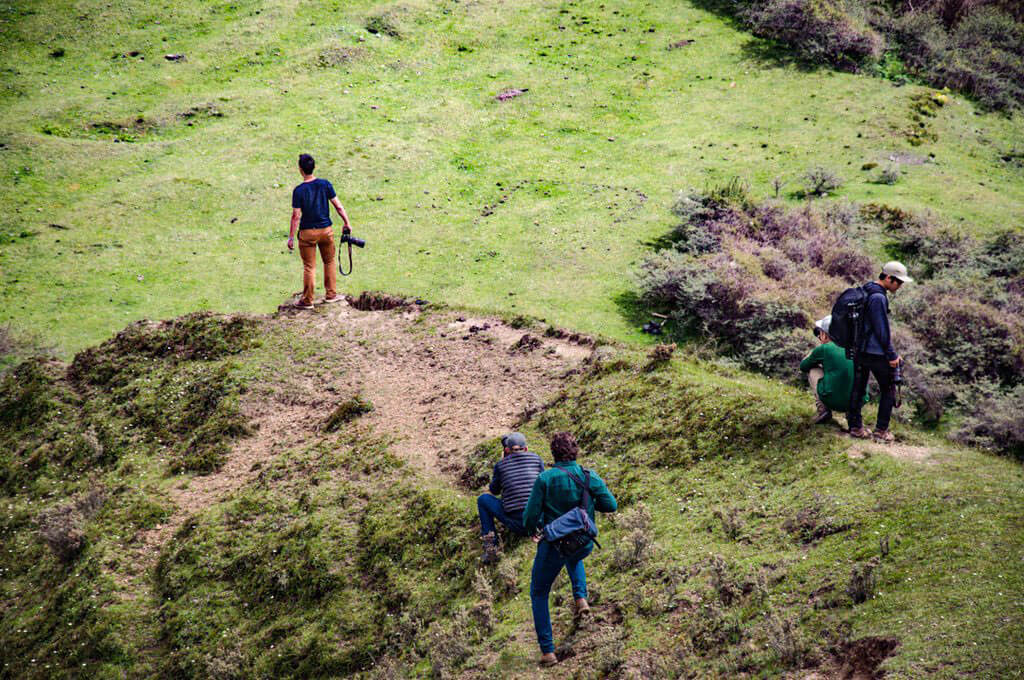
Culture stress happens because our brains like to be able to filter out most of the stimuli from our environment. This helps us to focus on what’s important and ignore the rest. When we are acclimatized to a certain culture, most of the external stimuli coming at us are familiar, therefore our brains don’t need to reprocess them. But when all or most of the external stimuli of our surroundings are unfamiliar, our brains work in overdrive to process all of the new data.
The experience of new, unfamiliar sites and smells can be fun in the short run, but after a certain amount of time (hours, days or weeks) all of the new stimuli begin to feel very uncomfortable and frustrating. Everything begins to filter through a comparison test, and on most counts, the host culture falls short of the expectations and standards developed in one’s home culture.
But for photographers, I observed something unique. They seemed impervious to these factors. I was so intrigued by this. It was as if something about being in the posture of an intense observer, looking at the world artistically through a lens, somehow shielded them from some of the challenges of a new culture.
We all like to have a measure of control, so when we get put in a situation where we have very little of it (like in a tour group in a region where we can’t speak the local languages), we may feel some discomfort. But photographers always have something they can control: their cameras and their desired shot. They are also never lacking to-do list items when they travel.
When photographers aren’t shooting, there’s photo dumping, sorting, rating and post-processing. And when they aren’t doing that, they’re always looking for the next unexpected, breath-taking moment. Photographers expect to be surprised. Witnessing and experiencing that level of anticipation in the group made the overall atmosphere of the tour fun and exciting.
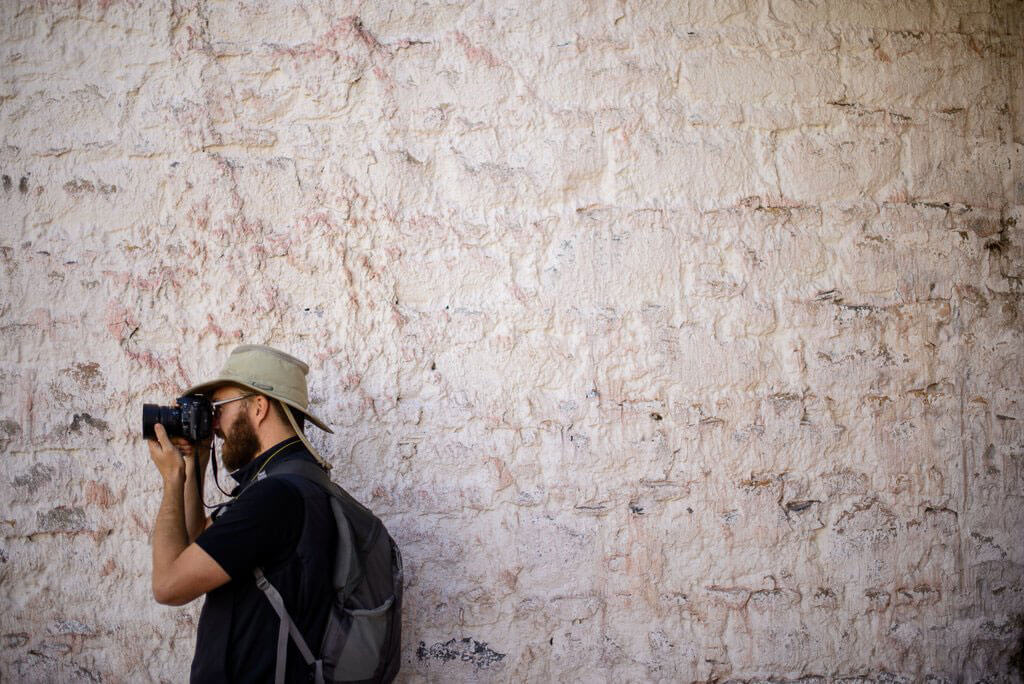
So, while it seems that photographers have a leg up on the rest of us in the travel department, it may have more to do with the fact that they aren’t trying to process and judge the environment for understanding’s sake, but they’re leaning in to find beauty in their environment for art’s sake. Call it a left brain / right brain thing. I don’t know.
Perhaps there are other factors at play. But whatever the reason, I challenge you to try your next travel adventure in the posture of an artist and try to suspend all judgments and see if it doesn’t make a difference. You may discover not only a new way to travel but a new way to be in the world all the time. That would be totally worth giving it a shot. (Pun intended).
Envious? Need a jumpstart on seeing the world through a different lens? Join our next photography tour to see what your missing.
We ran our third annual photography workshop tour in Tibet with Prairie Digital Media students from Canada and the United States. This year we used our Tibet Wild Frontier itinerary through Eastern Tibet and it was a huge success.
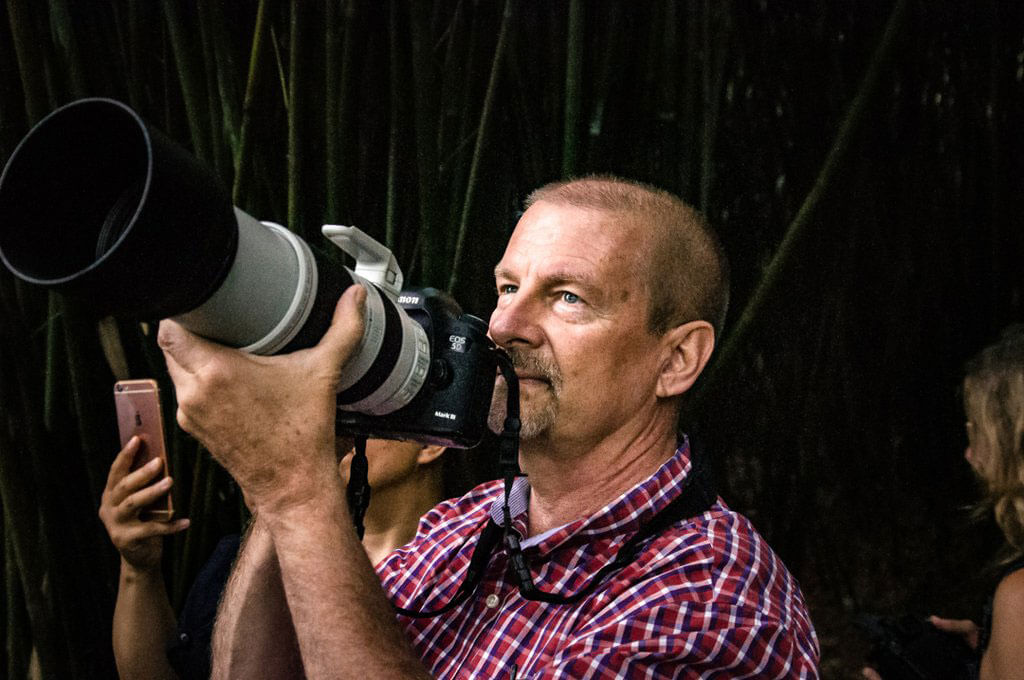
The tour commenced in Chengdu, where we visited the Pandas, ate hot pot, and walked with the crowds down the “ancient street” at Jinli. We then drove to Kangding, where we acclimatized, had a snow mountain sunrise shoot at Yajiagen Mountain Pass, and a meandering hike on Paoma Mountain. After two full days exploring the beauty of Kangding, we departed for Tagong.
We then took the scenic way through Xinduqiao, stopping every five minutes (a slight exaggeration) for photo ops. The next morning, we beat the sun to the top of the hill to capture a spectacular dawn over Yala Mountain and the monastery. That afternoon we explored the Anyi Gompa (nunnery) and nearby monastery where we were surprised to discover a large colony of rabbits on the monastery grounds (literally hundreds). We made our way back to town and enjoyed an incredible meal at the Khampa Cafe. We departed early the next morning for Danba via Bamei.
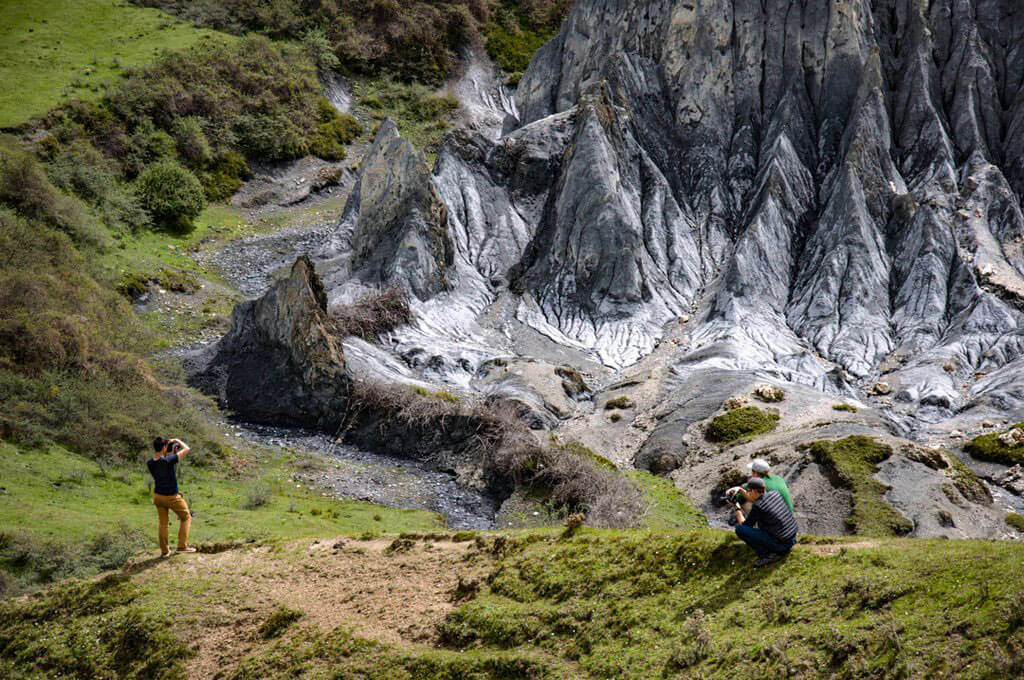
Just before arriving at Bamei, we stopped at the newly opened National Black Stone Forest Park. It was Extravagant Yak’s first time at the park, but we are always interested in finding new places for our guests to explore. The raised walkways, stunning rock projections and the scenery blew us away. We had planned to spend an hour or so there, but it quickly stretched to three.
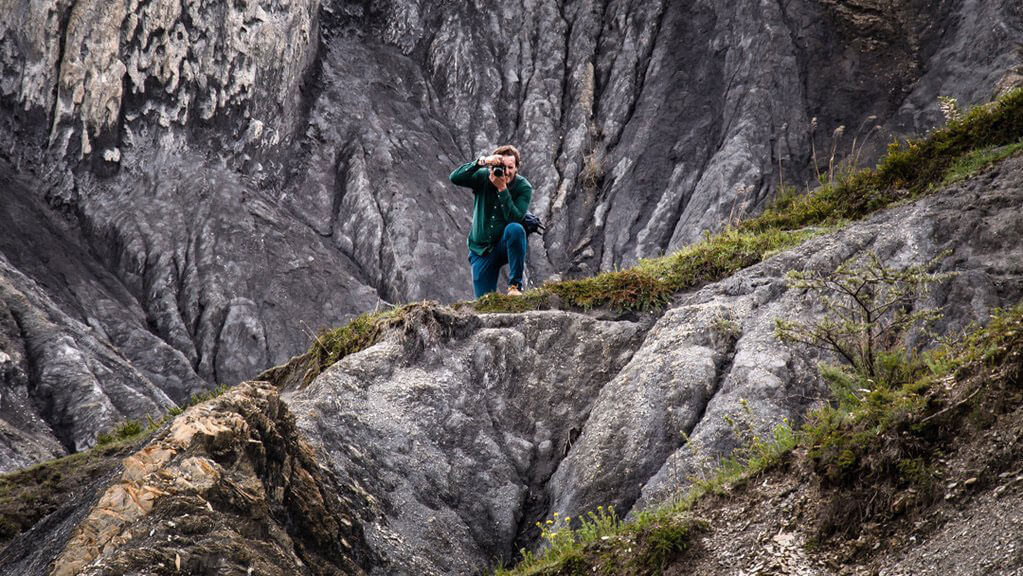
After a late lunch in Bamei and some more photo ops in town, we veered off of the 317 highway toward Danba. The weather that day was superbly favourable for epic landscape shots as we climbed the pass that drops you on the north face of Yala. The stretch of road between Bamei and Danba is my favourite in all of China.
On that three-and-a-half-hour ride, you get a bit of everything: vast plateau valleys, snow mountains, and a steep, winding river valley that eventually opens up into the green valley towns of the Danba area. I can’t think of another road in the world that is as enjoyable to drive. One of the photographers pined after his motorcycle and hoped to one day return to do a motorbike tour through the area.
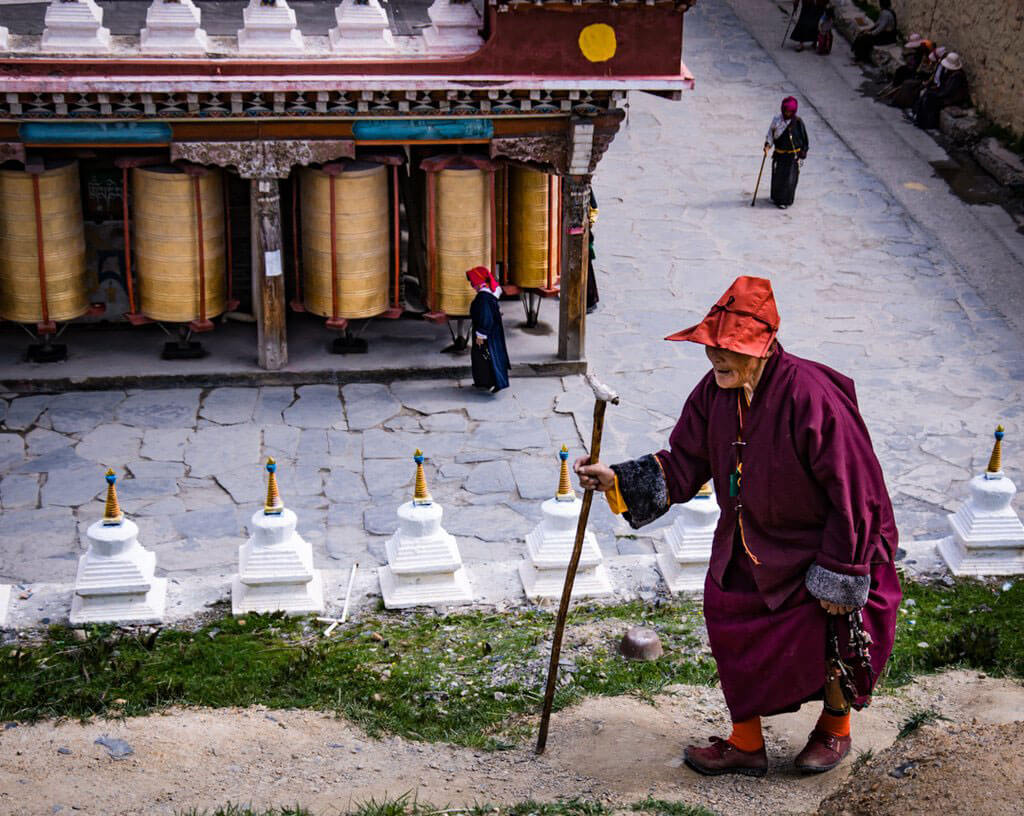
After pulling through Danba town, we crossed a tall, arched bridge and wound our way up a newly paved mountain road to Zhonglu village. Perched high up on the side of a mountain, the village is host to several of the ancient towers that pepper the valley. We enjoyed fresh, organic, home-grown, home-cooked meals at our guesthouse.
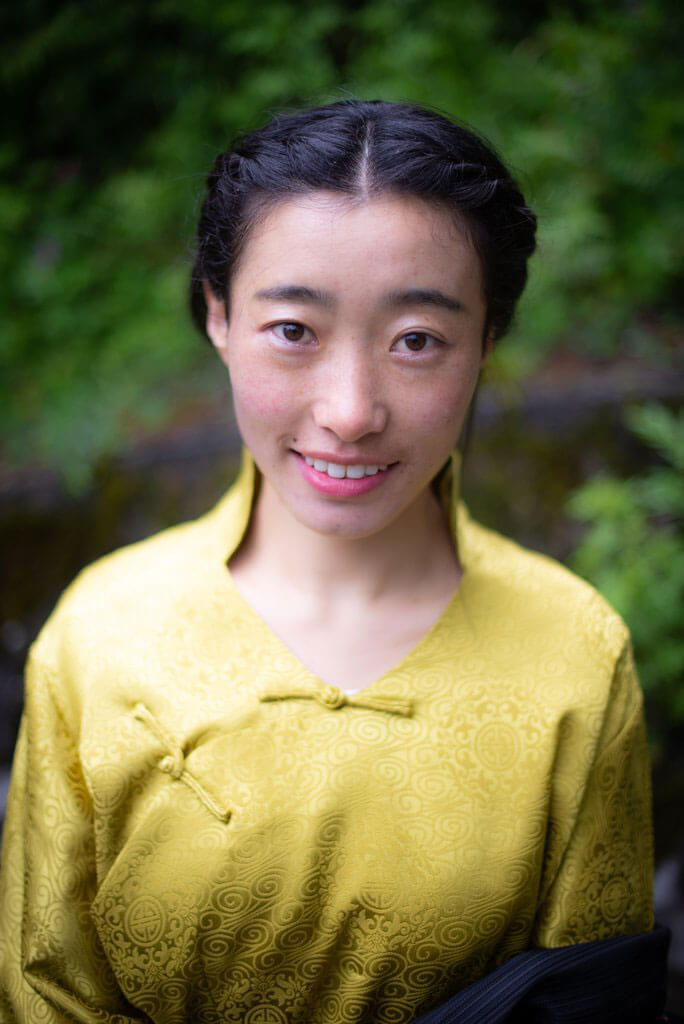
A famous model from the village was willing to “sit” for a couple of hours of shooting. The photographers each took twenty minutes with her to create their desired shots. After two nights in Danba, we stayed a night in Four Sisters Mountain Village and caught a sunrise shoot of the mountain from the lookout.
The drive back to Chengdu from Four Sisters Mountain was incredibly beautiful, until close to Dujiangyan, where the greens and blues from the mountain passes faded into the different shades of gray of the urban lowlands. Yet, Dujiangyan also had its own mystique. We visited the Ancient Irrigation System in town (after Apple Maps led us on a wild goose chase) and enjoyed the ancient Chinese architecture, which somehow goes well with the misty fog of the Qingcheng Mountain river basin.
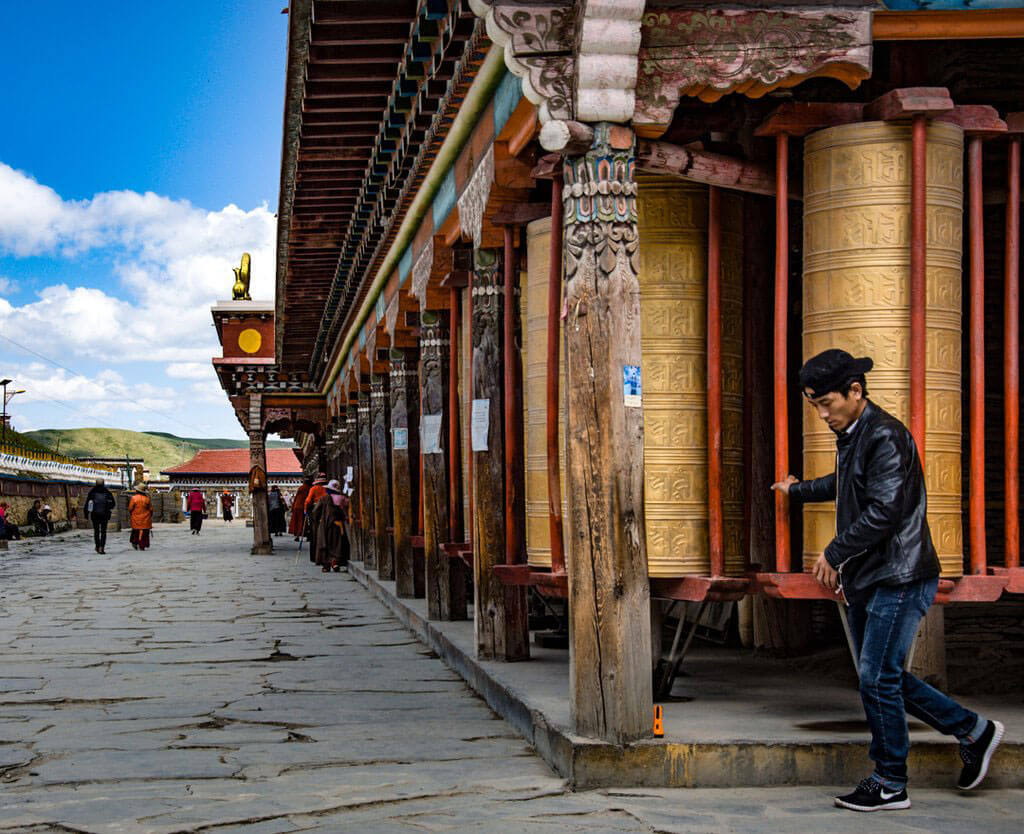
We arrived back in Chengdu still with enough time for everyone to do their souvenir shopping and a couple more photoshoots. I was especially blessed by this group, as their tip to me was in the form of taking an hour to do some family shots for us. I’ve included some of my favourite photos from the trip dotted throughout the article. I hope you enjoy them as much as I do, and maybe this will stir the longing in you to see the mystic Tibetan lands for yourself someday soon.
If you like the sound of this itinerary check out our Eastern Tibet Photo Tour.